Explore Hyakki Yagyō, Japan’s mysterious night parade of demons, through folklore, fear, Kyoto history, and the wisdom hidden in darkness.
 Wonderful Proverbs Journey
※This site uses affiliate advertising.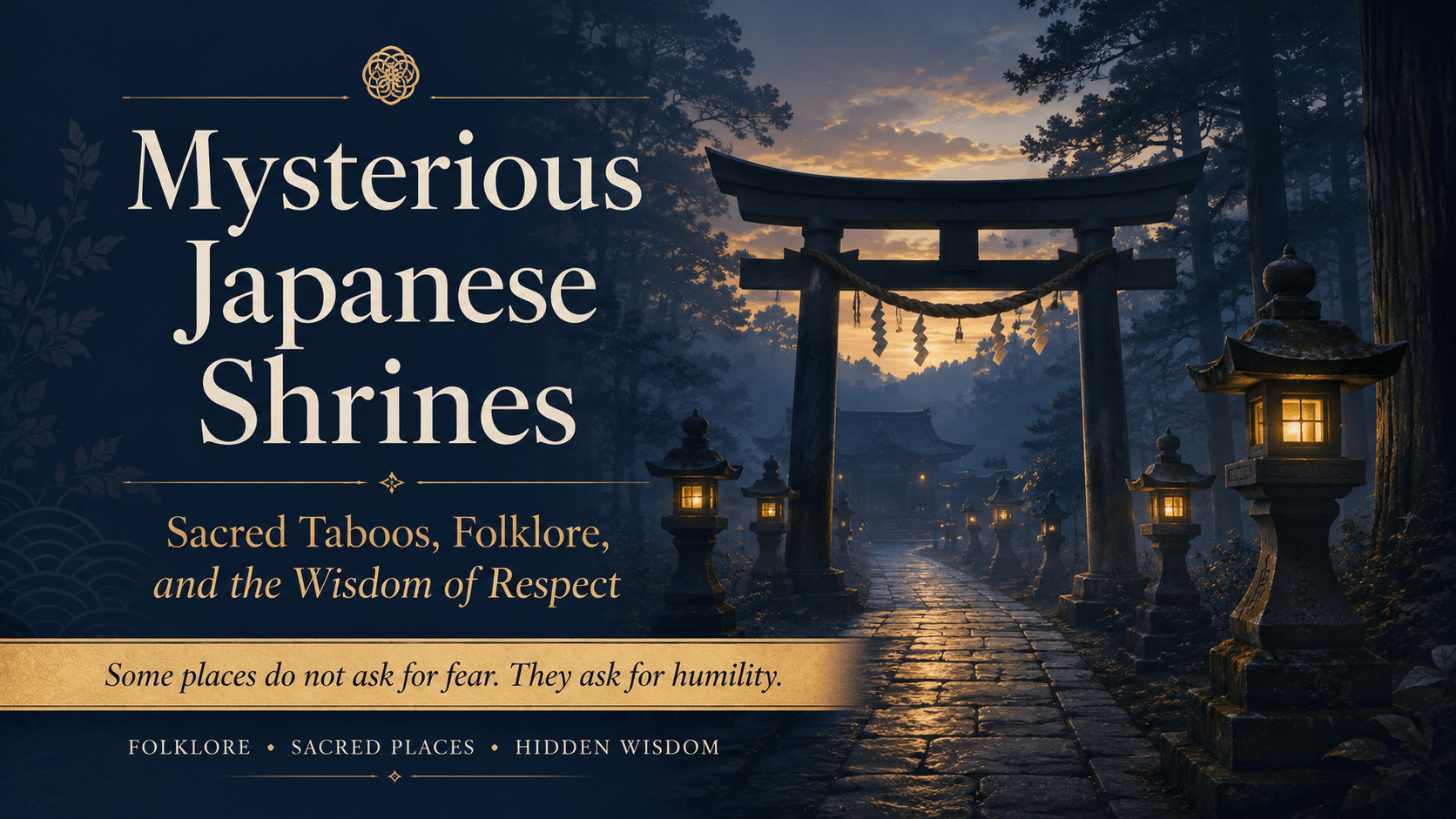
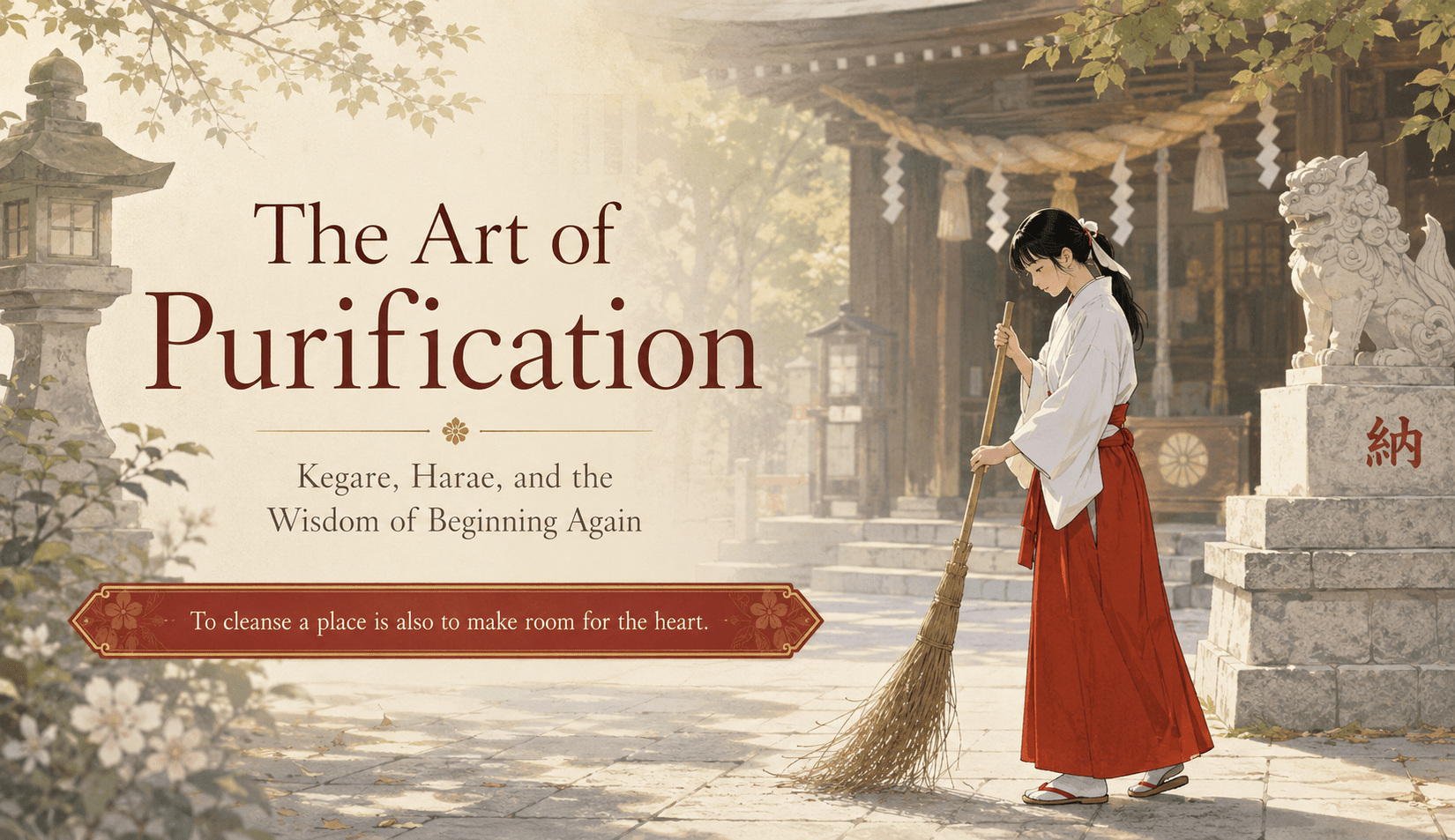
In Japan, shrines are often close to everyday life. People visit them for New Year prayers, school entrance exams, business success, weddings, safe childbirth, and quiet moments of gratitude. A shrine may stand at the edge of a busy city street, deep in a mountain forest, beside a river, or behind a neighborhood path so ordinary that one could almost pass it without noticing.
Yet Japanese folklore also preserves a more cautious way of looking at sacred places.
Some shrines are not spoken of merely as beautiful destinations. They are remembered as places of strong prayer, old resentment, purification, curse-breaking, severed relationships, ancestral memory, or divine presence. These stories do not need to be read as literal proof of supernatural punishment. They may be understood as cultural warnings: do not treat sacred places as entertainment, do not bring careless wishes into serious spaces, and do not confuse curiosity with reverence.
This article explores several Japanese shrine legends often described as places one should not visit lightly. Rather than treating them as simple horror stories, we will read them as mysterious folklore with moral meaning—stories about respect, fear, gratitude, and the unseen weight of human intention.
A Japanese shrine is not only an architectural place. In Shinto and folk belief, it can be understood as a threshold: a place where the human world approaches the world of kami, or sacred presences. The word kami does not simply mean “god” in the Western sense. It may refer to deities, ancestral spirits, forces of nature, extraordinary human figures, or presences that inspire awe.
This is why shrine folklore often focuses less on “evil” and more on balance. A place may become frightening not because it is wicked, but because it has received too much grief, resentment, desire, or careless behavior. In many Japanese stories, fear begins where respect disappears.
The shrines described below are not presented as places to avoid absolutely. Many are famous, beloved, and historically important. The deeper lesson is not “do not visit.” It is “do not visit without awareness.”

Fushimi Inari Taisha in Kyoto is one of Japan’s most recognizable sacred sites. Its thousands of vermilion torii gates wind through the mountain like a path between the visible and invisible worlds. Inari is widely associated with rice, prosperity, food, business success, and fox messengers.
Yet the same mountain that attracts visitors for beauty and photographs is also surrounded by stories of intense prayer. Some tales connect hidden mountain paths with ushi no koku mairi, a midnight curse ritual in which a person was said to nail a straw doll to a tree while praying for revenge. These stories are part of Japanese curse folklore, and they should be treated as legends rather than instructions or proven events.
In local rumor, figures in white clothing, strange fox-like presences, and the feeling of being unable to proceed have sometimes been associated with the area. Whether these tales come from fear, imagination, old ritual memory, or the atmosphere of the mountain itself, they point to one idea: a place of blessing can become frightening when human desire turns dark.
Fushimi Inari is not only a place to ask for gain. It is also a place to remember gratitude. Food, livelihood, and prosperity are not merely things to demand; they are things to receive humbly.
Kanda Myojin in Tokyo is deeply connected with the spirit of Taira no Masakado, a historical warrior whose rebellion and death became part of Japan’s powerful onryō tradition. Onryō are vengeful spirits, often associated with people who died with unresolved anger, political injustice, or humiliation.
Stories surrounding Masakado’s spirit are among the most famous in Japan. His head mound in Tokyo has long been treated with caution and respect. Various misfortunes have been associated in rumor with attempts to disturb or disrespect the site, though such accounts belong to the world of urban legend, historical memory, and spiritual folklore rather than verifiable proof.
What matters culturally is not whether every tale is literally true. What matters is that people continue to behave as if respect is necessary. Buildings are said to avoid looking down upon the mound. Some offices reportedly arrange spaces so that people do not symbolically turn their backs on it.
This is folklore as social memory. It says that the dead, especially those wronged by power, should not be casually erased.
Shiramine Jingu in Kyoto is associated with Emperor Sutoku, one of the most feared figures in Japanese onryō lore. In historical memory, Sutoku was an emperor whose life became entangled in political conflict, exile, defeat, and bitterness. Later legends describe him as transforming into a terrifying spirit after death.
Whether one reads this literally or symbolically, the emotional truth is powerful. A person who once stood at the center of sacred authority became an image of abandonment and rage. The higher the position, the deeper the fall. The more sacred the office, the more frightening the resentment.
Shiramine Jingu is not only a place of fear. It is also associated with purification, pacification, and the hope that even violent memory can be given a place of dignity. One tradition warns that prayers there should not be selfish, malicious, or aimed at harming others. If the spirit remembered there suffered from injustice, then perhaps careless or cruel wishes are especially out of place.
This tale suggests that sacred memory asks for moral seriousness.
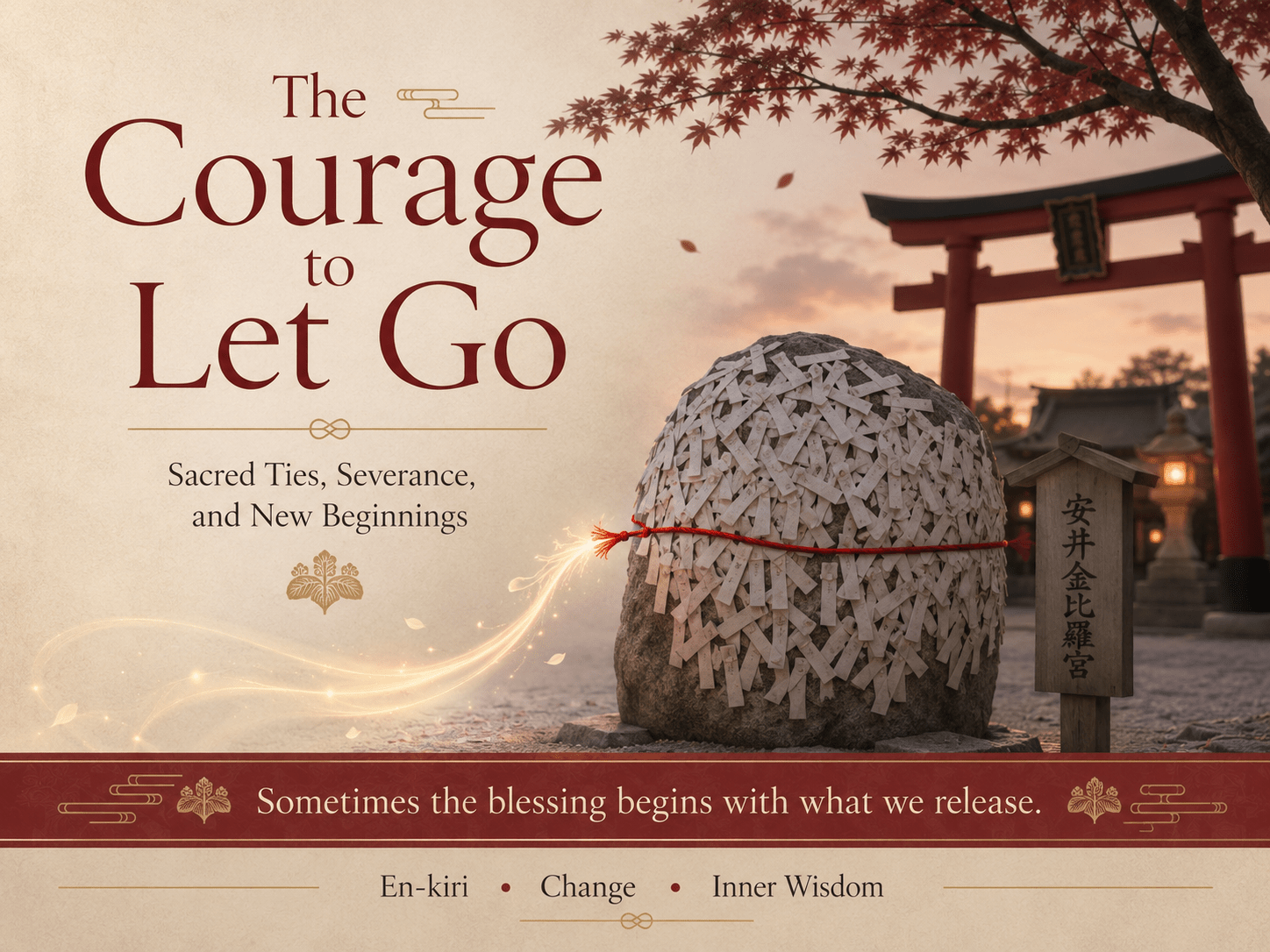
Yasui Konpiragu in Kyoto is famous for en-kiri and en-musubi: cutting harmful ties and forming good ones. Visitors write wishes on paper and pass through a symbolic stone covered with countless prayers. The sight is striking—beautiful, unsettling, and heavy with human longing.
The shrine is often described as powerful. Stories circulate of people who prayed to cut a relationship, only to experience sudden breakups, job changes, unexpected losses, or dramatic life shifts. Some later interpret these events as blessings in disguise; others feel shaken by the force of change.
From a reflective perspective, the legend asks a profound question: are we ready to lose what must be lost?
People often ask for a better life while clinging to the very bond that prevents it. A shrine of severance becomes frightening because it seems to answer not the wish we say aloud, but the deeper wish hidden underneath.
The moral is not to fear change. It is to approach change honestly.
Kitano Tenmangu in Kyoto enshrines Sugawara no Michizane, now widely revered as a deity of learning. Students visit to pray for success in exams, academic achievement, and intellectual growth. Yet Michizane was also a historical figure associated with exile, injustice, and posthumous fear.
After his death, disasters and misfortunes were interpreted by people of the time as signs of his angry spirit. Over time, this feared spirit was transformed into Tenjin, a revered kami of scholarship. This transformation is one of the most fascinating patterns in Japanese religious culture: fear becomes reverence, resentment becomes protection, and a troubled memory becomes sacred.
A common lesson associated with such shrines is the importance of orei-mairi, returning to give thanks after a wish has been fulfilled. To ask and never return is to treat the sacred as a tool. To return in gratitude is to acknowledge relationship.
Kitano Tenmangu reminds us that wisdom is not only about passing examinations. It is also about remembering who helped us along the way.
Izumo Taisha in Shimane is one of Japan’s most important shrines, associated with Ōkuninushi and the power of en-musubi, often translated as matchmaking or the binding of relationships. In Japanese tradition, the tenth lunar month is called Kannazuki, the month without gods, in many places. But in Izumo, it is called Kamiarizuki, the month when the gods are present, because the kami are believed to gather there.
This alone gives Izumo a unique atmosphere. It is not merely a shrine of romance. It is a place where relationships, destinies, meetings, partings, and social bonds are imagined as matters discussed by divine powers.
Some folklore suggests that praying for good bonds may also sever harmful or unnecessary ones. This is not always gentle. A person may ask for love, only to lose a relationship that was blocking a better future. A person may ask for new fortune, only to face painful change first.
Izumo’s mystery lies in the idea that true connection may require release.
Some shrine legends move into darker territory: curses, jealousy, betrayal, and revenge. Ikurei Shrine in Okayama and Hashihime Shrine in Kyoto are often connected in folklore with curse rituals, severing ties, and fierce emotions.
Hashihime, the “Princess of the Bridge,” is especially haunting. In legend, a woman consumed by jealousy prays to become an oni, a demon-like being, so she can curse her rival. She follows terrifying ritual instructions and transforms into a figure of rage. Over time, this story became associated with the imagery of curse rituals and the danger of love turning into obsession.
The point is not to romanticize curses. Quite the opposite. These stories show how resentment can deform the human heart. A bridge, normally a symbol of connection, becomes a place of jealousy and separation. A prayer, normally an act of humility, becomes a weapon.
In this sense, curse folklore is a warning about emotional possession. It asks: when anger speaks through us, who are we becoming?
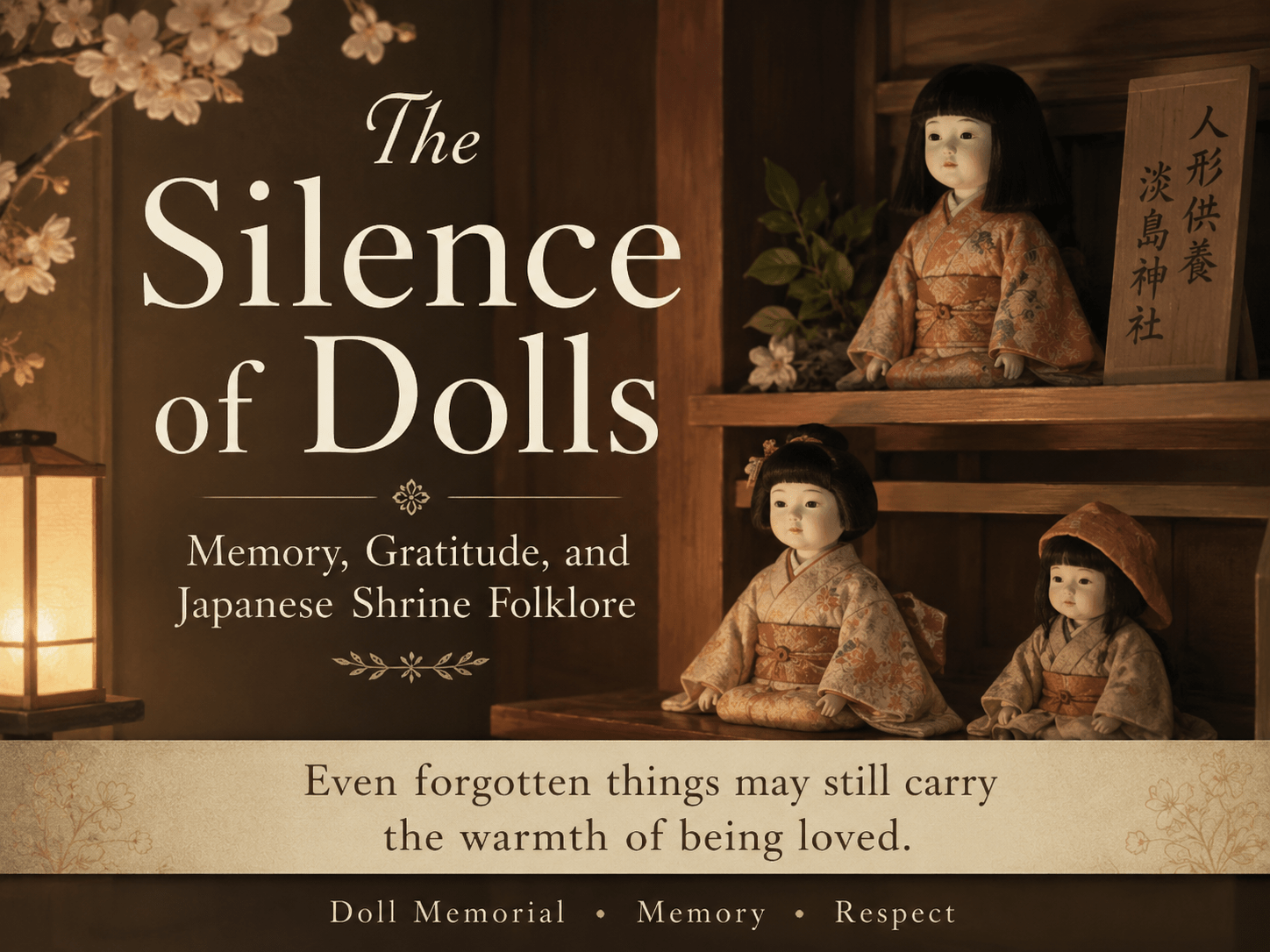
Awashima Shrine in Wakayama is known for its countless dolls. Dolls from across Japan are brought there to be cared for, memorialized, and ritually released. The sight can be unsettling: rows upon rows of faces, each one once held, dressed, loved, ignored, or outgrown by someone.
In Japanese culture, dolls are often more than objects. They may carry memory, affection, childhood, family history, or a sense of presence. This does not mean every doll is haunted. It means that people have long felt that certain objects absorb emotion.
Awashima Shrine’s atmosphere is powerful because it makes visible what modern life often hides: the emotional life of things. A doll may be made of cloth, wood, or porcelain, but it can become a vessel for memory. To discard it carelessly may feel like discarding part of one’s own past.
The shrine reminds us that respect is not limited to living beings. Sometimes, gratitude extends even to what once comforted us silently.
Meiji Jingu in Tokyo is one of Japan’s most visited shrines. Surrounded by a great forest, it offers an atmosphere of calm in the middle of the city. It is also a place where millions of hopes, prayers, anxieties, and wishes gather every year.
Some modern stories describe famous “power spots” within or near major shrines, such as wells, trees, stones, or pathways said to carry special energy. These stories can be meaningful, but they also reveal something about modern spiritual hunger. People want a place where invisible renewal feels possible.
Yet when too many wishes gather in one place, folklore sometimes imagines that the atmosphere becomes heavy. Not all wishes are pure. Some are anxious, desperate, jealous, or fearful. A sacred place may feel peaceful to one person and overwhelming to another.
Whether one believes in spiritual energy or reads it psychologically, the lesson is similar: do not seek power without stillness. Visit sacred places not only to ask, but to quiet the heart enough to listen.
“Enter sacred places with a quiet heart; what you bring with you may be what you meet there.”
This is not an old proverb, but it captures the wisdom behind many Japanese shrine legends. The frightening presence in the story is sometimes less important than the attitude of the visitor. A shrine does not only receive footsteps. It receives intention.
Many Western ghost stories focus on haunted houses, evil spirits, or demonic presence. Japanese shrine folklore often works differently. It tends to focus on taboo, impurity, gratitude, neglected memory, and the need to maintain harmony between visible and invisible worlds.
A shrine may be beautiful and frightening at the same time. A kami may bless and punish. A dead historical figure may become both feared and worshipped. A doll may be only an object, yet still treated with tenderness. A wish may be sincere, yet dangerous if it is careless.
This ambiguity is one reason Japanese folklore feels so rich. It does not always divide the world into simple good and evil. Instead, it asks whether the relationship between human beings, places, spirits, memories, and objects has fallen out of balance.
Why are we drawn to stories about shrines one should not visit lightly?
Perhaps because they give form to a feeling many people already know: the sense that some places require a different version of ourselves. We behave differently in a hospital, a cemetery, a courtroom, a temple, or a childhood home. Certain spaces ask us to lower our voice, slow our steps, and become aware of our intentions.
Shrine folklore turns that feeling into story.
The fear is not only fear of gods, ghosts, curses, or punishment. It is fear of being seen clearly. What if the place reveals the resentment we have hidden? What if our wish is more selfish than we thought? What if the relationship we want to keep is the one we need to release?
Rather than proving the supernatural, these stories reveal the psychology of sacred space.
Why are we drawn to stories about shrines one should not visit lightly?
Perhaps because they give form to a feeling many people already know: the sense that some places require a different version of ourselves. We behave differently in a hospital, a cemetery, a courtroom, a temple, or a childhood home. Certain spaces ask us to lower our voice, slow our steps, and become aware of our intentions.
Shrine folklore turns that feeling into story.
The fear is not only fear of gods, ghosts, curses, or punishment. It is fear of being seen clearly. What if the place reveals the resentment we have hidden? What if our wish is more selfish than we thought? What if the relationship we want to keep is the one we need to release?
Rather than proving the supernatural, these stories reveal the psychology of sacred space.
Before entering a sacred place, a difficult relationship, or an old memory, perhaps the quiet question is the same:
What am I bringing with me—and am I ready to meet it?
What are you carrying into the sacred places of your life—gratitude, fear, resentment, or hope?