Explore mysterious Japanese urban legends through folklore, fear, cultural meaning, and quiet wisdom for modern life.
 Wonderful Proverbs Journey
※This site uses affiliate advertising.
Some books are remembered because of what they contain.
Others are remembered because of what they awaken.
The Codex Gigas, often called the Devil’s Bible, belongs to that second and more mysterious kind. It is not simply an old manuscript. It is a book surrounded by silence, rumor, fascination, and unease. Even before one speaks of the legend attached to it, the object itself feels almost unreal: vast, solemn, heavy with text, and marked by one of the most famous images in medieval manuscript history — a full-page portrait of the Devil.
Historically, Codex Gigas is a large thirteenth-century manuscript from Bohemia, one of the historical Czech lands. It is widely known for its exceptional size and for the striking image that gave rise to its nickname, the Devil’s Bible. The National Library of Sweden describes it as the largest surviving medieval manuscript in the world, and the Library of Congress identifies it as a major medieval manuscript containing biblical, historical, and other learned texts.
But history alone does not explain its power.
The reason Codex Gigas continues to fascinate people is that it stands at the border between artifact and myth. It is real enough to be studied, measured, preserved, and digitized. Yet the story surrounding it belongs to a darker and more symbolic world — the world of impossible vows, fear, temptation, and the human soul under pressure.
The legend says that a condemned monk, facing a terrible punishment, promised to create a book unlike any the world had ever seen. When he realized that the task could not be completed by human hands in a single night, he called upon the Devil for help.
Whether taken literally or symbolically, this strange medieval tale speaks to something deeper than horror. It asks what fear can do to judgment. It asks how shame can narrow the mind. It asks why human beings sometimes seek escape from the very forces that may lead them further into darkness.
This is not merely a scary story about a devil in a book.
It is a story about knowledge, fear, pride, desperation, and the wisdom of knowing when not to make a bargain with panic.
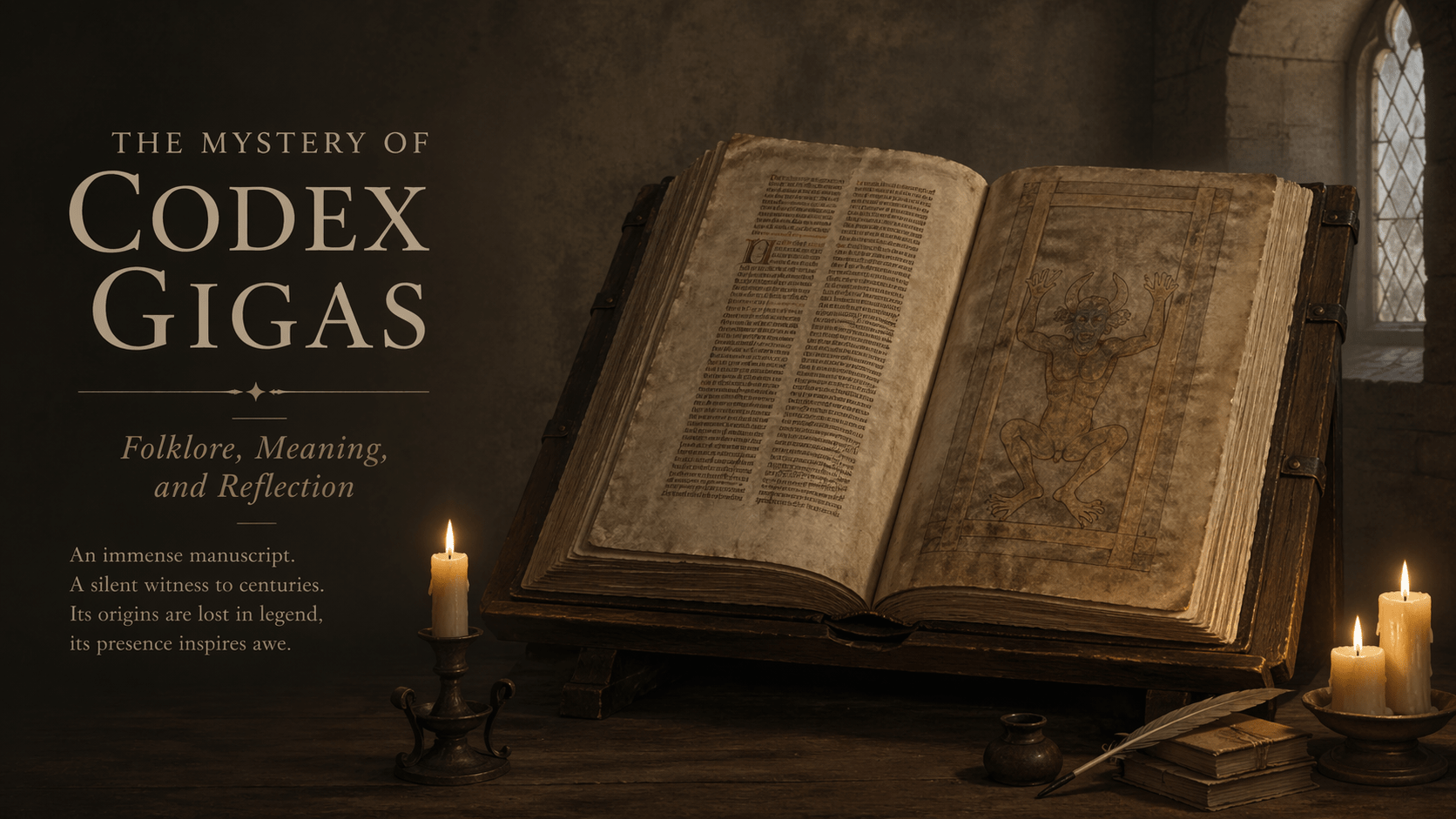
The legend begins in a monastery.
According to the tale, there was once a monk who had committed a grave offense. The exact nature of his wrongdoing is not always stated, and perhaps that silence is part of the story’s power. When a tale refuses to tell us precisely what someone has done, the imagination fills the gap. The monk’s sin becomes more than one specific act. It becomes a symbol of every failure that makes a person fear they can never return to who they were.
His punishment, the story says, was terrifying.
He was to be walled up alive.
To modern readers, the image is almost unbearable: stone closing around a living body, light removed, voice buried, name reduced to warning. In the logic of the legend, this punishment is not merely physical. It is social, spiritual, and symbolic. To be sealed inside a wall is to be erased from the living community while remaining trapped inside its structure.
Facing such a fate, the monk pleaded for mercy.
He made an extraordinary promise: if his life were spared, he would create a manuscript so magnificent that it would bring everlasting honor to the monastery. It would contain sacred scripture, history, medicine, calendars, prayers, and the gathered learning of generations. It would be a book vast enough to hold a world.
The promise was accepted, but with one impossible condition.
The book had to be completed in a single night.
At sunset, the monk began.
One can imagine him alone in the dim room where manuscripts were copied by hand. The air may have smelled of parchment, wax, old wood, and ink. Candlelight trembled over the blank pages. Outside, the monastery grew quiet. Inside, the monk worked with the fierce concentration of a man trying to outrun dawn.
At first, fear may have sharpened him.
Fear can make the body alert. It can make time feel precious. It can turn ordinary labor into desperate motion. The monk may have believed that if he wrote quickly enough, prayed intensely enough, and refused to look at the passing hours, he might yet survive.
But the task was too great.
The manuscript he had promised was not a letter.
Not a single prayer.
Not one book of scripture.
It was a universe of text.
As the night deepened, the blank pages remained. The candle shortened. The silence grew heavier. Each unwritten line became a reminder of the wall that waited for him.
By midnight, according to the legend, the monk understood.
No human hand could finish the book before dawn.
Then came the moment that gives the story its darkness.
In despair, the monk turned away from heaven and called upon the Devil. He offered his soul in exchange for help. By morning, the impossible manuscript was finished.
And within its pages appeared the image that would haunt the book’s reputation for centuries: a full-page portrait of the Devil.
The legend explains the nickname. But it also does something more subtle. It turns a manuscript into a mirror. The Devil is not only a figure on parchment. He becomes the shape of a decision made under pressure, a symbol of what fear can persuade a person to surrender when hope feels too slow.
Historically, the one-night creation story is not treated as verified fact. Codex Gigas is a real medieval manuscript, but the tale of its demonic creation belongs to folklore. The manuscript’s actual scale, contents, and famous Devil image are documented; the supernatural bargain is best understood as legend, interpretation, and cultural memory.
Yet folklore does not need to be literal in order to be true in another sense.
The monk’s fear feels real because it is human.
He wants to escape punishment.
He wants to undo shame.
He wants a miracle without a slow reckoning.
He wants dawn to arrive with proof that he is not lost.
That is why the story still speaks.
Not because everyone believes a devil wrote the book, but because many people know what it feels like to be cornered by fear and tempted by a dangerous shortcut.
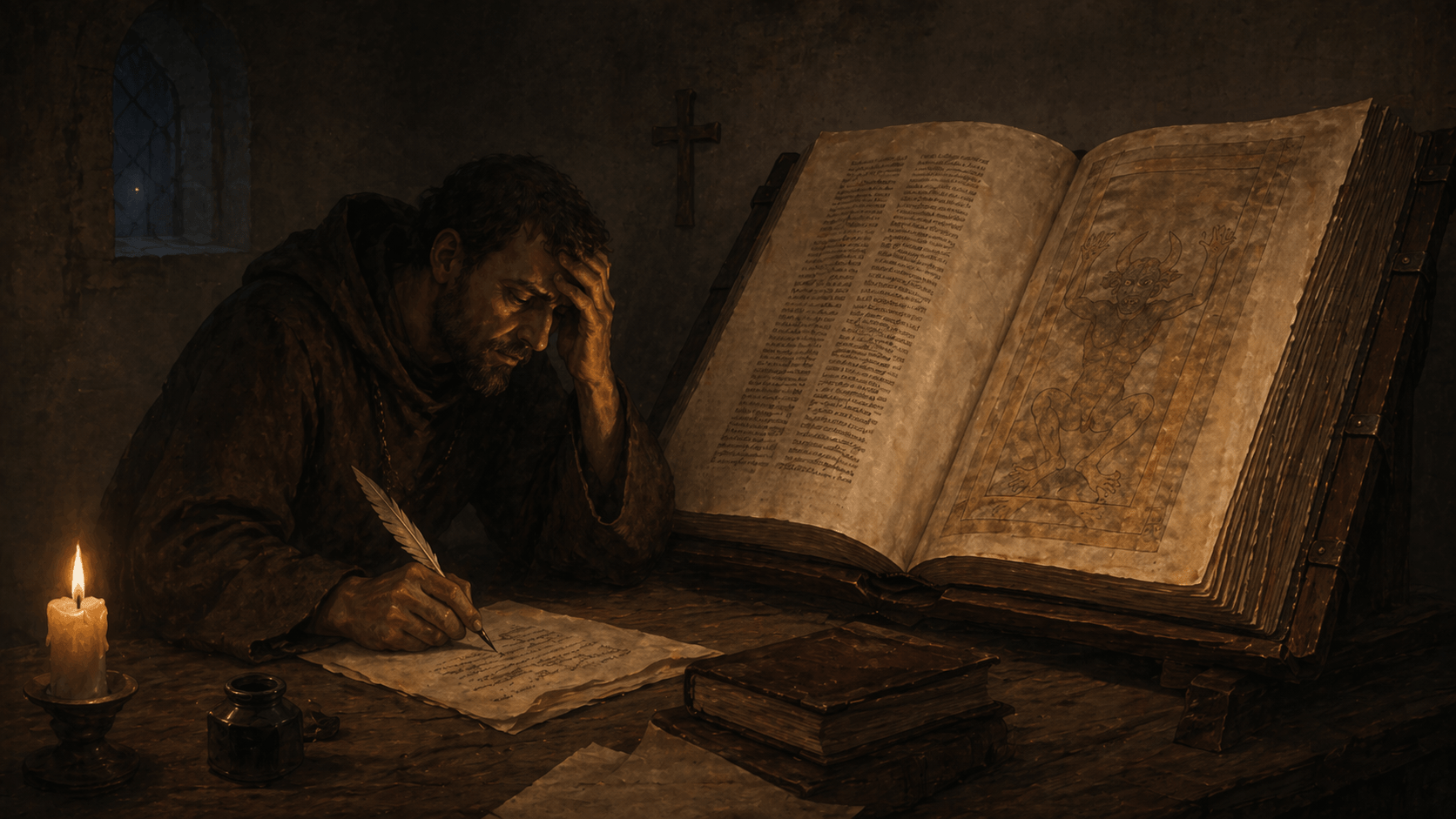
The most famous image in Codex Gigas is not hidden.
It does not appear as a small symbol in the margin. It is not tucked away as a minor decoration. It occupies a full page, facing the reader with startling directness.
This is important.
The Devil in Codex Gigas is frightening not only because of what it depicts, but because of how it appears. The figure is placed within the ordered space of the manuscript. It is framed by the page. It is visible, named, contained. Instead of bursting beyond the book, it remains inside it.
That ambiguity gives the image its power.
Is the manuscript glorifying darkness?
Or is it holding darkness still long enough for human beings to look at it?
One possible interpretation is that the Devil image functions less as a celebration of evil and more as an act of containment. The terrifying figure is given a place, a boundary, and a form. In that sense, the page does what many old stories do: it makes invisible fear visible.
Temptation becomes a figure.
Guilt becomes a face.
Pride becomes a posture.
Dread becomes something the eye can meet.
Many cultures preserve frightening images for this reason. A monster in a story is not always there only to scare us. Sometimes it gives shape to an inner conflict that would otherwise remain formless. What cannot easily be confessed becomes a symbol. What cannot easily be understood becomes a tale.
The original article makes a similar point: the Devil’s image can be read not simply as sensational horror, but as a symbol of temptation, guilt, pride, and dread. It invites readers to move beyond fear and ask what darkness means when it is framed by story.
This is why Codex Gigas fits naturally into a wisdom-focused reading.
The book does not merely say, “Look at evil.”
It asks a quieter question:
What happens when human beings keep looking at what frightens them?
There is a strange intimacy in fear. We often return to what unsettles us. We read about it, search for it, imagine it, and tell it again. Part of us wants to understand it. Another part may be drawn to the very unease it creates. Fear can become an object of fascination.
The Devil’s page, then, is not only about the Devil.
It is also about the gaze of the reader.
Perhaps the shadow grows not only because darkness exists, but because generation after generation keeps opening the same page and staring into it.
A proverb-like line that fits this story is:
“When fear writes the contract, wisdom pays the price.”
This is not presented as an ancient proverb, but as a reflective saying inspired by the legend. It captures the emotional center of the tale: when a person is cornered by terror, the bargain that seems to promise rescue may quietly demand the most precious part of the self.
A fitting affirmation is:
“I do not have to surrender my judgment to my fear.”
This affirmation does not deny fear. It does not pretend that darkness, pressure, or uncertainty are easy to face. Instead, it offers a steadier posture. Fear may speak, but it does not have to decide. Panic may knock, but it does not have to be invited in as master.
The legend of Codex Gigas becomes more meaningful when read through this lens. The monk’s tragedy is not simply that he was afraid. Fear itself is human. His tragedy is that he allowed fear to become his only counselor.
The wisdom of the story lies in that distinction.
Fear can warn us.
Fear can awaken us.
Fear can reveal what matters.
But fear becomes dangerous when it begins to negotiate on behalf of the soul.

Stories about dangerous books appear in many cultures.
A forbidden manuscript, a cursed text, a secret scripture, a book that should not be opened — these motifs survive because books are never only objects. They are thresholds. They promise access to knowledge, memory, power, truth, and sometimes danger.
In medieval Europe, manuscripts carried a weight that modern readers can easily underestimate. Before printing, books were made slowly and physically. Parchment had to be prepared. Ink had to be mixed. Text had to be copied by hand. A large manuscript was not simply a source of information. It was discipline made visible.
Codex Gigas intensifies that meaning because of its scale. The manuscript is famous not only as a religious object, but also as a monumental gathering of knowledge. It contains biblical material along with historical, medical, calendrical, and other learned texts.
That breadth matters.
The Devil’s Bible is frightening not because knowledge is evil, but because the legend asks what happens when knowledge is pursued without humility. A book that gathers the world may be an act of devotion. It may also become an image of ambition. The difference lies not only in the contents of the book, but in the heart of the person seeking to possess or produce it.
Many old stories warn against crossing boundaries too quickly.
Do not enter the forbidden room.
Do not open the sealed box.
Do not speak the hidden name carelessly.
Do not seek power before you have learned restraint.
These warnings are not always anti-knowledge. Often, they are pro-wisdom. They do not say, “Do not learn.” They say, “Do not confuse learning with mastery. Do not confuse access with readiness. Do not confuse curiosity with reverence.”
The Codex Gigas legend belongs to that family of stories.
Its medieval Christian imagery gives it a particular form, but its deeper concern is universal. Human beings long to gather order from chaos. We want to name, collect, classify, preserve, and understand. That desire is noble. Civilization depends on it.
But the same desire can become restless.
Curiosity can become obsession.
Ambition can become pride.
Learning can become control.
A sacred task can become a desperate bargain.
From a cultural perspective, the Devil in the story is not only a religious figure. He is also the symbol of a boundary crossed under pressure. He appears where patience fails, where shame tightens, where the desire to escape consequence becomes stronger than the willingness to face truth.
This is why the story still feels modern.
The setting is medieval.
The fear is timeless.
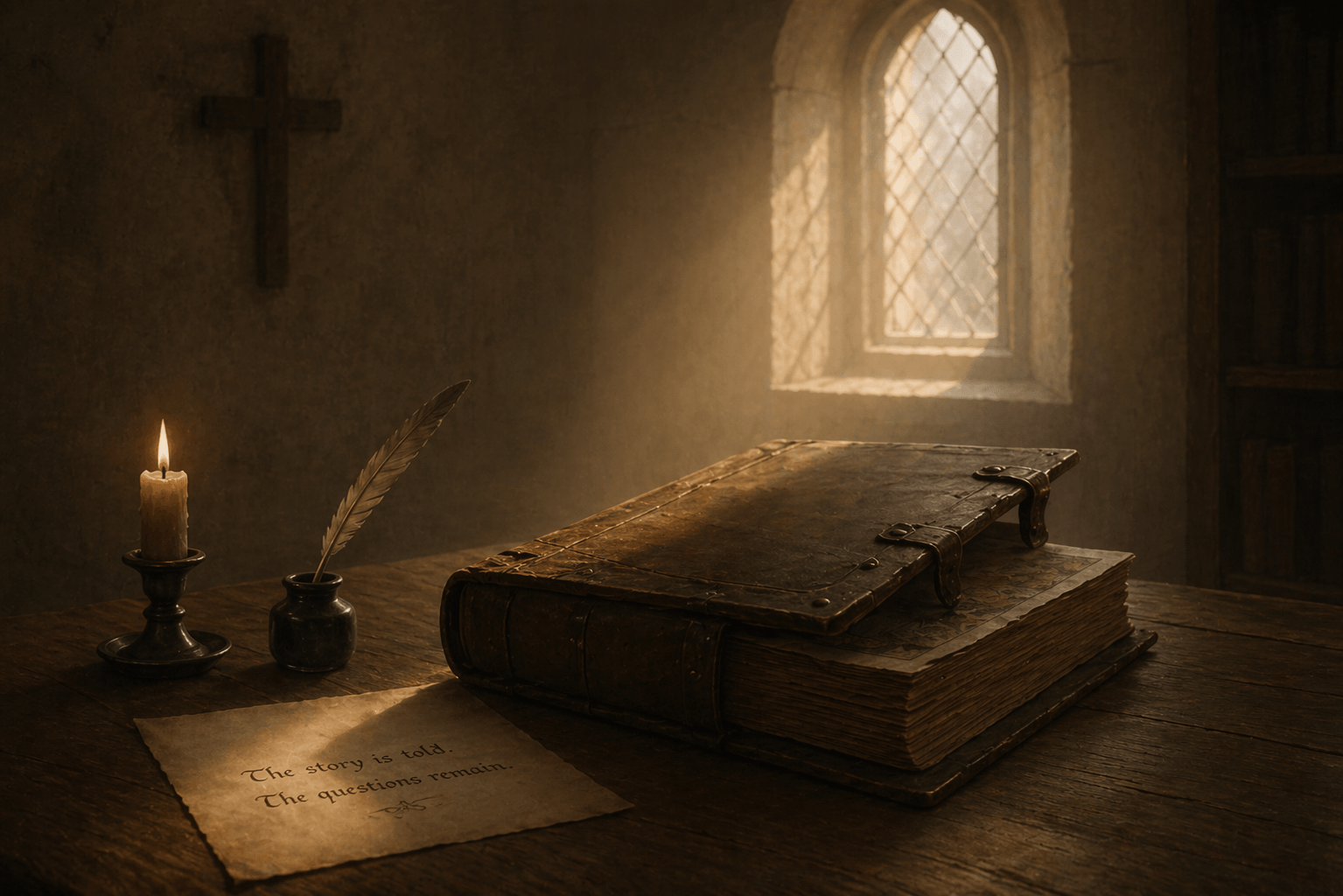
Human beings are drawn to frightening stories because they give shape to anxiety.
A vague fear is difficult to face. But a story gives fear a setting, a character, a sequence, and an image. The Codex Gigas legend gives us all of these: a monastery, a condemned monk, an impossible deadline, a terrible bargain, and a Devil on the page.
Once fear becomes a story, we can stand at a distance from it.
We can ask what it means.
We can compare it to our own lives.
We can feel fear without being consumed by it.
This is one reason mysterious folklore matters. It turns private dread into shared reflection.
But Codex Gigas also reveals another psychological truth: we often return to what unsettles us.
People do not simply glance at the Devil’s page and move on. They search for it. They talk about it. They reproduce it in articles, documentaries, images, and online discussions. The same thing happens with many frightening stories. We say they disturb us, yet we keep opening them again.
Why?
Perhaps because looking gives us the illusion of control. If we can stare at what frightens us, perhaps it will become less powerful. If we can learn its history, name its symbols, and explain its legend, perhaps the shadow will shrink.
Sometimes that happens.
Awareness can reduce fear.
Language can calm anxiety.
Context can restore proportion.
But sometimes repeated attention deepens the impression. What we keep feeding with imagination can grow larger in the mind. A frightening symbol may become more powerful not because it changes, but because we return to it with expectation.
This is one of the quiet insights of the Codex Gigas story. The Devil’s page may be frightening, but the human gaze is part of the mystery. What we look at again and again begins to shape us.
The same pattern appears in modern life.
We reread messages that hurt us.
We revisit memories that shame us.
We search for signs of danger even after the danger has passed.
We return to worries, not because they help us, but because fear has made them feel important.
The legend of Codex Gigas may therefore be read as a story about attention.
Where we place our attention, we place a portion of our life.
And when we give too much attention to fear, fear begins to look like truth.
The idea of selling one’s soul appears in many stories because it expresses a deep human anxiety: the fear that we might gain relief and lose ourselves.
In the Codex Gigas legend, the monk gains the completed manuscript. He gains survival, at least for the moment. He gains the appearance of success. The impossible task is finished. The monastery receives a wonder.
But the cost is hidden.
That is what makes the bargain powerful.
In real life, the most dangerous bargains rarely announce themselves as evil. They often appear practical, urgent, even necessary.
Just this once.
Only until the crisis passes.
I have no choice.
I can repair the damage later.
Such thoughts are not medieval. They are modern. They appear whenever people are exhausted, ashamed, pressured, or afraid of losing everything. The Devil in the legend may be read as the voice that appears when fear insists there is no time left for wisdom.
This is why the story should not be reduced to a simple warning against ambition or curiosity.
Ambition can build.
Curiosity can illuminate.
Knowledge can heal.
Discipline can create beauty.
The danger is not the desire to make something great. The danger is the willingness to abandon judgment in order to escape fear.
The monk’s bargain is therefore a mirror.
It reflects the moment when human beings confuse rescue with surrender. It reflects the desire to bypass the slow work of truth, repentance, patience, and repair. It reflects the temptation to solve an inner crisis through an outer achievement.
A magnificent book cannot erase an unresolved soul.
That may be the quiet philosophical meaning of the tale.
The question is not only, “What did the monk create?”
It is also, “What did he lose in the act of creating it?”
In modern life, the same question remains.
What do we gain when we rush?
What do we lose when we act from panic?
What part of ourselves do we trade when we let fear write the terms?
The story does not give an easy answer. It gives an image: a vast book, a dark page, and a bargain that may have saved a life while endangering the self.
The lesson of Codex Gigas is not that we should avoid mystery.
It is not that we should fear old books, strange images, or difficult knowledge.
A wiser reading is this: when fear and shame join together, they can make dangerous choices feel reasonable.
In modern life, the Devil’s Bible may be understood as a story about pressure. Most people will never face a medieval punishment or write a manuscript by candlelight. But many people know the feeling of being trapped by an impossible demand.
A deadline becomes unbearable.
A mistake feels unforgivable.
A private fear grows larger in silence.
A person begins to believe that only a drastic solution can save them.
In those moments, the greatest danger may not be the fear itself. The danger may be the belief that fear must be obeyed immediately.
This story may remind us that a slower answer is not always a weaker answer.
Pause before the bargain.
Name the fear.
Ask what the fear is demanding.
Ask what it is asking you to give up.
Ask whether relief and wisdom are pointing in the same direction.
Sometimes they are.
But sometimes immediate relief asks for a price that inner wisdom would never agree to pay.
The monk’s story may also remind us that attention is a form of nourishment. What we keep staring at can grow stronger in the imagination. This does not mean we should deny fear or pretend not to be disturbed. It means we should look with awareness rather than compulsion.
To face darkness wisely is not to feed it endlessly.
It is to see it clearly, name it carefully, and refuse to let it define the whole room.
The hidden wisdom of Codex Gigas may be this:
Courage is not the absence of dread.
Courage is the refusal to let dread decide what kind of person we become.
Codex Gigas remains powerful because it refuses to become only one thing.
It is a manuscript.
It is a historical object.
It is a legend.
It is a symbol.
It is a mirror.
For historians, it is an extraordinary medieval book. For lovers of folklore, it is the Devil’s Bible. For reflective readers, it is a story about fear, temptation, knowledge, and the human tendency to give power to what unsettles us.
Perhaps the most haunting question is not whether the Devil touched the page.
Perhaps the deeper question is whether human beings, by returning again and again to what frightens them, sometimes help write the shadow themselves.
Old stories survive because they guard a form of wisdom inside their strangeness. The legend of Codex Gigas suggests that fear becomes most dangerous when it joins hands with shame, impatience, and unchecked desire. It also suggests that awareness can loosen fear’s grip.
We do not have to deny the dark page.
But we do not have to live inside it.
Proverb: “He who fights with monsters should be careful lest he become one.”
Affirmation: “I do not have to fear what I can face with awareness.”
Codex Gigas belongs to a wider tradition of mysterious folklore about forbidden books, dangerous knowledge, and the spiritual risks of pride. In medieval culture, manuscripts were not casual objects; they represented labor, devotion, memory, and authority. The legend of the Devil’s Bible uses that cultural weight to explore a timeless anxiety: what happens when curiosity, ambition, and desperation outrun humility?
The story is not anti-knowledge. Rather, it suggests that knowledge without patience and reverence can become a mirror of human fear.
The life lesson is not to avoid mystery or difficult knowledge. It is to avoid letting fear become the author of our choices.
This story may remind us to pause before making decisions from panic, to ask what our fear is demanding, and to notice whether immediate relief is asking us to abandon patience, honesty, or inner steadiness.
Fear may speak first, but wisdom should have the final word.
What fear in your own life might be asking for a desperate bargain, when what you truly need is patience, honesty, and a steadier kind of courage?