

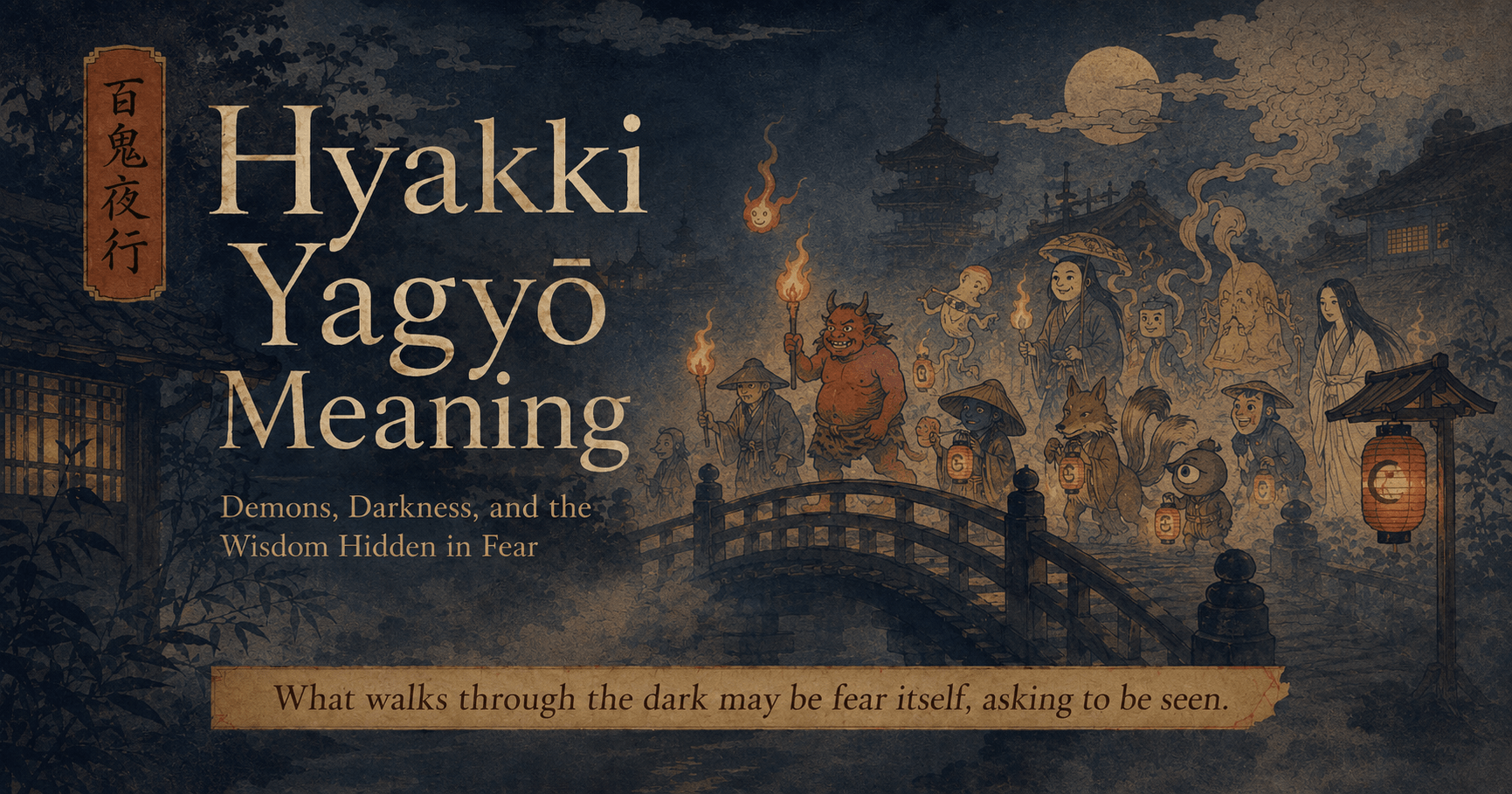
※This site uses affiliate advertising.Hyakki Yagyō is not only a frightening legend of demons walking through the night. It is also a mirror of how pe...
 Wonderful Proverbs Journey
※This site uses affiliate advertising.
A collection of mysterious, eerie, and thought-provoking stories explored through wisdom, reflection, and cultural insight.
Not every mysterious story is only about fear. Some stories stay with us because they reveal something deeper about human nature, culture, and the quiet truths we carry through life. In this category, we explore strange tales, eerie folklore, and puzzling narratives not simply as entertainment, but as windows into meaning, reflection, and insight.

Mystery often carries meaning beneath the surface. A strange encounter, an unsettling legend, or an unexplained event can reflect fear, hope, memory, morality, or the values of a community. By looking beyond the shock or suspense, we can discover why these stories continue to be told across generations and cultures.

Here, mysterious and even frightening stories are approached through wisdom rather than sensation. We consider the emotional truth behind fear, the cultural background behind folklore, and the reflective questions that a strange story leaves in the mind. The goal is not to preach, but to invite thought.

Many of these stories connect naturally with the wisdom found in proverbs and reflective words. A mysterious tale may remind us of an old saying, reveal a lesson about human behavior, or offer a new way to understand uncertainty, courage, silence, desire, or destiny. In that sense, strange stories are not separate from wisdom—they are one of its oldest forms.

Whether the story comes from folklore, literature, urban legend, or cultural tradition, we look for the hidden wisdom within it. Some stories illuminate the fears people share. Others reveal how different cultures give shape and meaning to the unknown. Together, they help us reflect on life with a little more depth, curiosity, and imagination.

If you are drawn to mystery, folklore, and stories that linger in the mind, this category is for you. Read not only for suspense, but for meaning. Read not only to wonder, but to reflect.
Discover selected stories that blend mystery, folklore, fear, and reflection. These featured tales invite you to look beyond the strange and uncover the hidden wisdom within each narrative.
In the shadowed streets of ancient Kyoto, fear was once imagined as a procession. Hyakki Yagyō, the mysterious Night Parade of One Hundred Demons, is more than a tale of yokai moving through the dark—it is a haunting reflection of disease, memory, abandoned things, and the human need to give shape to the unknown.
Shinto is one of Japan’s oldest spiritual traditions, yet its deepest mystery lies in how quietly it lives within everyday life. Through kami, purification, shrines, festivals, and reverence for nature, this ancient faith reveals a worldview where the sacred is not distant, but woven into places, seasons, memories, and small acts of respect.
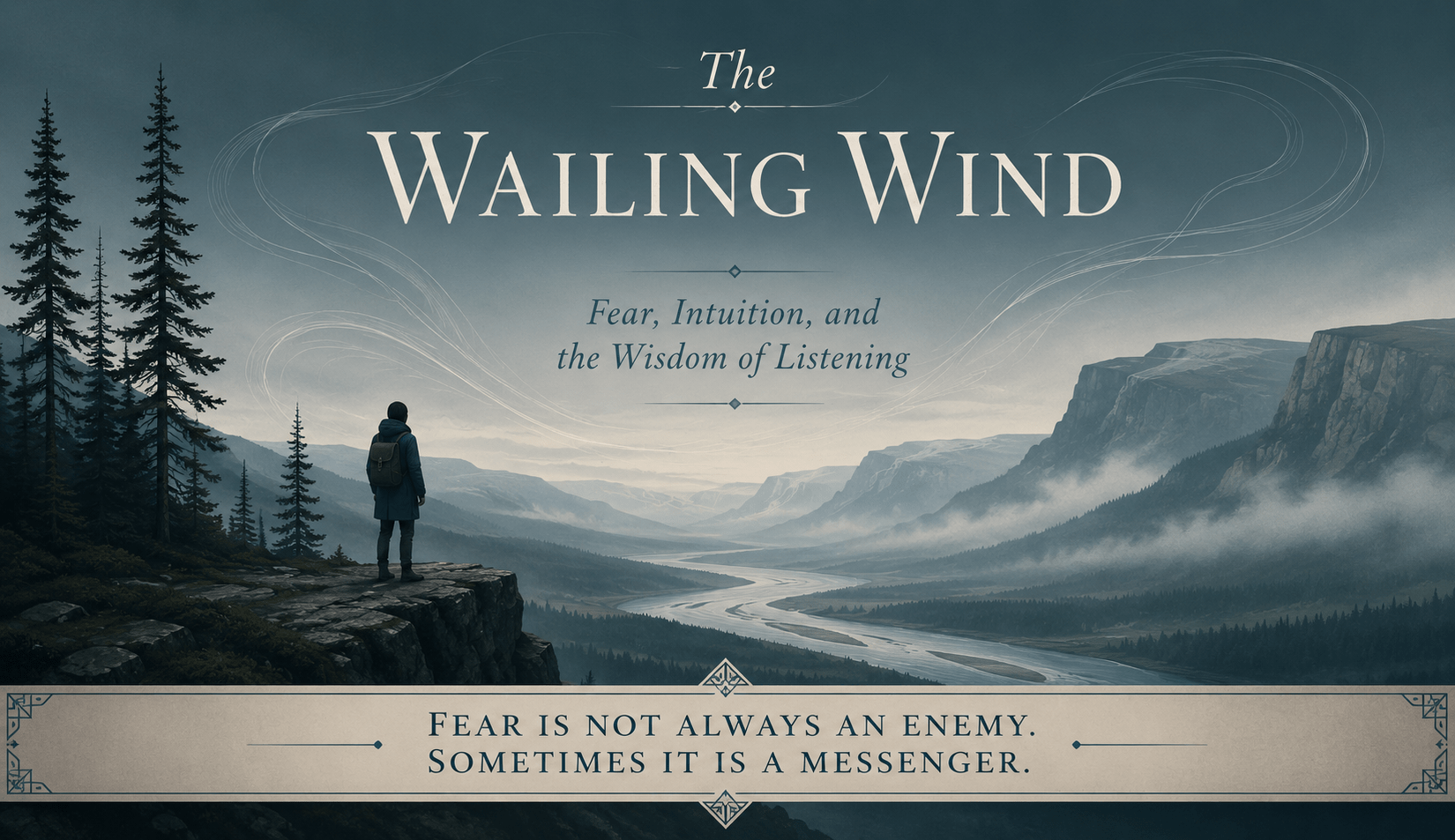
Beyond its breathtaking mountains and mist-filled valleys, Nahanni Valley carries a reputation shaped by disappearance, silence, and fear. This mysterious Canadian folklore is not only a tale of haunted wilderness, but also a story about human ambition, intuition, and the wisdom of listening when the unknown begins to speak.
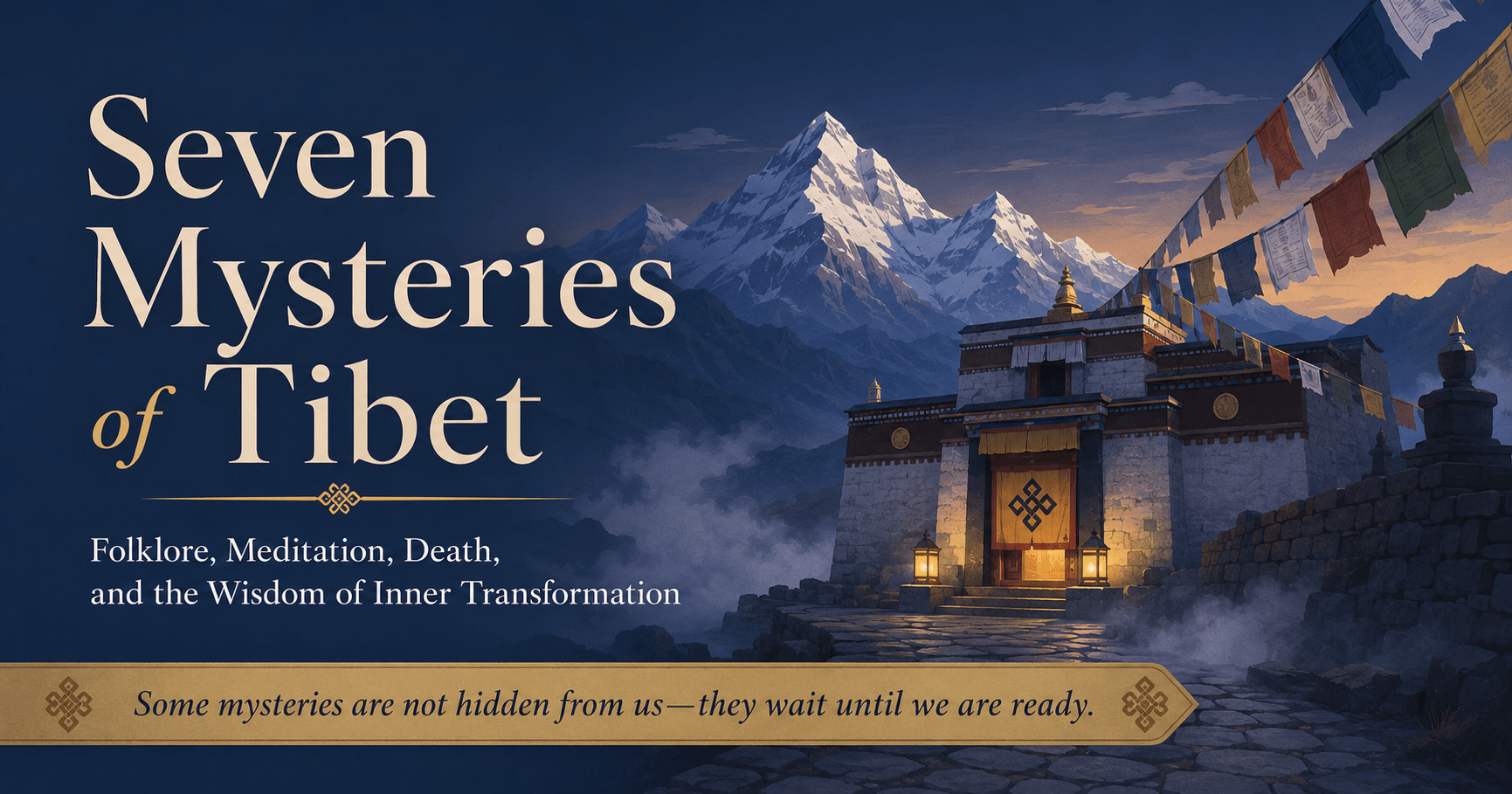
Tibet has long lived in the imagination of the world as a land of silence, snow, prayer, and hidden wisdom. From monks said to awaken an “inner fire” through meditation to sky burial, sacred texts for the dead, hidden valleys, and legends of bodies dissolving into light, Tibetan traditions invite us into a world where mystery is never separated from meaning. These stories are not merely strange or exotic tales. They reflect a culture shaped by altitude, impermanence, discipline, and the search for spiritual transformation. In exploring the seven mysteries of Tibet, we are not only looking at folklore—we are looking at how human beings face fear, death, uncertainty, and the quiet possibility of inner change.
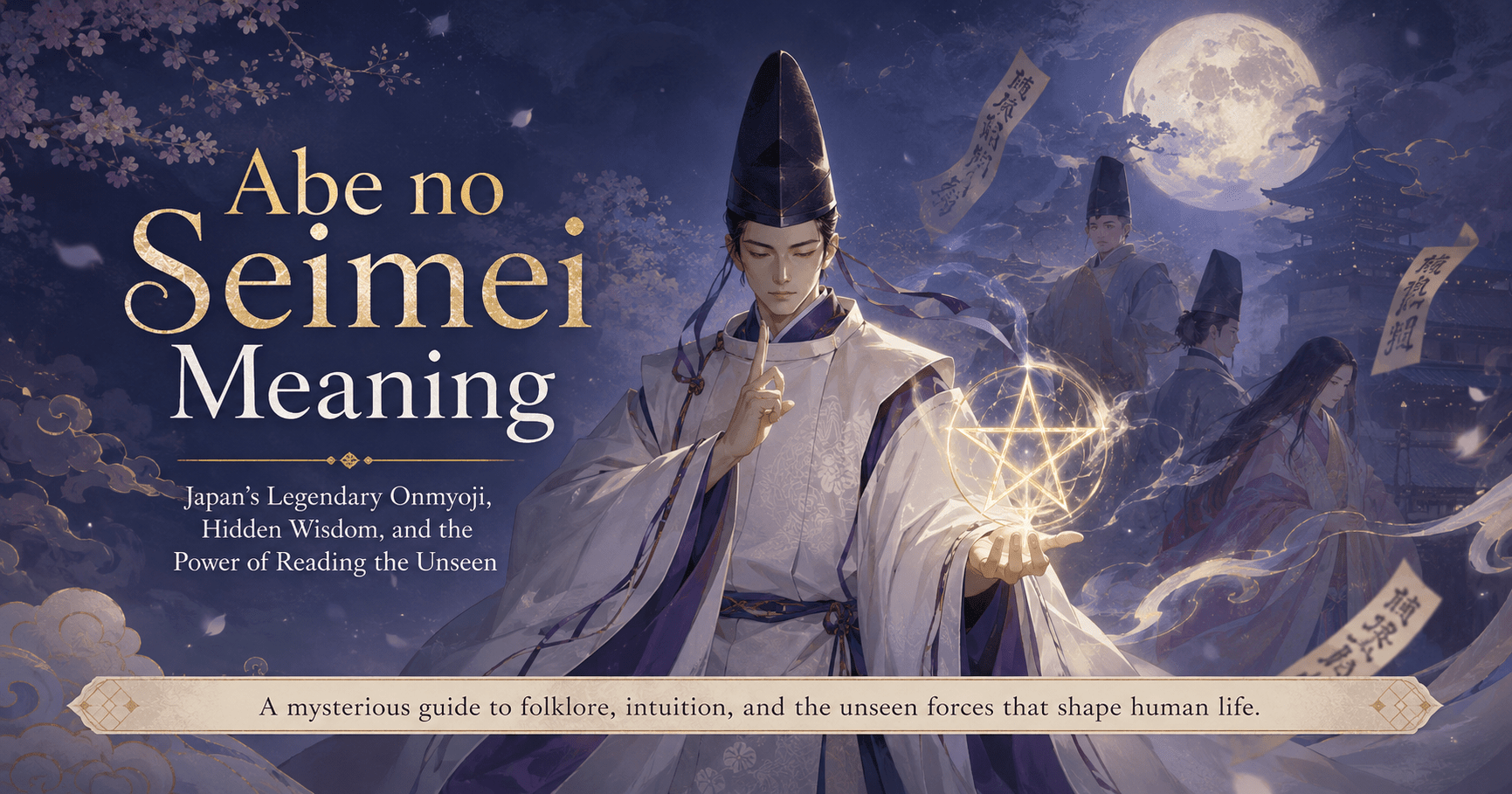
Abe no Seimei is one of the most mysterious and influential figures in Japanese folklore. Remembered as Japan’s legendary onmyoji, he was said to read hidden signs, understand invisible forces, and protect people through ritual knowledge. His story is not only about magic or supernatural power, but also about wisdom, intuition, balance, and the human ability to perceive what ordinary eyes often miss.
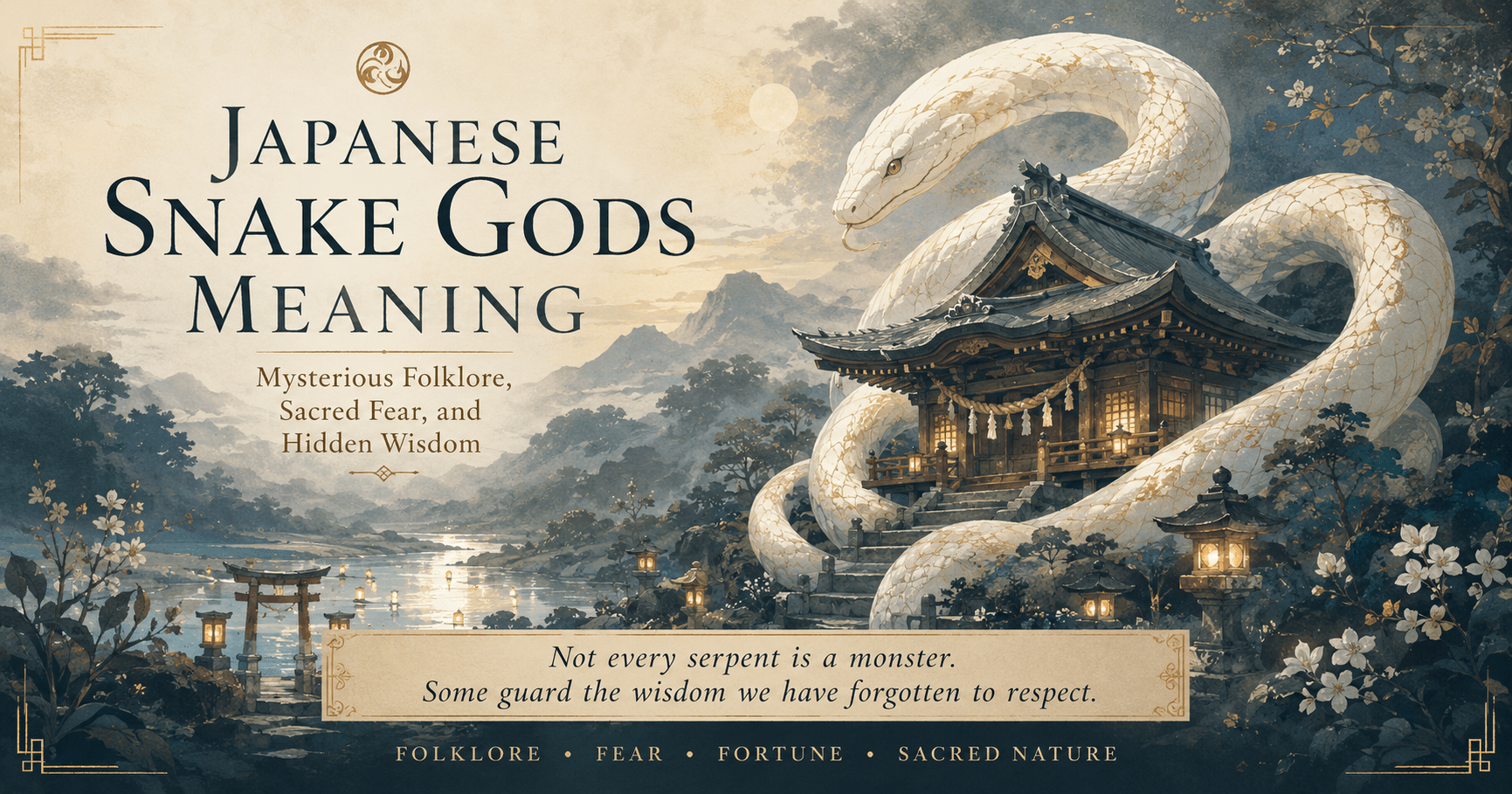
In Japanese folklore, the snake is never only a creature of fear. It may appear as a many-headed monster, a hidden mountain god, a bringer of fortune, or a sacred guardian of rivers, fields, and unseen boundaries. These serpent legends reveal a world where nature is both dangerous and divine, where fear becomes reverence, and where old stories preserve quiet wisdom about humility, gratitude, and the mysteries we cannot fully control.
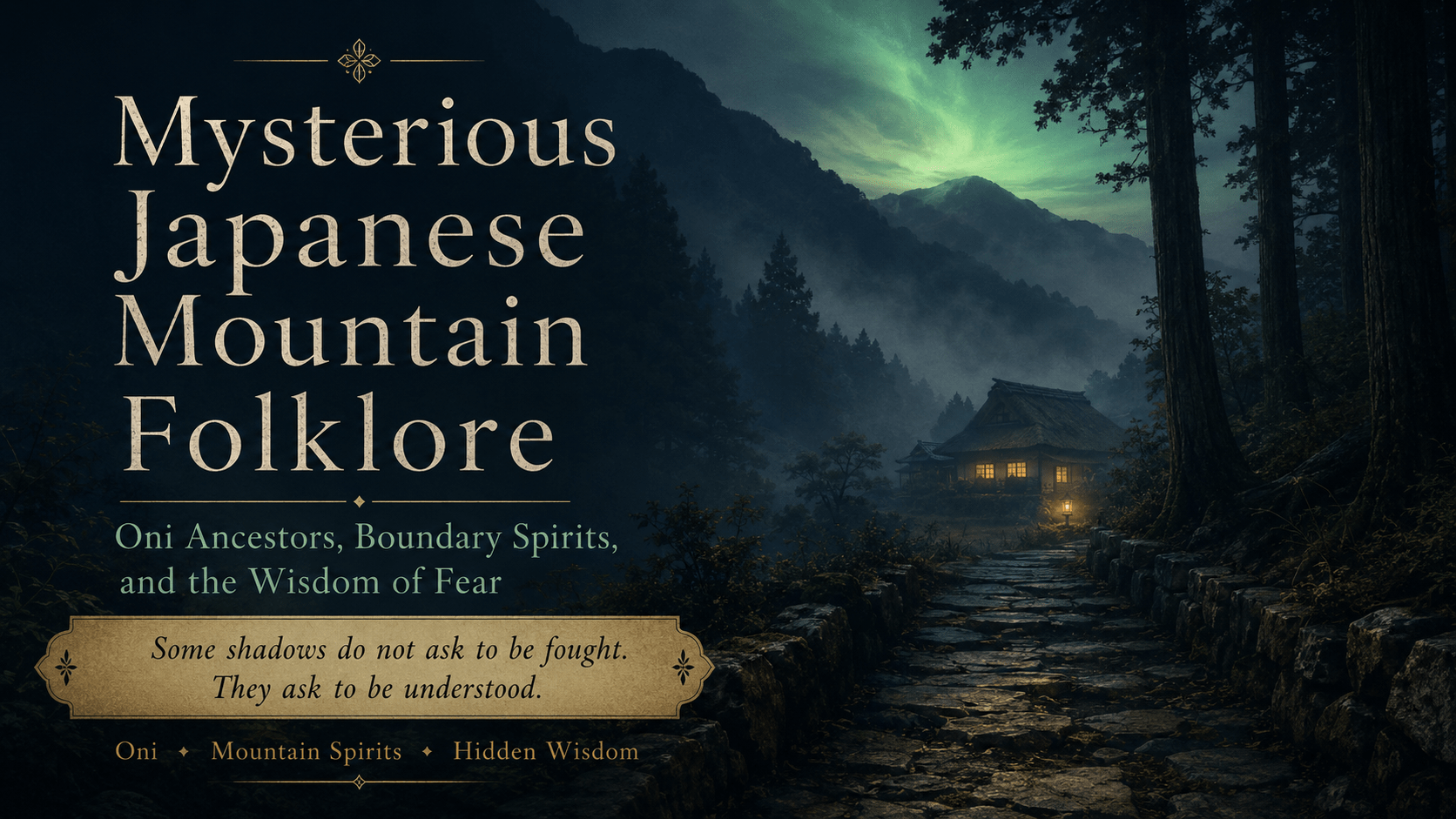
Japanese mountain folklore often begins where ordinary roads become uncertain—at twilight, near old forests, beside forgotten stone walls, or inside family stories passed down in quiet voices. Tales of oni ancestors, boundary-crossing animals, and strange heirlooms are not merely frightening legends. They reveal how people once understood the mountain as a living border between memory and mystery, fear and wisdom, the human world and something older. In these stories, the true lesson is not simply to fear the unknown, but to listen carefully to what fear may be trying to remember.
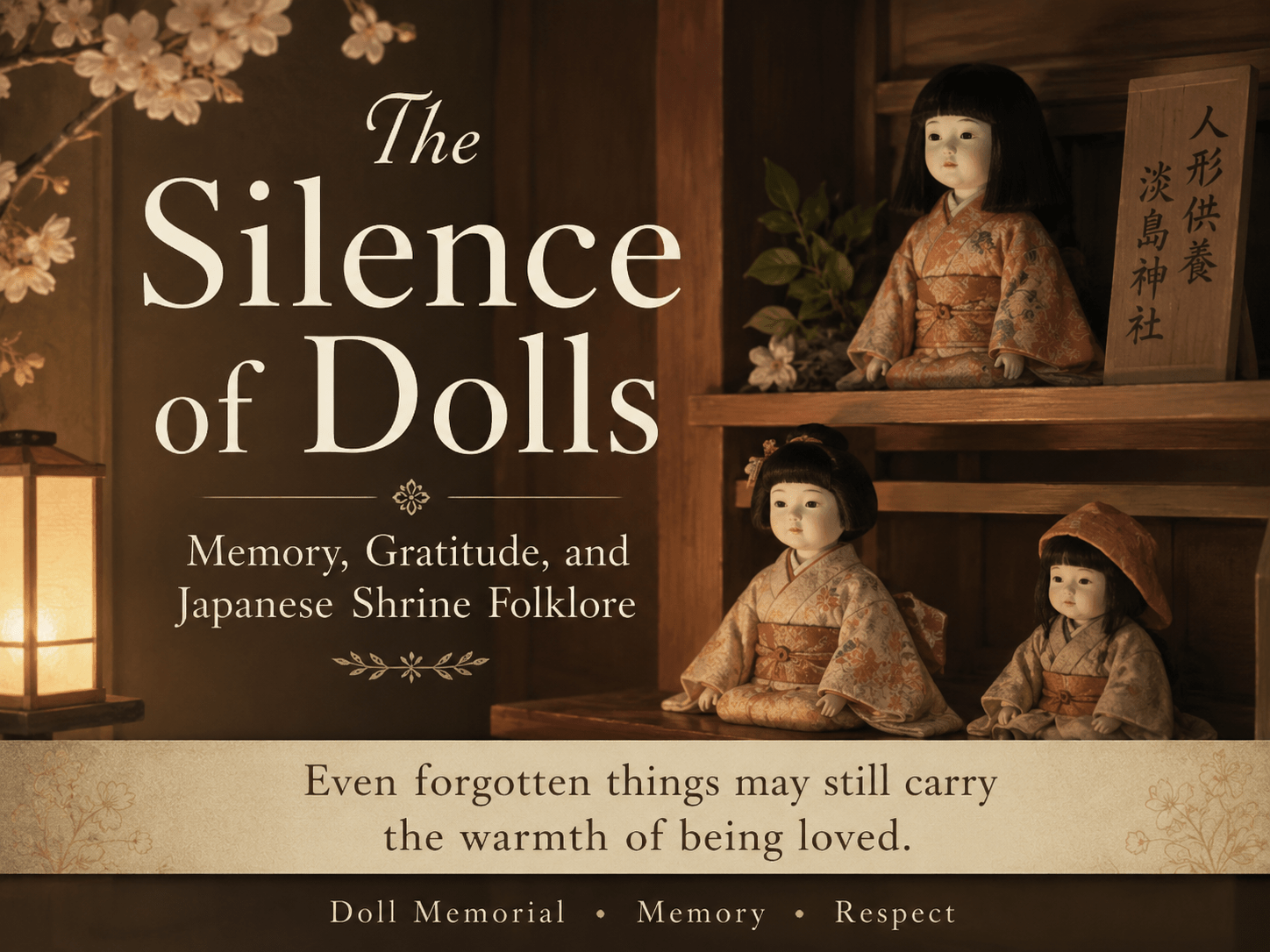
Japanese shrines are often seen as peaceful places of prayer, gratitude, and quiet beauty. Yet in folklore, some shrines are also remembered as places where sacred taboos, powerful wishes, old resentments, and unseen presences gather. These mysterious shrine legends are not merely stories meant to frighten us. They reveal a deeper cultural wisdom: sacred places should not be entered with arrogance, careless curiosity, or selfish desire, but with humility, respect, and a quiet awareness of what we carry in our hearts.
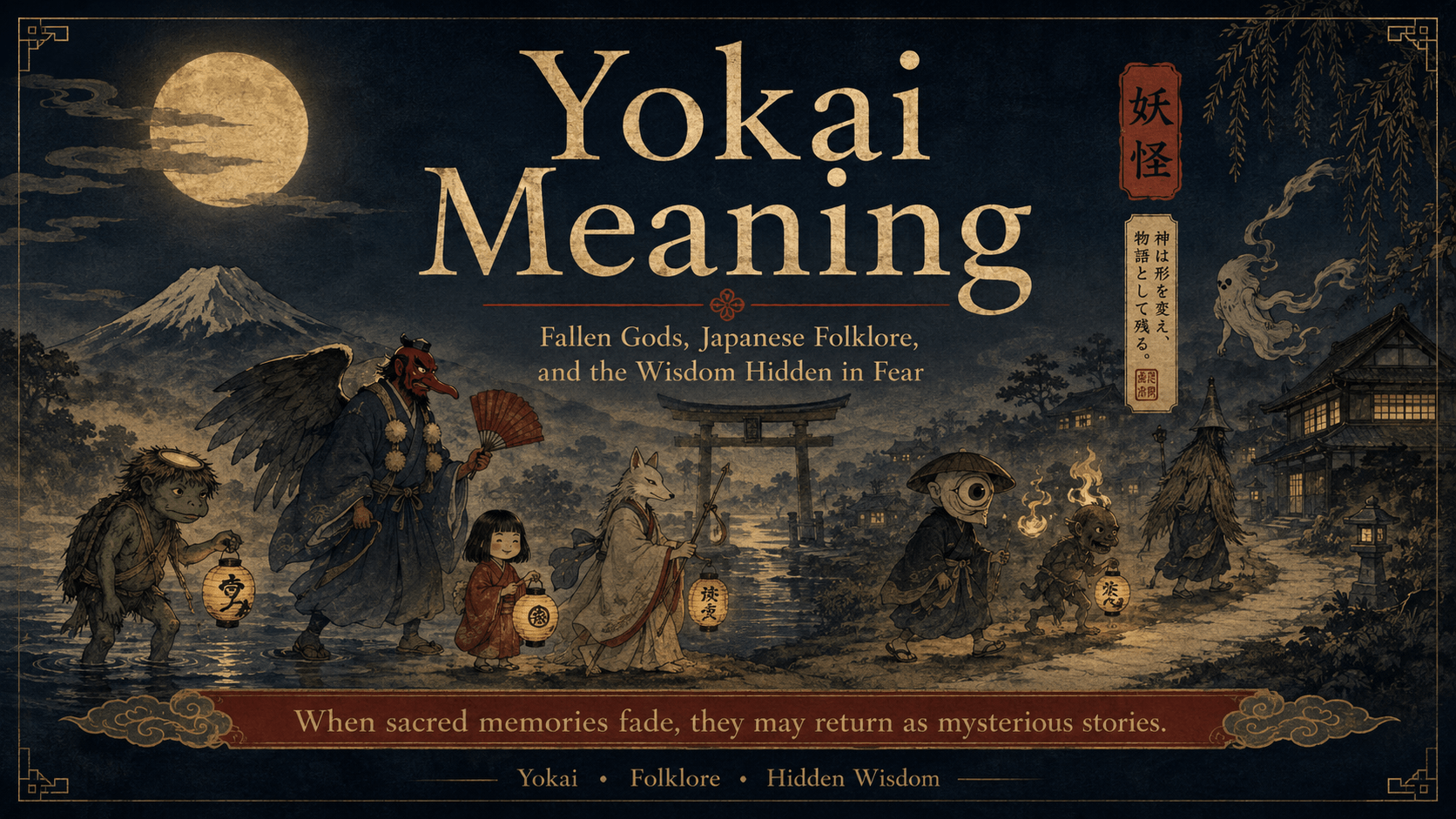
Yokai are more than strange monsters from Japanese folklore. They are shadows of forgotten beliefs, memories of sacred places, and echoes of gods whose names may have faded from worship but remained alive in stories. Through the folklorist Kunio Yanagita’s idea that some yokai can be understood as “fallen gods,” this article explores how fear, mystery, and old village traditions reveal a deeper wisdom about nature, memory, and the human need to give shape to the unknown.
Some books are feared not only for what they contain, but for what they awaken in the human heart. Across cultures, stories of forbidden scriptures, occult manuals, and dangerous sacred texts reveal our fascination with hidden knowledge, taboo, power, and the moral limits of curiosity. Rather than treating these books as simple objects of horror, this article explores them as symbols of fear, wisdom, and reflection—mysterious mirrors that ask why we seek what has been hidden, and whether we are truly prepared to understand it.
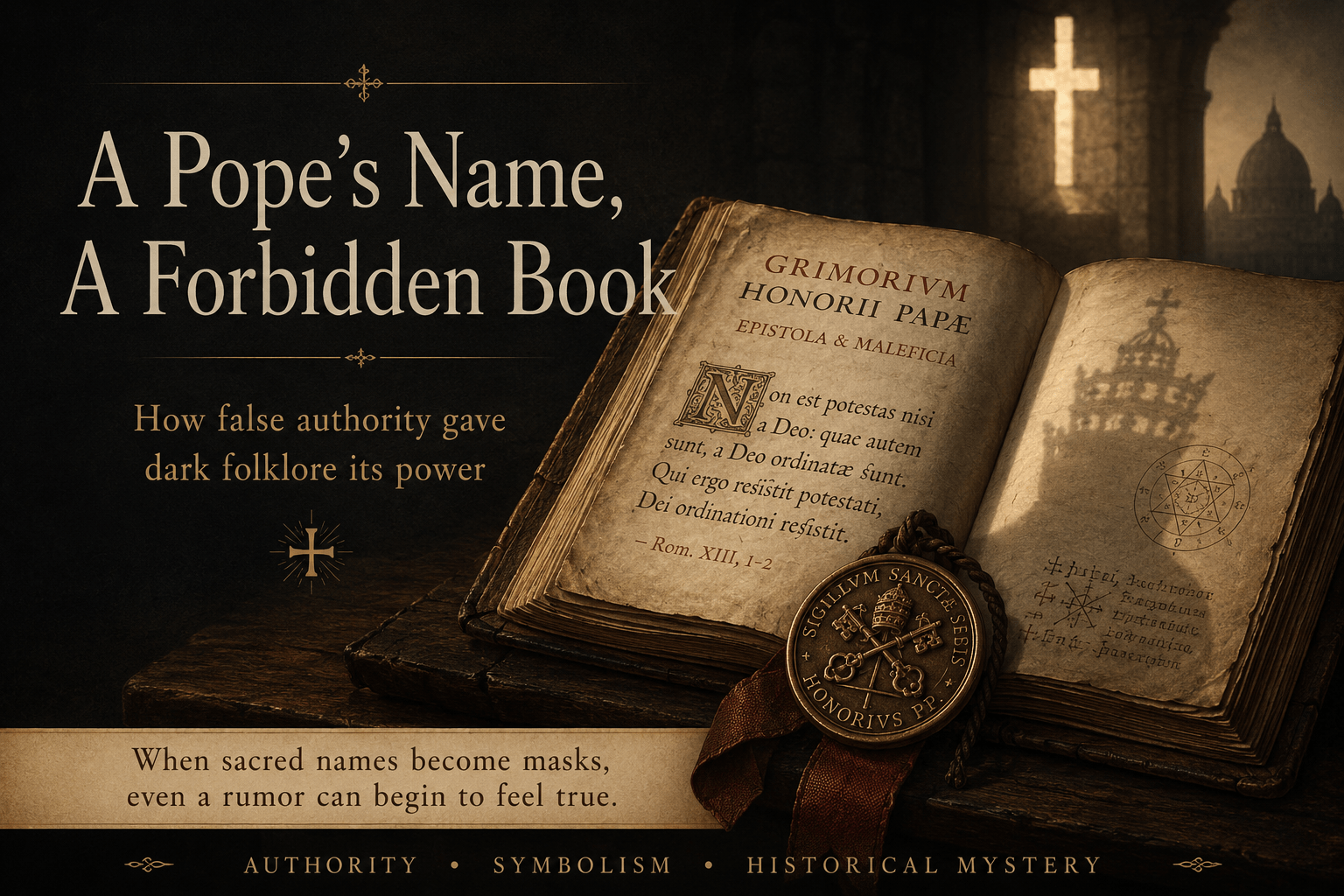
Behind every forbidden book legend lies a deeper human question: why are we so drawn to knowledge that has been hidden, condemned, or feared? The Grimoire of Pope Honorius is more than an occult curiosity attributed to a pope’s name. It is a mysterious tale about false authority, sacred language, forbidden desire, and the uneasy line between wisdom and power. By reading this grimoire as folklore rather than fact, we can explore not only the fear of dark rituals, but also the timeless lesson hidden inside our fascination with locked doors and secret books.
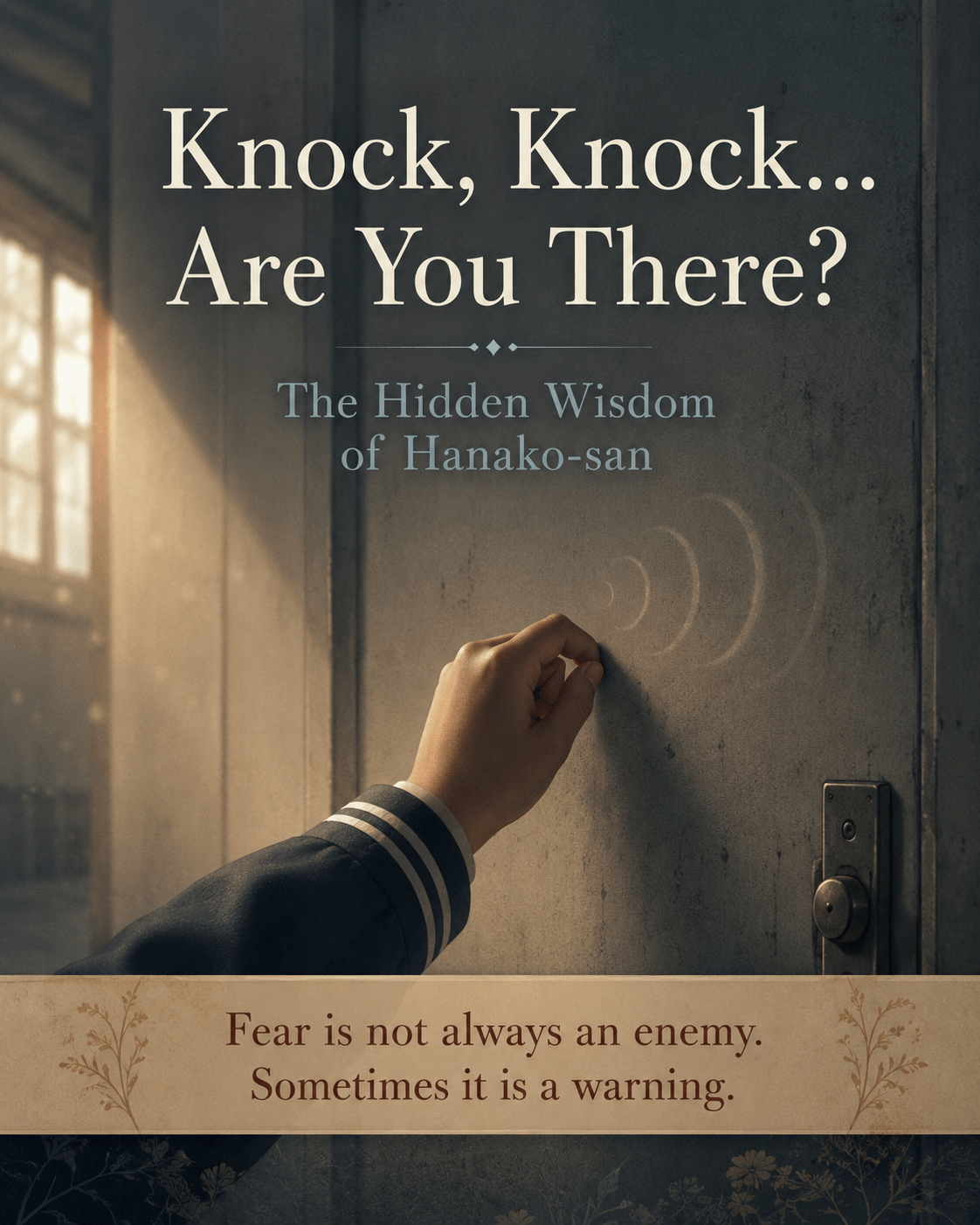
Behind the simple question, “Hanako-san, are you there?” lies one of Japan’s most haunting school legends. More than a frightening tale about a ghost in the third stall, Hanako-san reflects the uneasy power of curiosity, the silence of hidden fear, and the wisdom of pausing before opening a door we do not fully understand. This story invites us to look beyond the scare itself and ask what old urban legends reveal about childhood, courage, caution, and the mysterious spaces where ordinary life begins to feel unfamiliar.
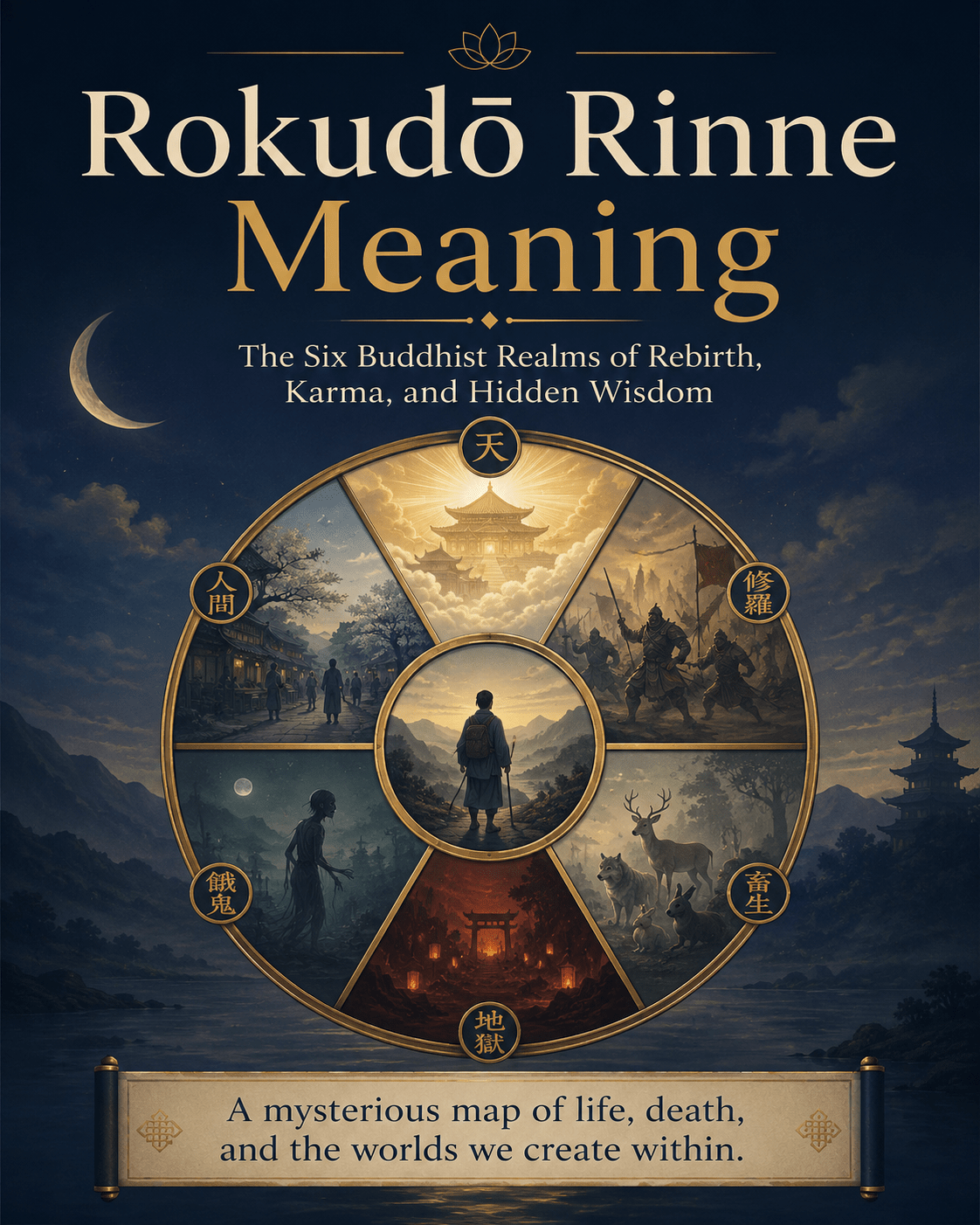
Rokudō Rinne, the Buddhist cycle of rebirth through the Six Realms, is more than a mysterious vision of the afterlife. It is a symbolic map of karma, desire, suffering, and awakening. From the heavenly realm to the human world, from the battlefield of Asura to the hunger of ghosts and the darkness of hell, each realm reflects not only where beings may be reborn, but also the inner worlds we create through our thoughts, actions, and attachments. By exploring Rokudō Rinne, we discover a deeper lesson: life is shaped by the seeds we plant, and wisdom begins when we learn to see those seeds clearly.
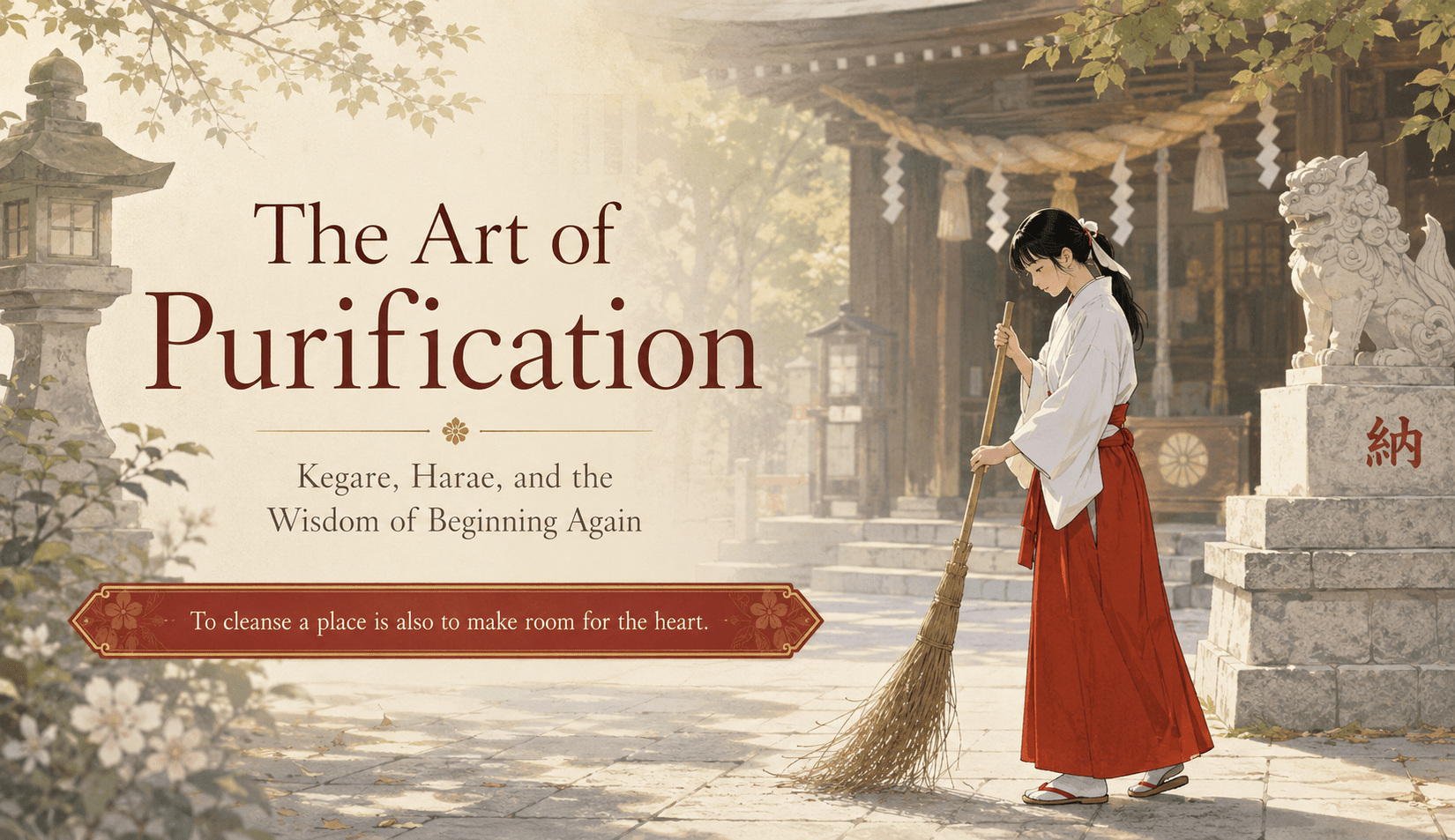
Shinto demonology is not a simple story of good spirits versus evil demons. In Japanese spiritual folklore, fear often appears where balance has been disturbed—between kami and humans, purity and impurity, life and death, the visible and invisible worlds. Through the ideas of kami, kegare, Yomi, and purification, this article explores how Shinto traditions turn shadows into wisdom, and how old myths can still teach us about grief, renewal, and returning to harmony.
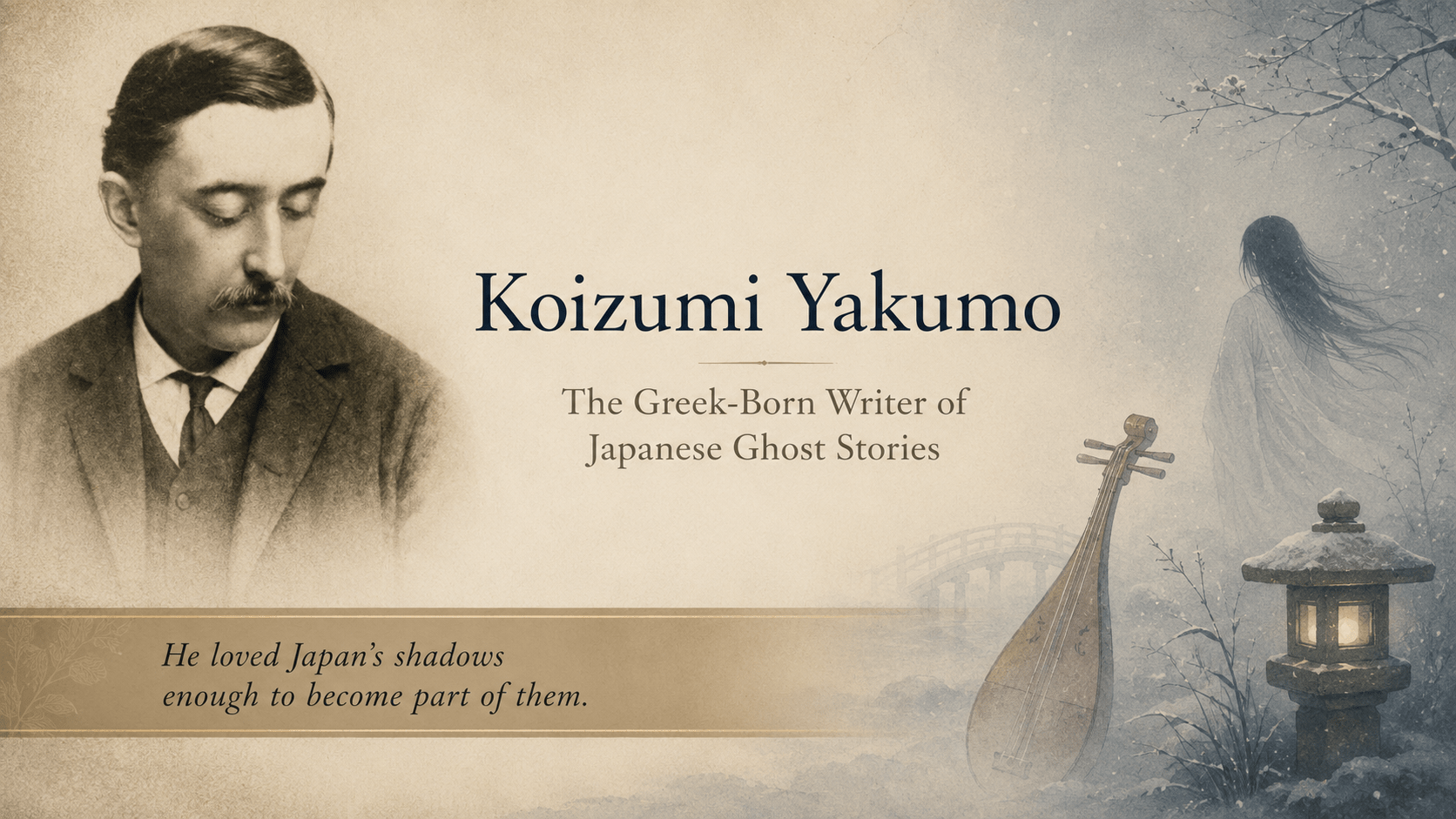
Koizumi Yakumo, formerly known as Lafcadio Hearn, was a Greek-born British writer who found a spiritual home in Japan. Fascinated by old legends, temple shadows, and stories passed down by voice, he introduced English-speaking readers to unforgettable Japanese ghost tales such as “Mimi-nashi Hōichi,” “Yuki-Onna,” “Rokurokubi,” and “Mujina.” For Hearn, these stories were not merely frightening. They revealed memory, silence, longing, identity, and the hidden wisdom of the unseen.
Japanese urban legends often begin in familiar places, such as train stations, forests, and quiet streets. Through stories like Kisaragi Station, Aokigahara, and Teke Teke, this article explores how modern folklore reveals fear, intuition, and hidden wisdom in everyday life.
This Japanese ghost story follows the lingering memory of Osaka through fear, fire, and silence. Beneath its haunted atmosphere lies a deeper reflection on loss, remembrance, and the wisdom that remains after tragedy.
A mysterious night in Tokyo becomes more than a frightening encounter. This story invites readers to look beneath the surface of fear and discover how silence, memory, and uncertainty can reveal quiet wisdom.
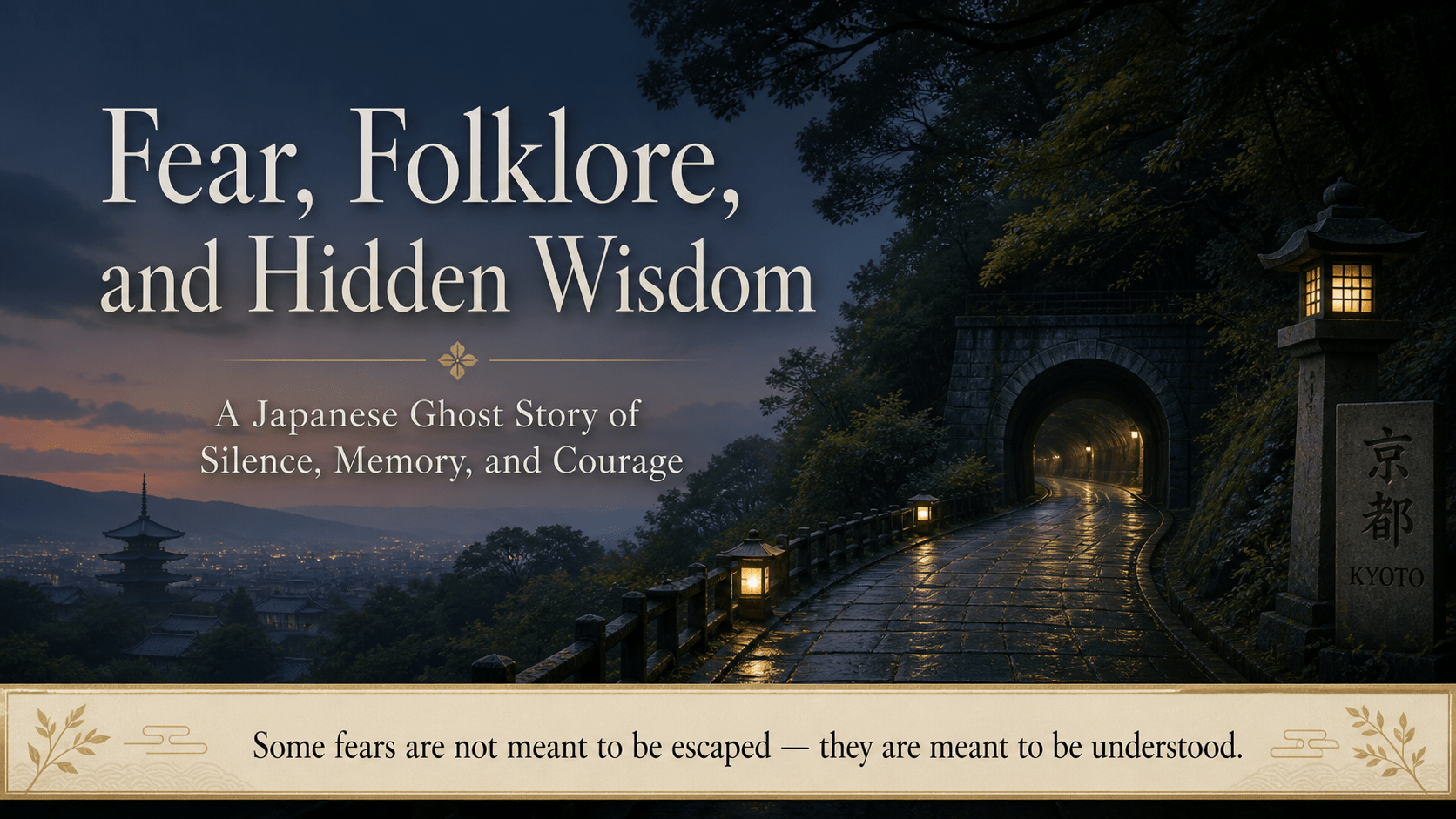
Kyoto’s old streets and sacred places carry stories that blur the line between memory and mystery. This ghost story explores how haunted places can reveal cultural fear, spiritual respect, and hidden wisdom.
The Witch House of Hiroshima draws readers into a tale of curiosity, fear, and the danger of crossing unseen boundaries. Through its mysterious setting, the story reflects on respect, caution, and the wisdom of knowing when not to enter.
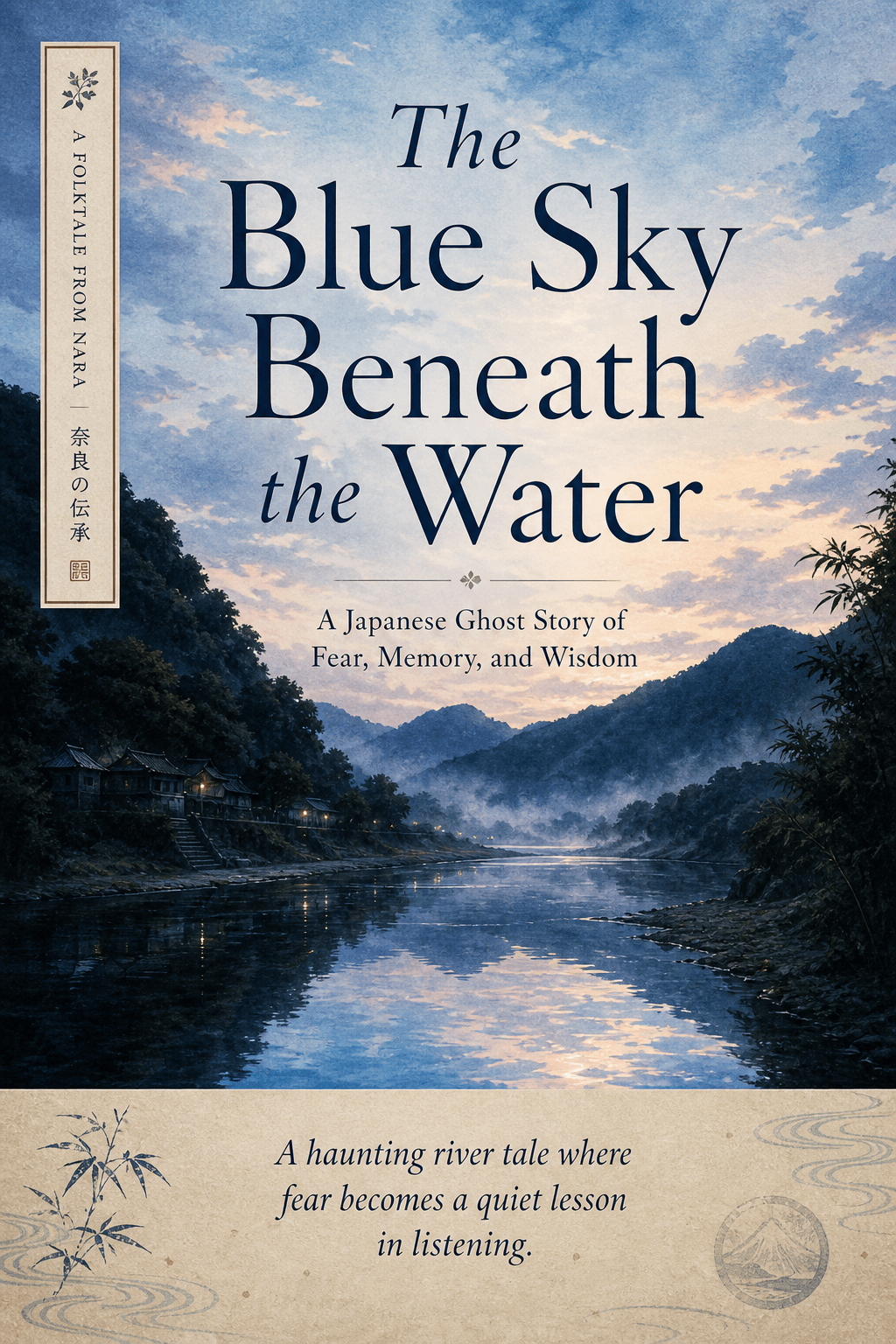
This mysterious ghost story from Nara follows the quiet power of the Yoshino River and the fear hidden within memory and place. Its deeper meaning points to respect for nature, sorrow, and the wisdom carried by old landscapes.
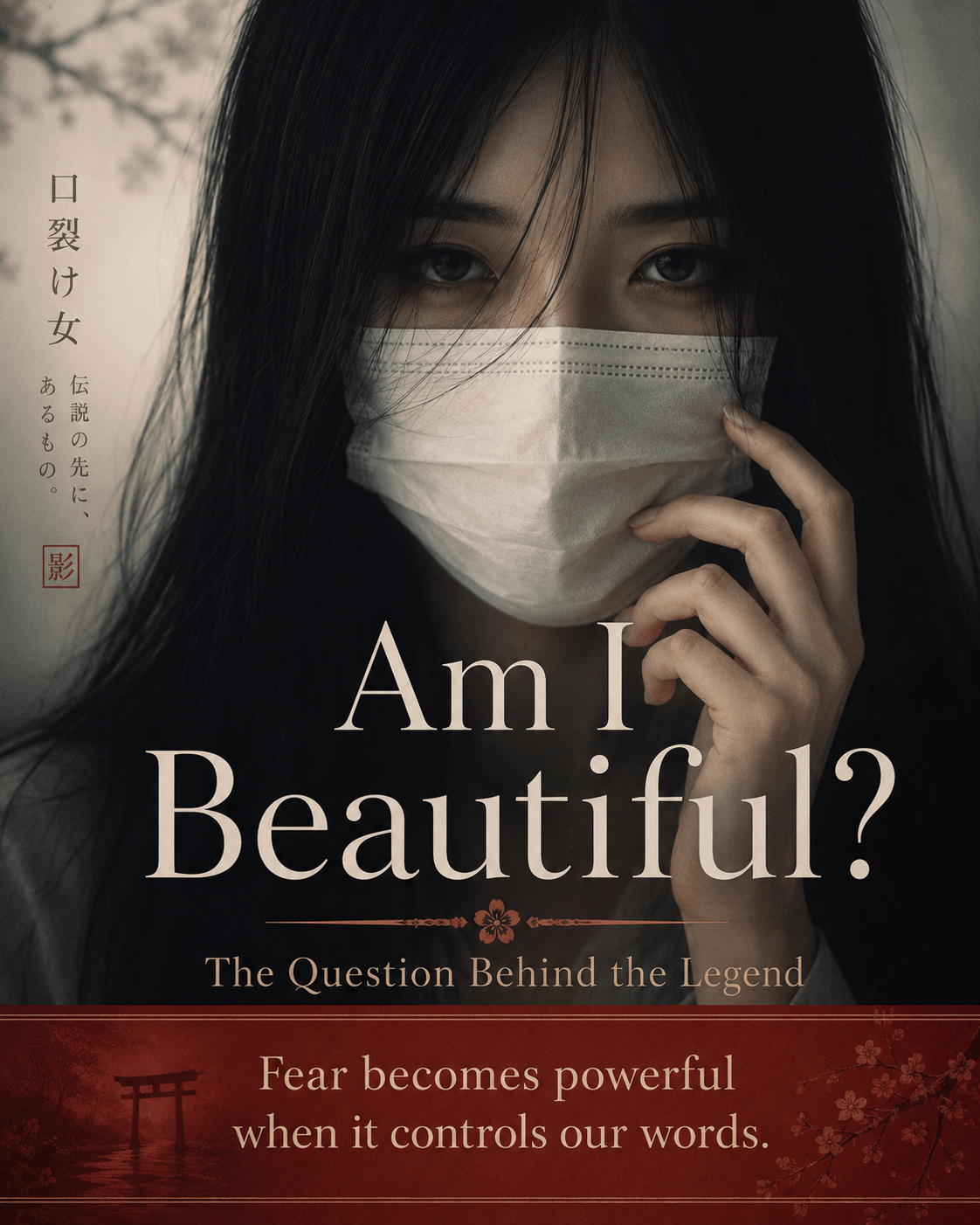
On a rain-soaked street in Japan, a woman in a white mask waits beneath the dim glow of a streetlamp. She does not scream. She does not chase. She simply steps closer and asks one quiet question:
“Am I beautiful?”
The legend of Kuchisake-onna, the Slit-Mouthed Woman, is one of Japan’s most haunting urban legends. Yet behind its eerie image lies more than fear. This mysterious folklore speaks to anxiety, beauty, judgment, and the fragile power of words. In this article, we explore Kuchisake-onna not only as a scary story, but as a tale of hidden wisdom—one that asks what happens when fear demands an answer, and whether courage may begin with finding a third one.
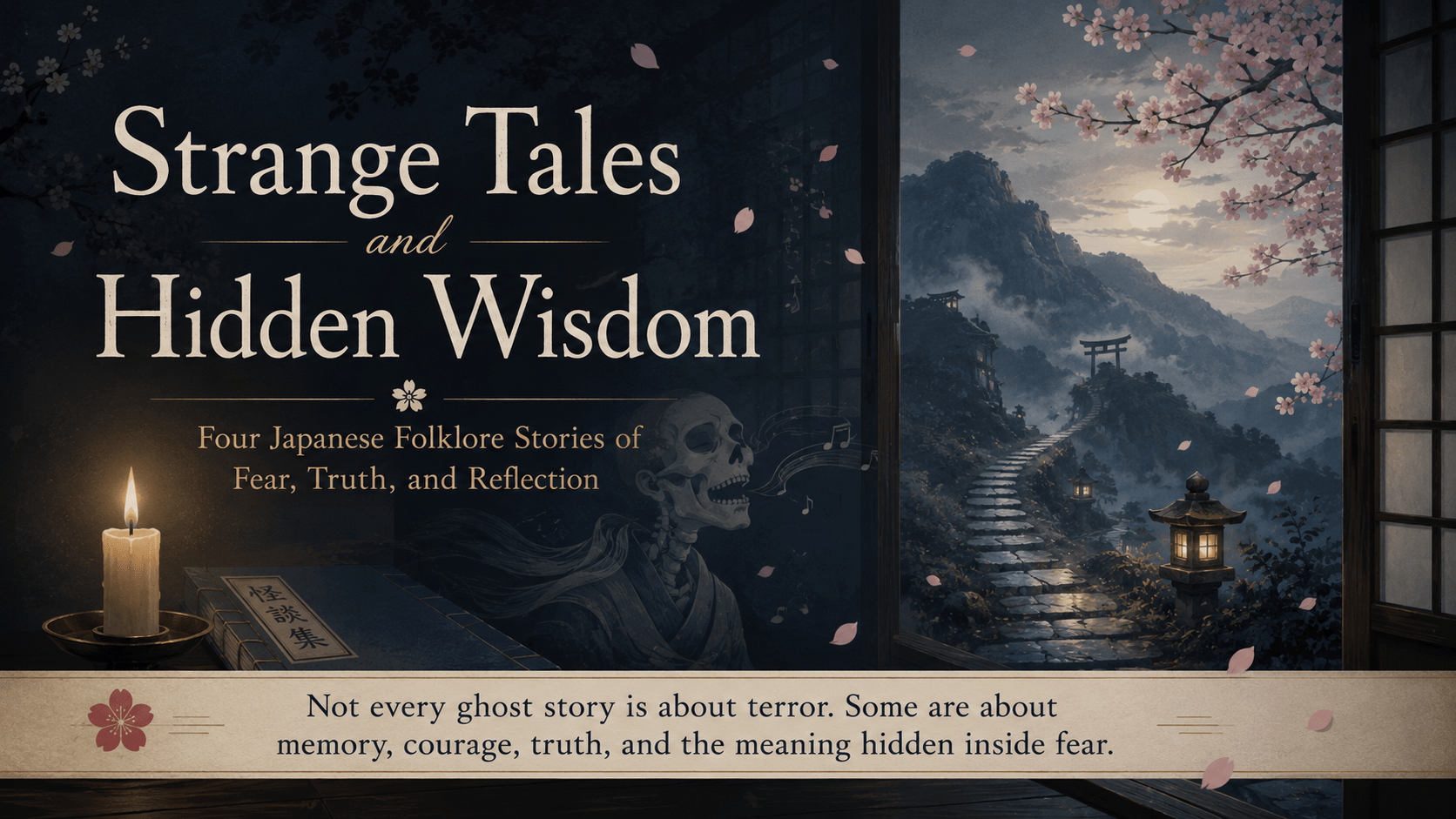
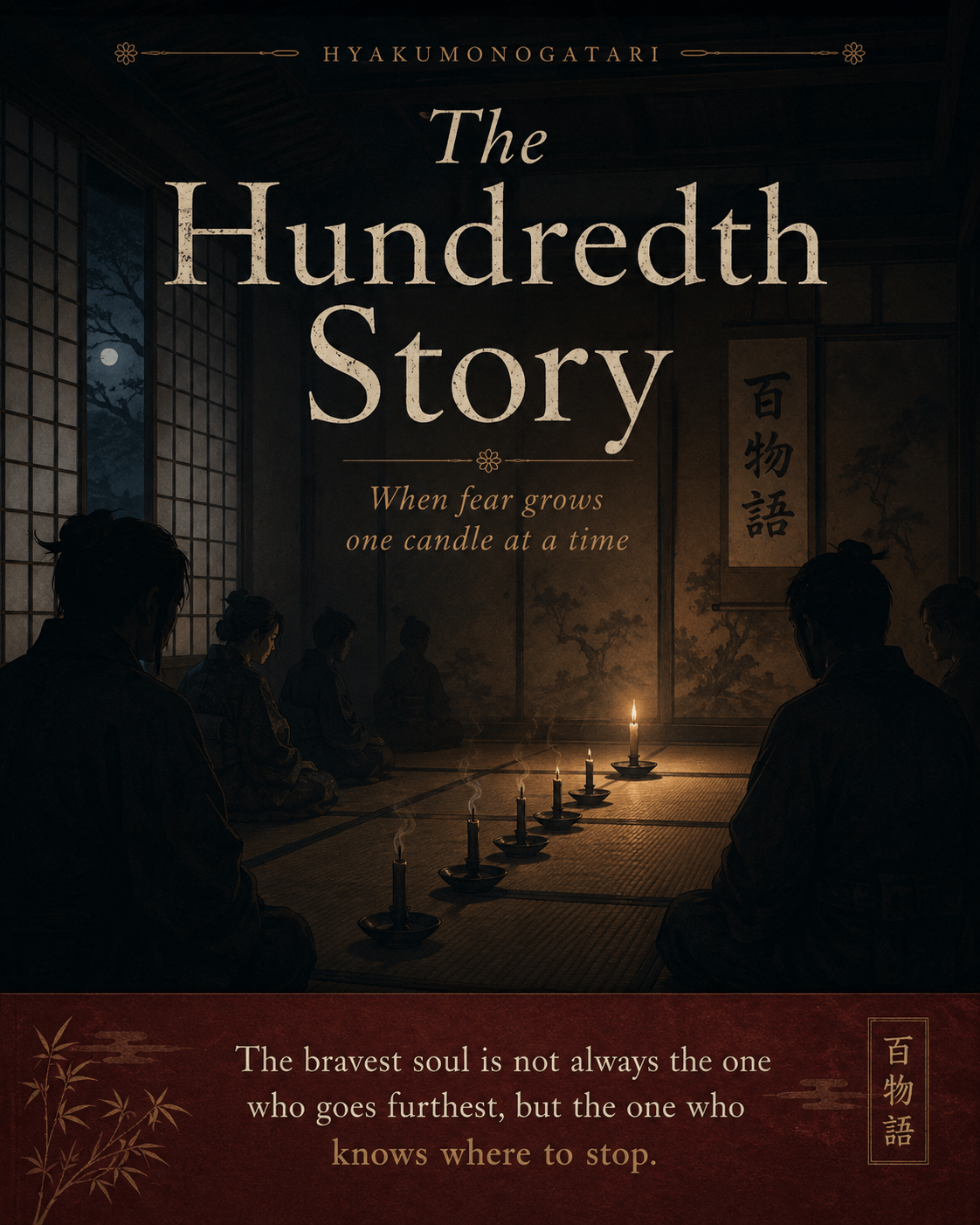
Japanese ghost stories have not been passed down simply to frighten people. From Hyakumonogatari, where one hundred candles are extinguished one by one, to Kamikakushi, the mysterious disappearance of a person from the ordinary world, to The Singing Skull, in which the bones of the dead reveal the truth, and The Spirit of the Cherry Blossom, a tale of fleeting beauty—these strange stories contain deep wisdom about fear, memory, truth, and beauty. This article explores the cultural meaning and quiet life lessons hidden within Japanese ghost stories and folklore for English-speaking readers.
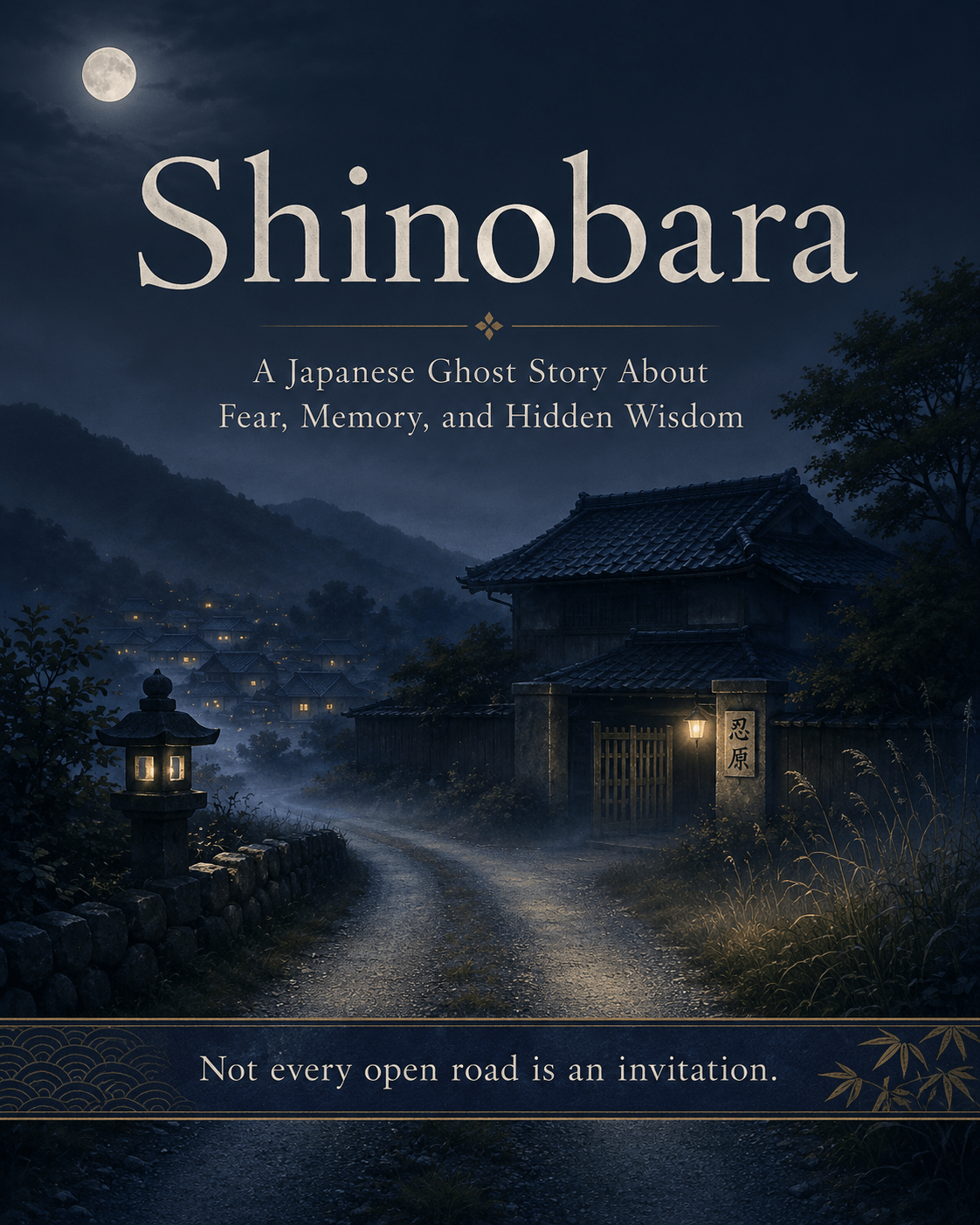
Shinobara is not simply a story about a haunted village. It is a quiet descent into the moment when curiosity becomes unease, and unease becomes a warning. Told like a modern Japanese urban legend, the tale follows a group of teenagers who enter a rural village for what they believe is only a test of courage. But the road changes, the air grows old, and the name Shinobara begins to feel less like a place than a memory waiting to be found.
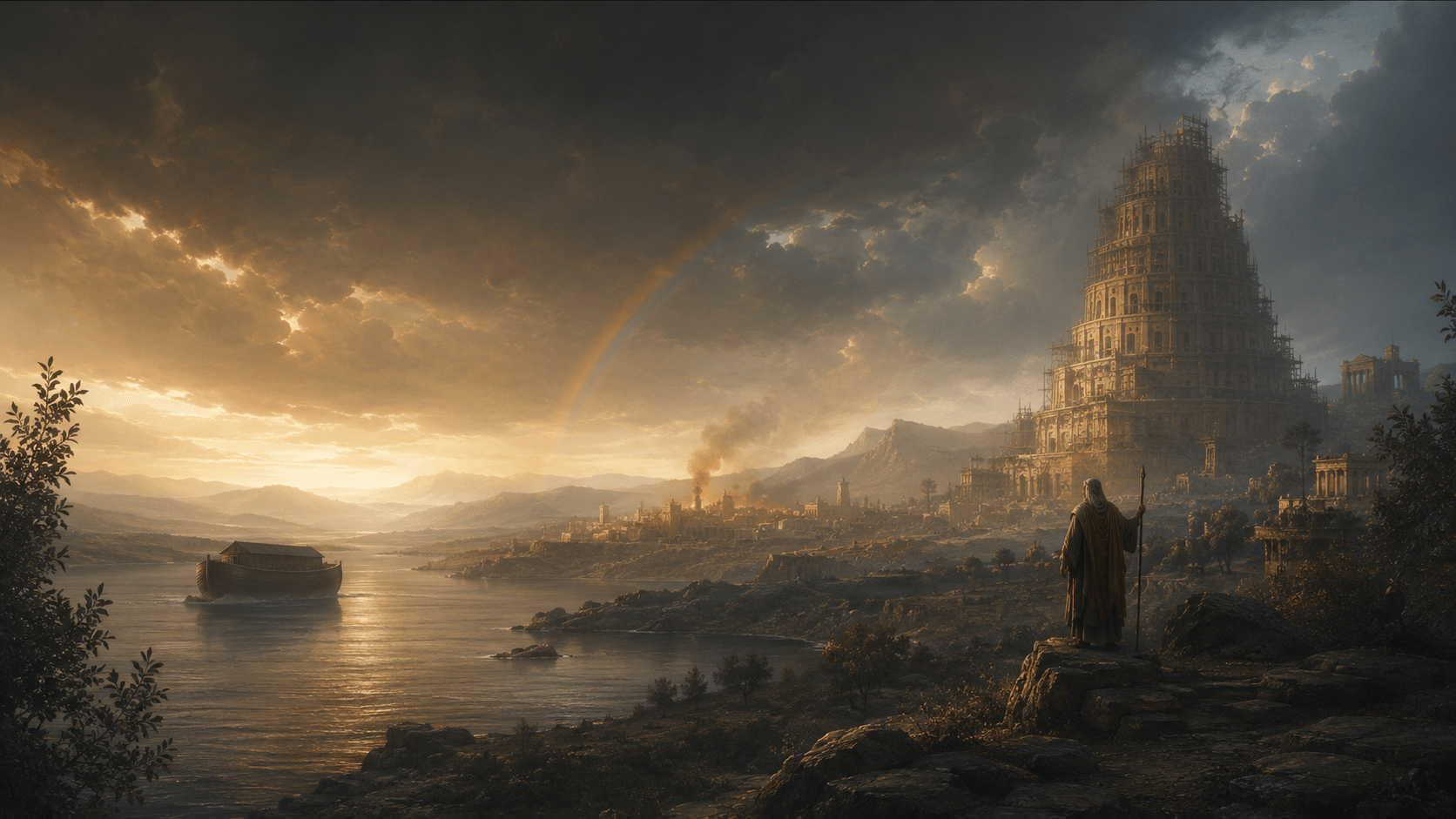
Some of the most mysterious stories in the Bible are not only about punishment, but also about fear, pride, mercy, and renewal. From Noah’s Flood to the Tower of Babel, these ancient tales reveal how human weakness, divine warning, and hidden wisdom are woven together in unforgettable symbolic stories.
Ghost ship stories have long carried the fear and wonder of the sea. Beyond the mystery of abandoned vessels and vanishing crews, these tales reflect human anxiety, survival, isolation, and the wisdom hidden in the unknown.
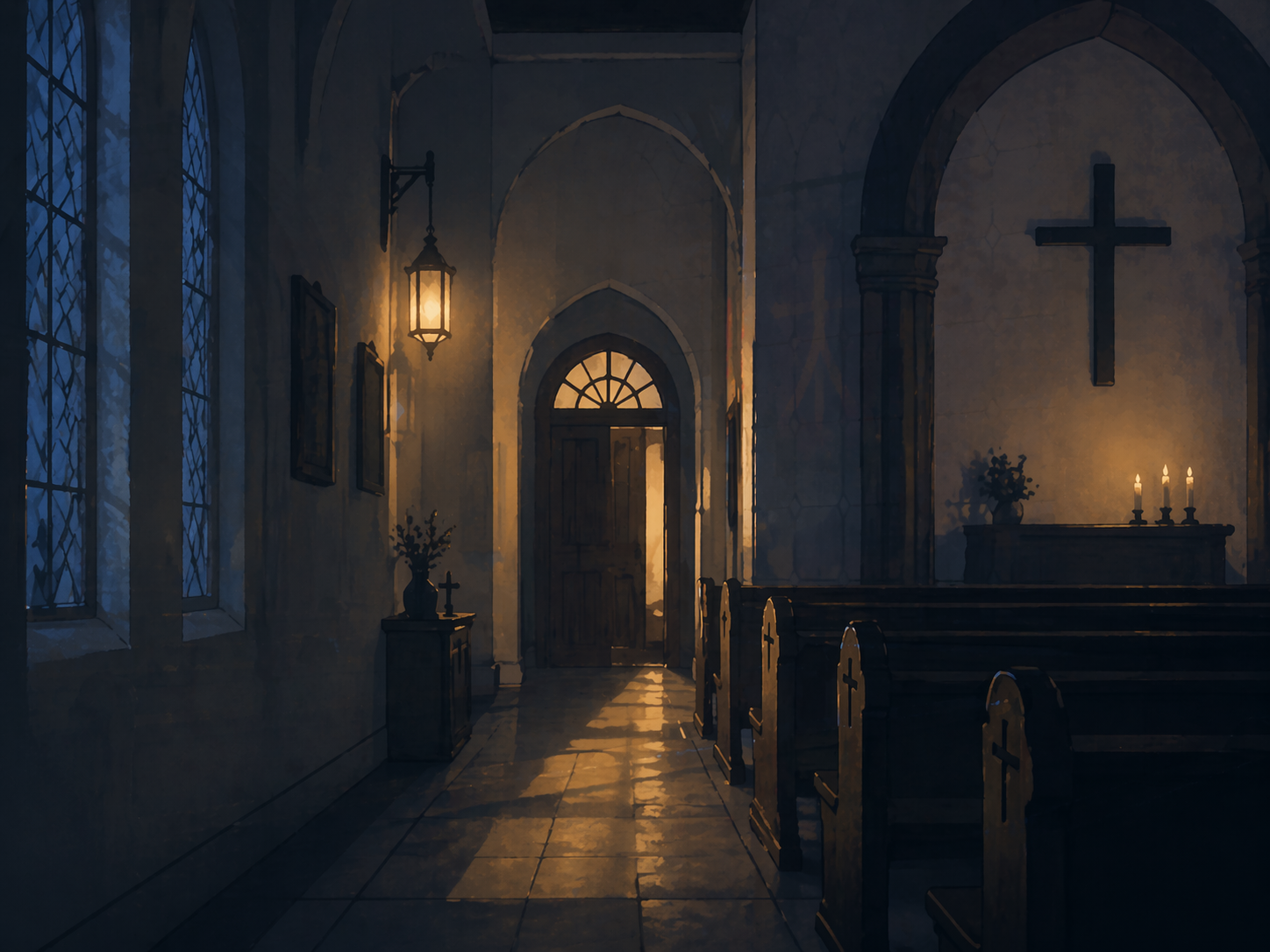
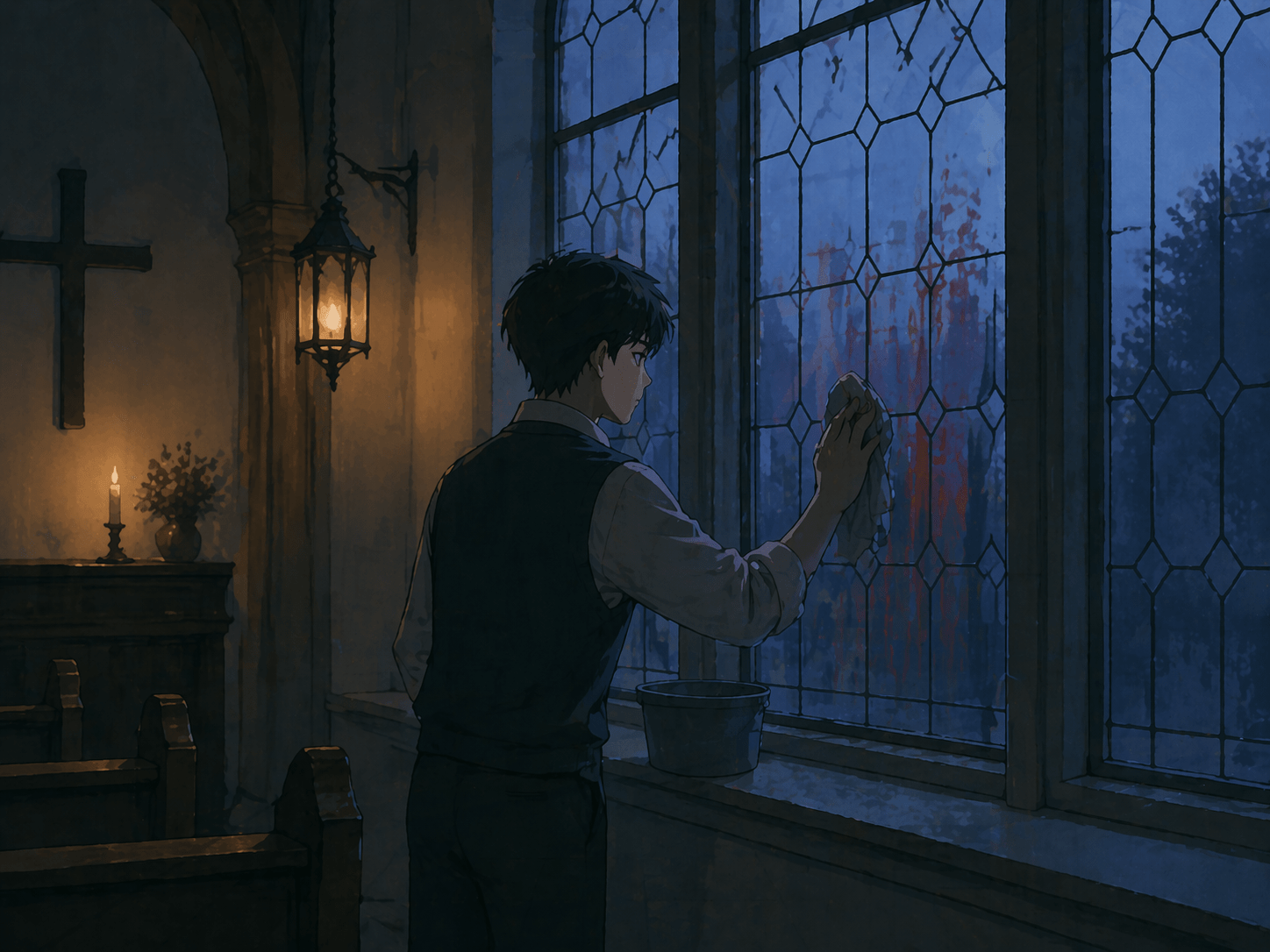
This mysterious church story explores the uneasy space between fear and faith. Through the account of an alleged possession, it invites readers to consider belief, vulnerability, and the deeper wisdom found in moments of spiritual uncertainty.
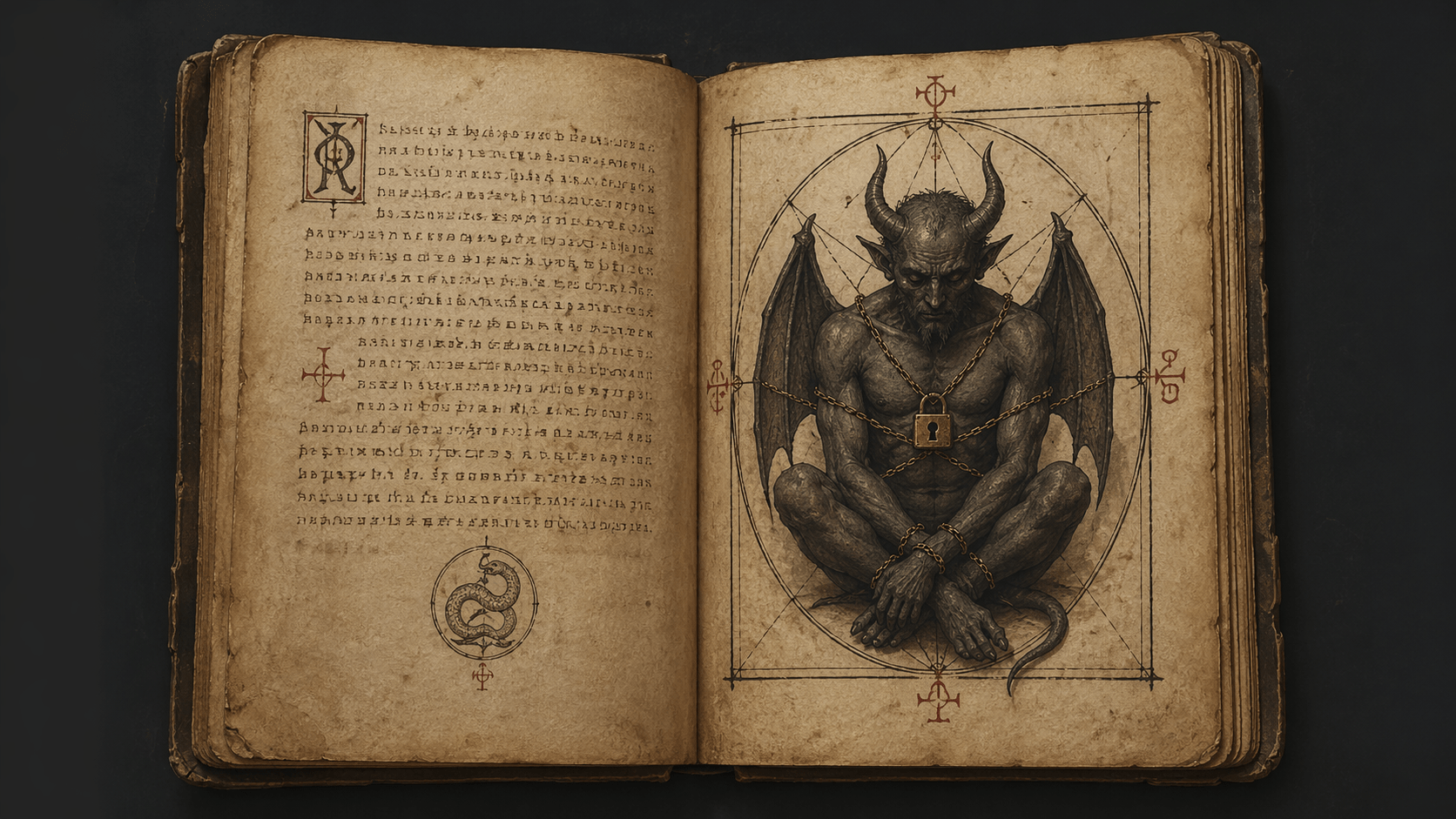
The Codex Gigas, often called the Devil’s Bible, remains one of history’s most mysterious manuscripts. Its legends reveal not only fear of the supernatural, but also questions about knowledge, temptation, punishment, and human imagination.
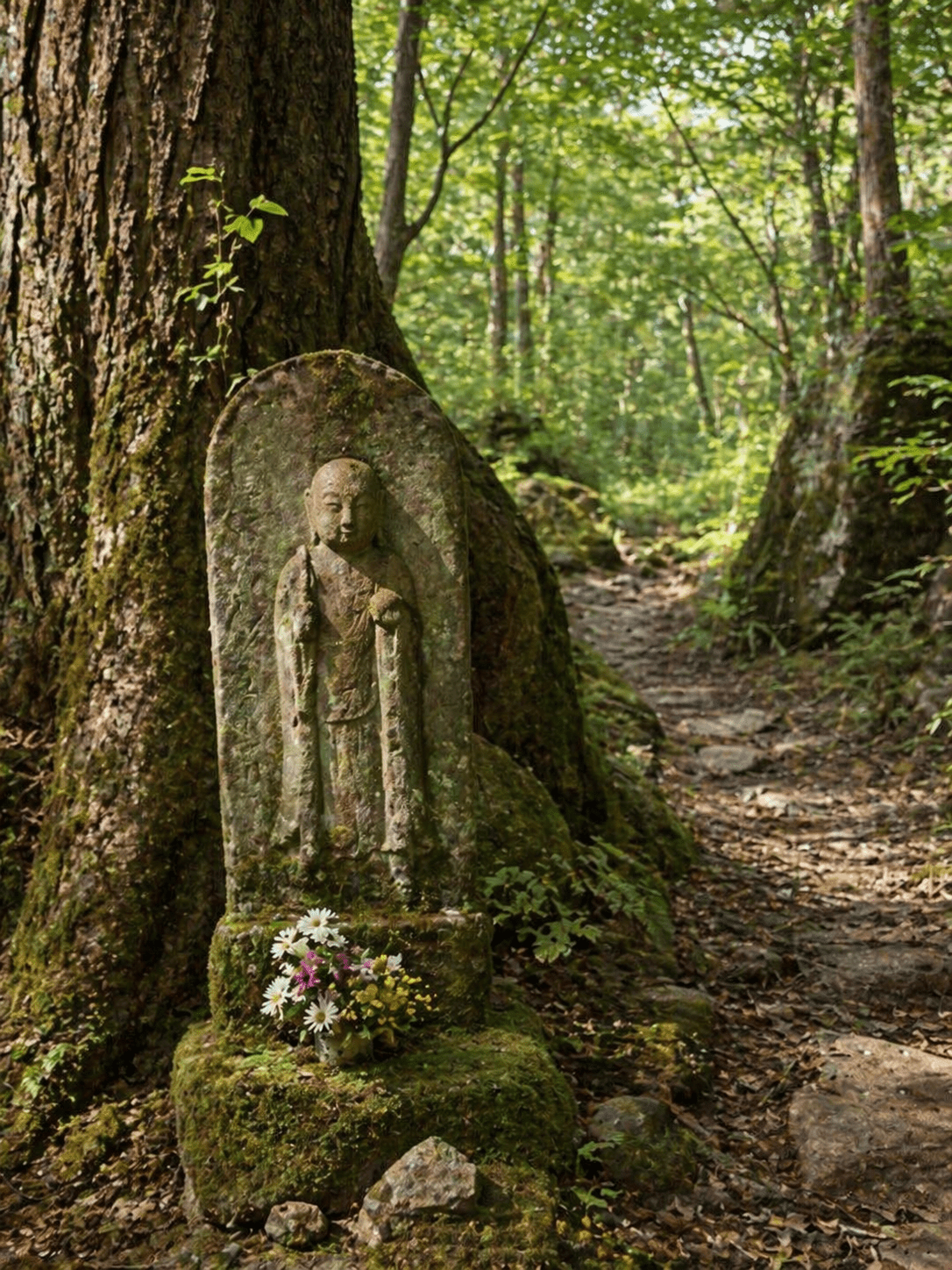
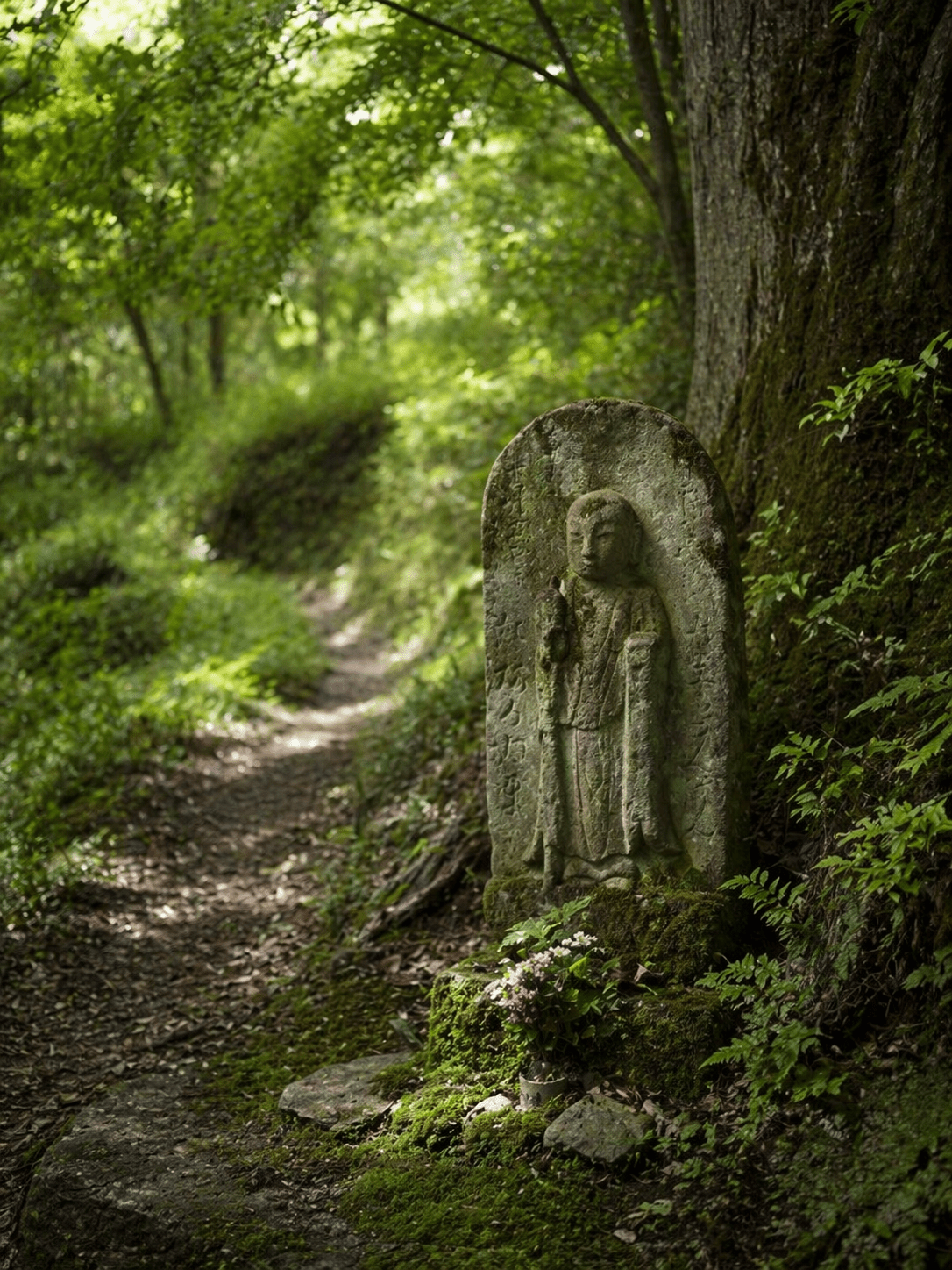
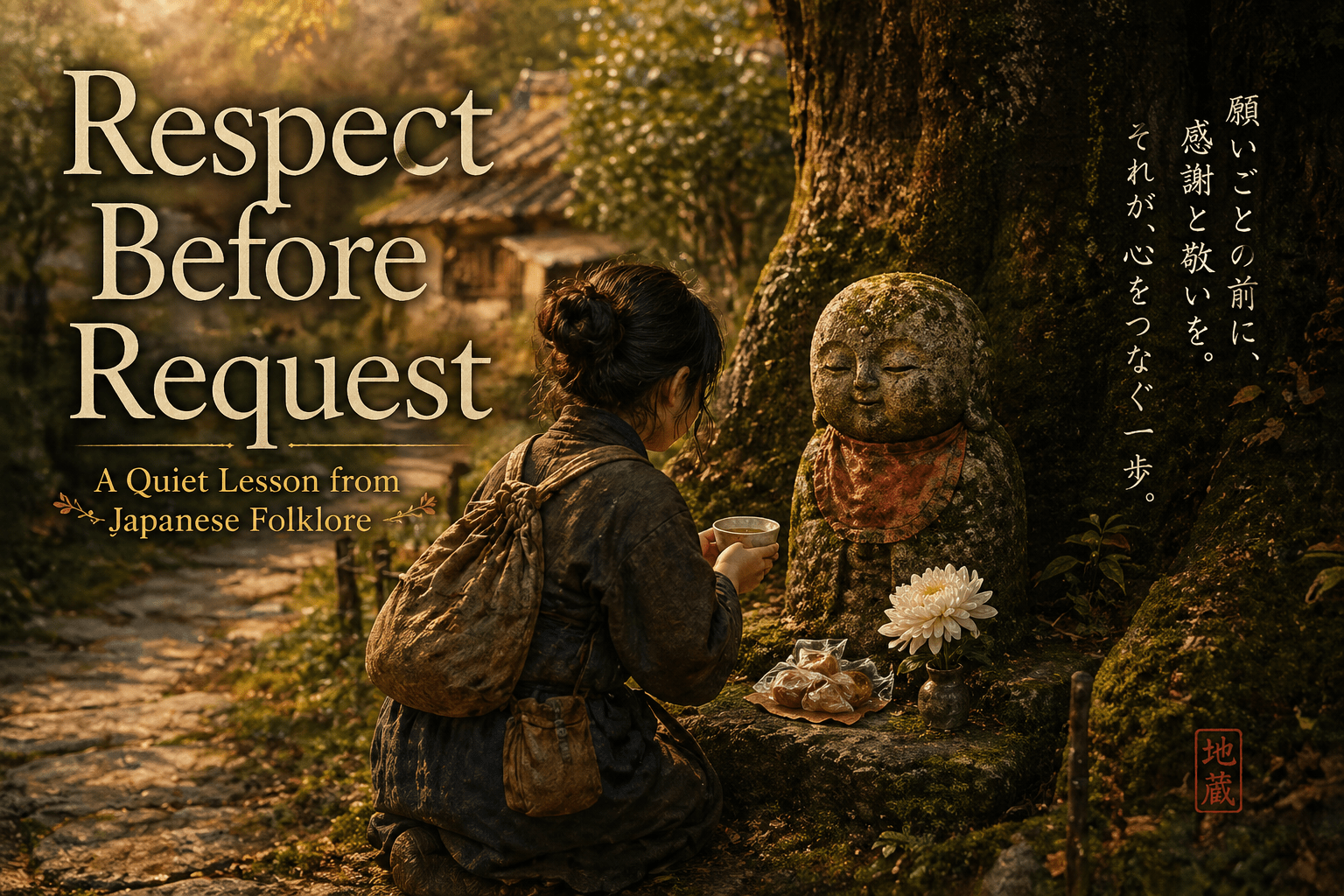
A silent Jizō statue by the roadside can carry more meaning than it first appears. This Japanese folklore tale reflects quiet fear, respect for the unseen, and the wisdom of treating sacred places with humility.
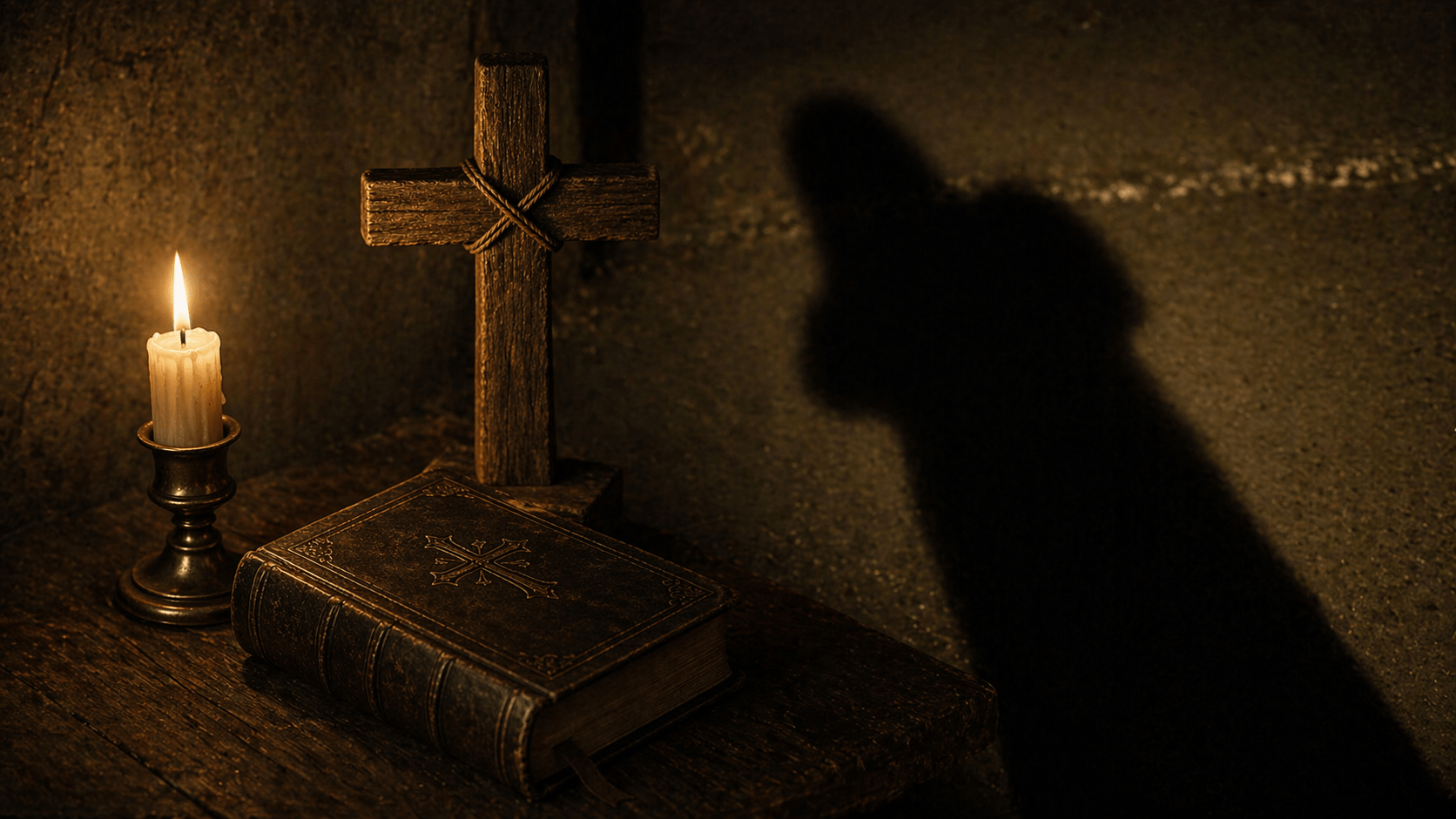
Exorcism stories often speak to fear, faith, and the limits of human understanding. Behind their dramatic images lies a deeper reflection on suffering, belief, compassion, and the search for meaning in darkness.
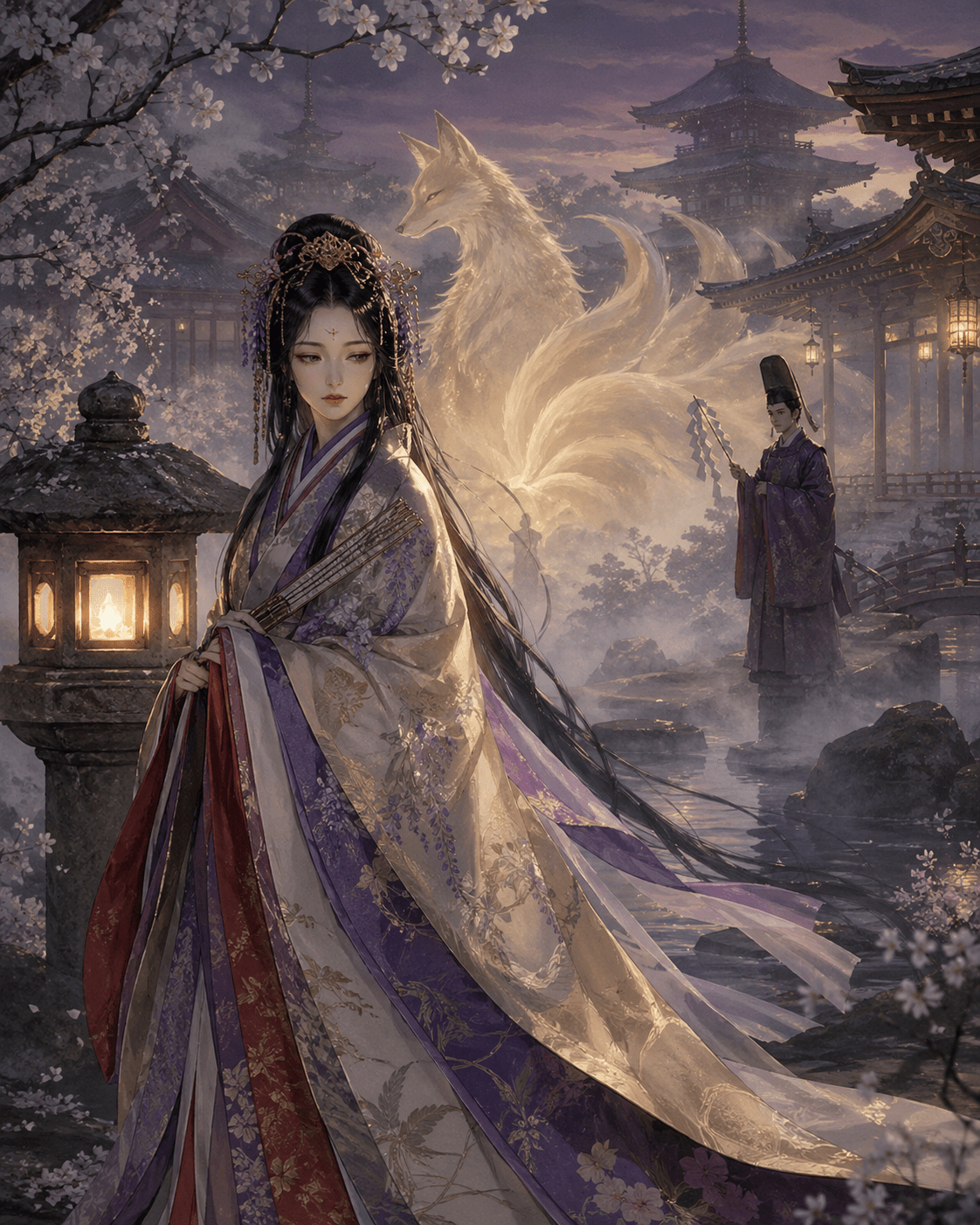
The tale of Tamamo-no-Mae and the nine-tailed fox blends beauty, deception, and supernatural fear. Through this mysterious folklore, we can glimpse how old stories warned against illusion, desire, and hidden danger.
Japanese Esoteric Buddhism uses mantras, mandalas, and sacred rituals to express truths that words alone cannot fully explain. Its hidden wisdom points toward transformation, inner awareness, and a deeper connection with the universe.
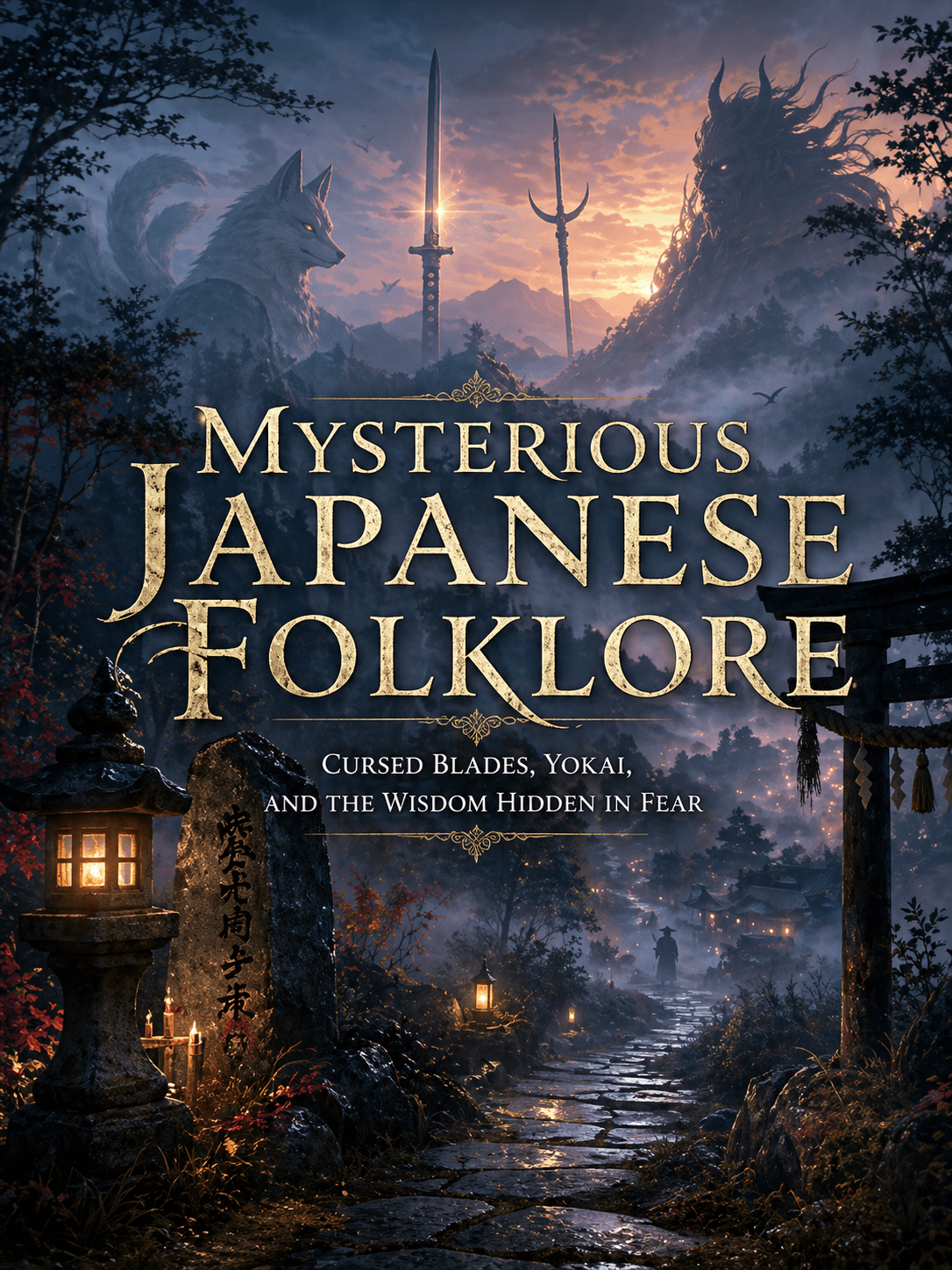
Cursed blades and yokai reveal the darker side of Japanese folklore. Yet behind these frightening images lies a wisdom about power, anger, respect, and the unseen forces that shape human choices.
Jizō statues are familiar sights in Japan, yet many stories surround them with mystery and quiet fear. This folklore reveals the importance of compassion, remembrance, and respectful attention to the sacred in everyday life.