Explore mysterious Japanese urban legends through folklore, fear, cultural meaning, and quiet wisdom for modern life.
 Wonderful Proverbs Journey
※This site uses affiliate advertising.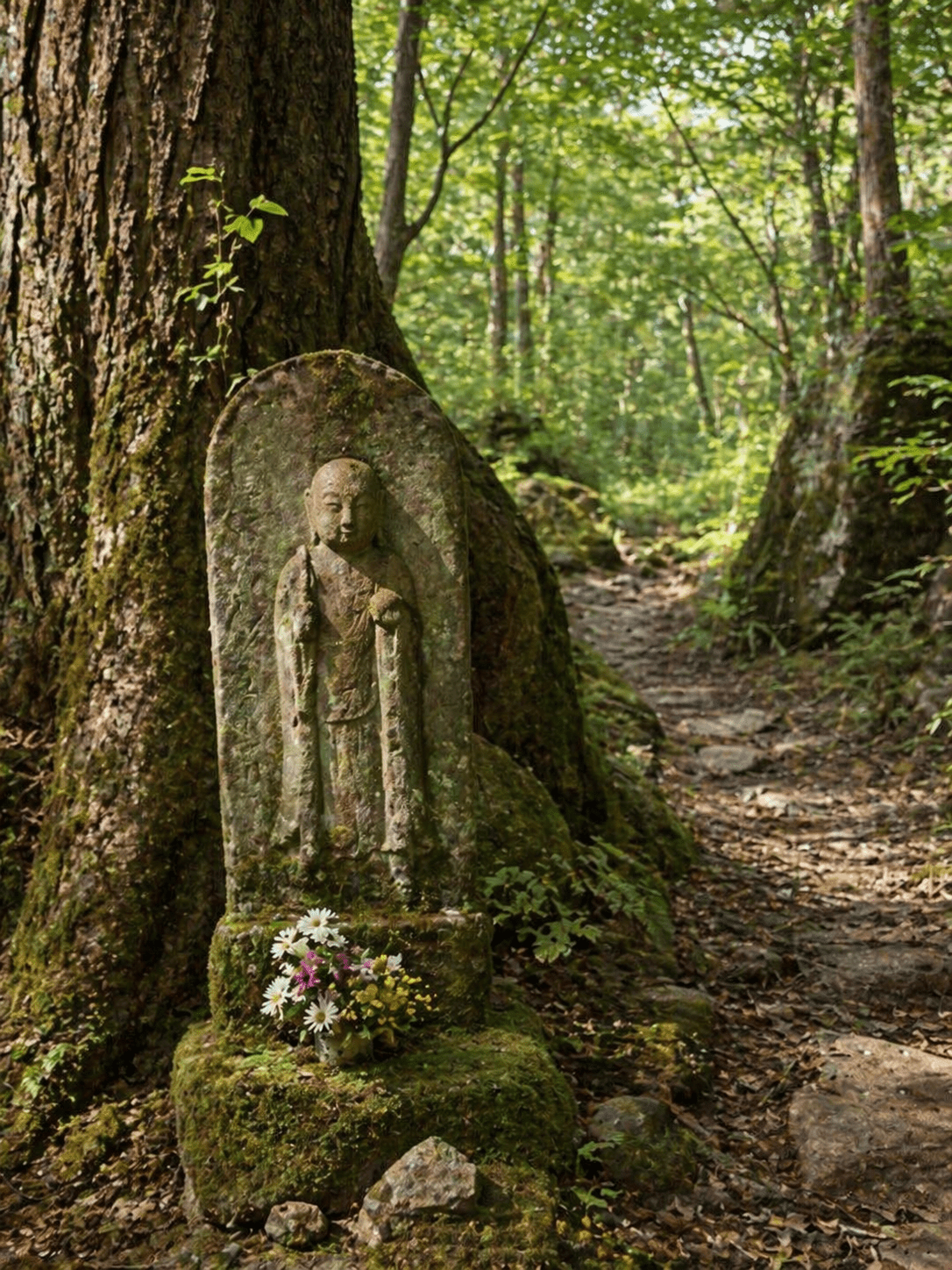
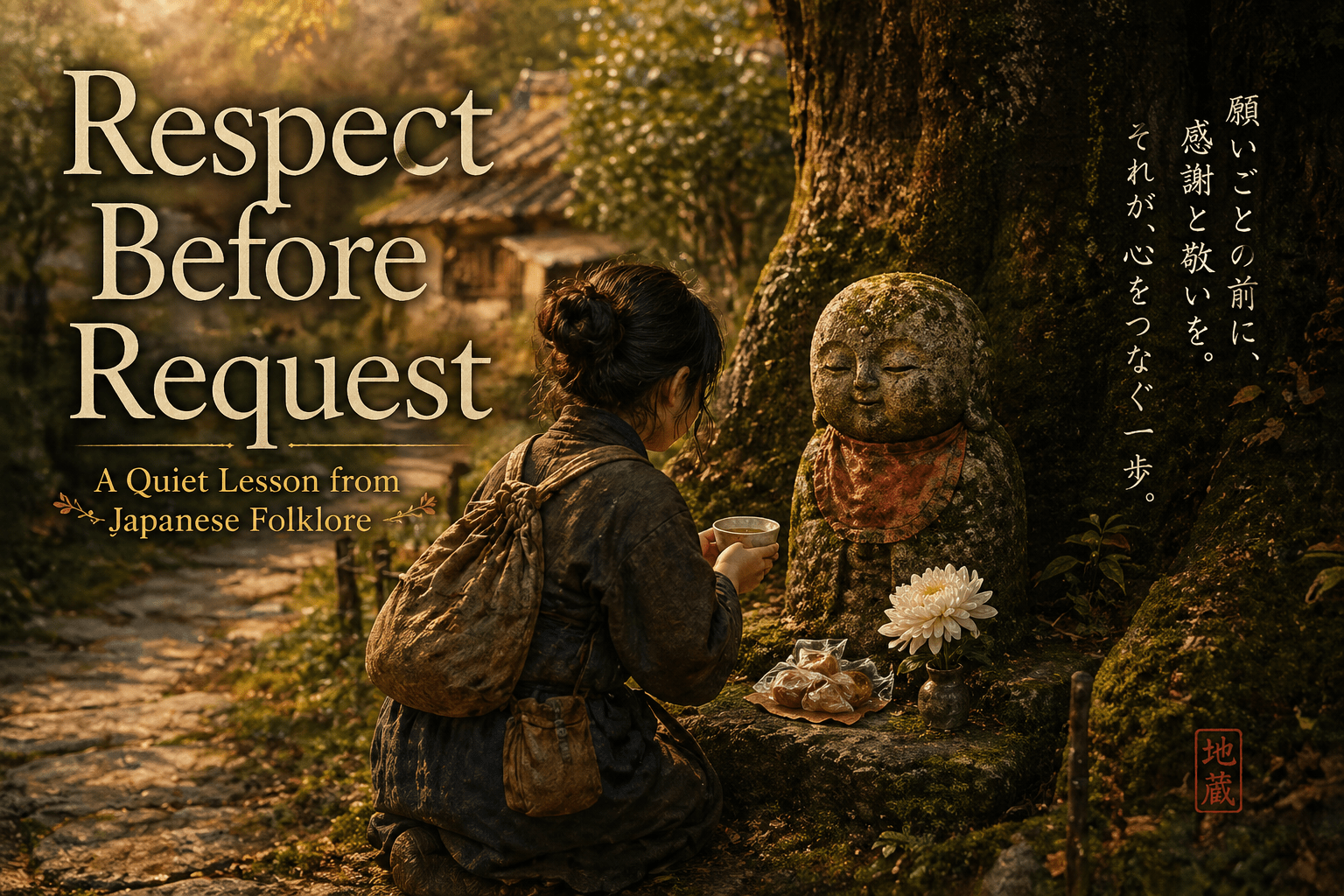
In many Japanese neighborhoods, one may find a small stone figure beside a road, a weathered shrine under an old tree, or a rock wrapped with sacred rope. To someone passing by, these places may look peaceful, even comforting. They seem like natural spots for a quiet prayer.
But some old stories suggest caution.
This mysterious Japanese folklore tale begins with a simple habit: a person waking early, taking a walk, and wondering whether it would be wasteful not to offer a prayer at the small roadside Jizō statues and shrines along the path. After all, the old Japanese proverb says, “The early riser gains three mon,” meaning that waking early brings small but valuable blessings. If one rises early and walks for health, why not gain a little spiritual blessing too?
Yet in folklore, not every sacred place is meant to be approached casually. Some places carry memories. Some shrines were built for protection. Some statues were placed where people once disappeared, died, or prayed in desperation.
This is not merely a scary story. It is a quiet tale about respect, boundaries, and the wisdom of not touching what we do not yet understand.
There was a person who loved taking walks early in the morning.
The road was quiet at that hour. The air still held the coolness of dawn, and the houses stood in silence behind closed shutters. Birds moved softly in the trees. The sky had not yet become bright enough to feel ordinary.
Along this walking route, there were several old sacred places.
One was a stone Jizō statue, its features softened by rain and time. Another was a small wooden shrine tucked beneath a tree whose roots rose like sleeping animals from the earth. Nearby, a stone wrapped with rope stood inside what looked like a tiny old house.
The walker thought, If I am already here, perhaps I should pray.
It seemed harmless. A small bow. Hands pressed together. A wish for good health, good fortune, and protection.
But an older woman in the neighborhood once warned him.
“If you want to do something during your walk,” she said, “take pictures of flowers. Enjoy the morning scenery. Buy something on your way home. But do not casually put your hands together before a Jizō or a roadside shrine whose origin you do not know.”
The walker laughed at first.
“Why not? Isn’t Jizō a Buddhist figure? Aren’t those shrines for gods? If they are sacred, shouldn’t prayer be welcome?”
The woman did not answer immediately. She looked toward the road, where the old shrine stood half-hidden in shadow.
“That is exactly why you should be careful,” she
To understand the warning, it helps to know what Jizō means in Japanese culture.
Jizō, often called Jizō Bosatsu in Japanese Buddhism, is one of the most familiar and beloved Buddhist figures in Japan. In English, the name is sometimes translated as Kṣitigarbha Bodhisattva: a compassionate being who delays complete enlightenment in order to help others who are suffering.
In Japan, however, Jizō is not understood only as a distant religious figure. For many people, Jizō feels close, gentle, and protective. Stone Jizō statues can be found along roadsides, in temple grounds, near graveyards, at mountain paths, and at the edges of old villages. They are often small, quiet, and weathered by time, which gives them a deeply human presence.
One of the most important roles of Jizō in Japanese culture is as a protector of children. This includes children who are alive, children who died young, and, in some traditions, unborn children. Because of this, Jizō statues are sometimes dressed with red bibs or small red caps. The color red has traditionally been associated with protection, life, and the wish to keep harm away.
Jizō is also closely connected with travelers. In earlier times, travel was dangerous. Mountain roads, village borders, river crossings, and remote paths could expose people to illness, accidents, bandits, wild animals, or simply the risk of never returning home. A Jizō statue by the roadside was not only a religious image; it was also a quiet sign of hope: someone is watching over this path.
For this reason, Jizō is often associated with those who stand between safety and danger, belonging and loneliness, life and death. He is a guardian of thresholds.
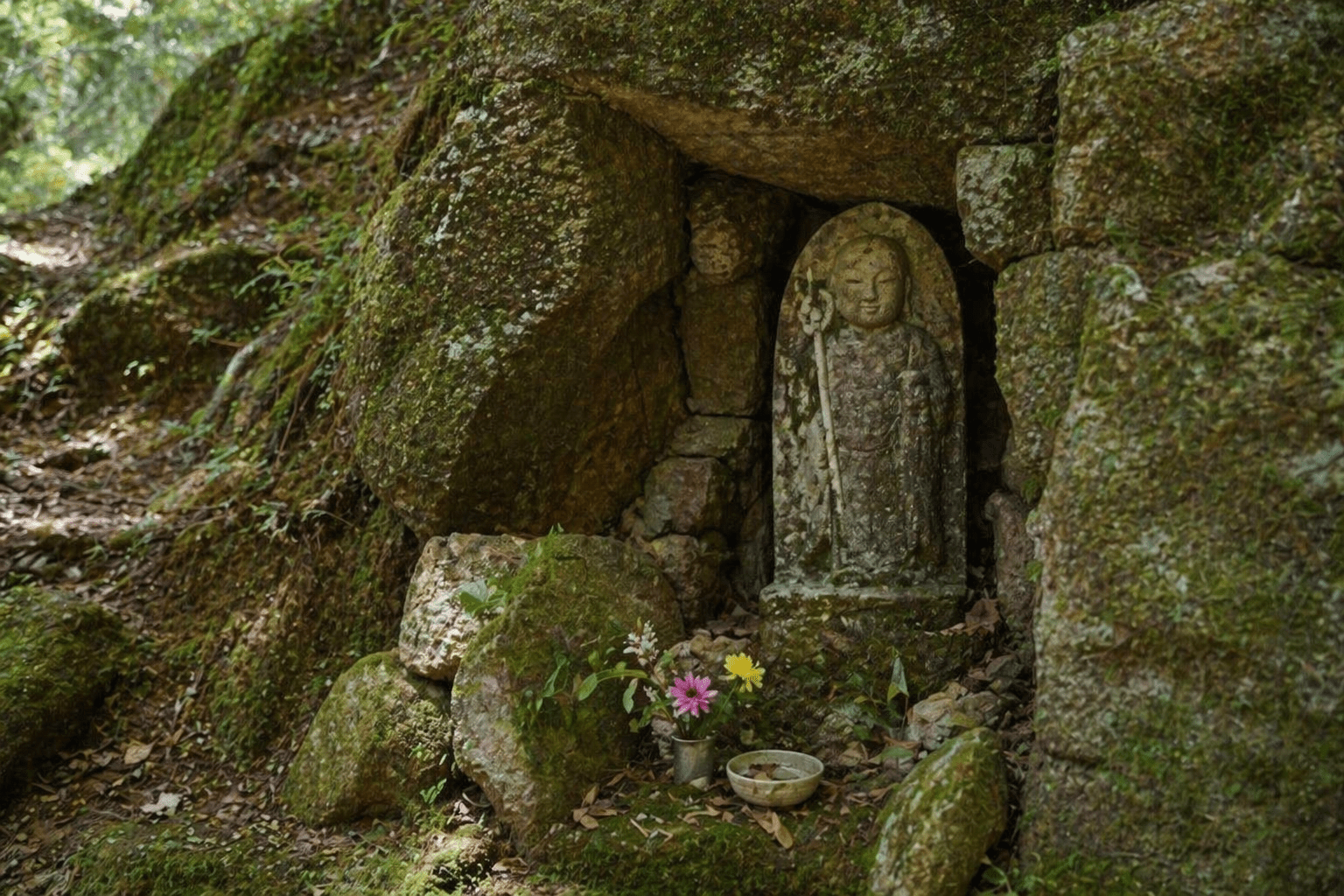
For English-speaking readers, it may seem unusual that sacred statues are placed not only inside temples but also in lonely outdoor places. Yet this is one of the most meaningful features of Jizō in Japanese culture.
A roadside Jizō may mark a place where people once prayed for safe passage. A Jizō near a graveyard may express the hope that the dead are not abandoned. A Jizō at a mountain pass may remember travelers who struggled, disappeared, or died along the way. In some cases, local people may no longer know the exact origin of the statue, but the feeling remains: this is a place where human fear and prayer once gathered.
Jizō stands where people feel vulnerable.
That is why his presence can feel comforting, but also mysterious. A Jizō statue may symbolize compassion, yet it may also remind us that compassion was needed there for a reason.
This is important for understanding the story. The unease does not come from Jizō being frightening. In most traditions, Jizō is deeply compassionate. The unease comes from not knowing why a particular statue was placed in a particular location.
A Jizō statue may have been built for protection, mourning, repentance, or remembrance. It may have stood for decades or centuries as a silent witness to local fear and hope. To approach it without knowing anything may be like entering someone else’s memorial and speaking loudly without realizing where you are.
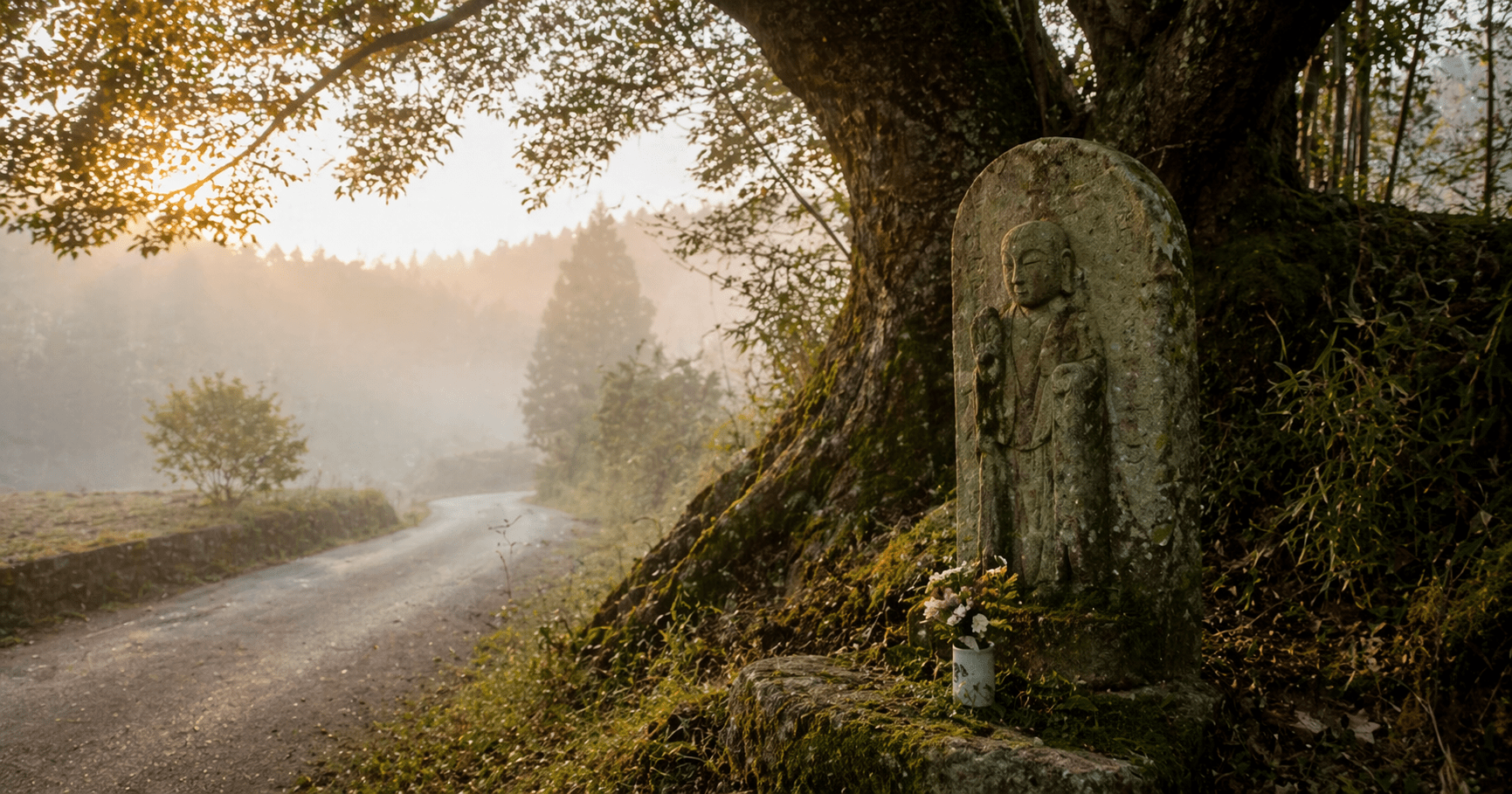
Jizō is not the only sacred presence found along old roads. Small roadside shrines may contain local guardian deities, natural stones, sacred trees, or objects believed to serve as a yorishiro — a temporary dwelling place or vessel for a divine presence.
Some of these shrines are connected to Dōsojin, protective deities traditionally placed at village boundaries, crossroads, mountain passes, and entrances to settlements. They were believed to guard against disease, misfortune, evil spirits, and dangers coming from outside the community.
Such places may look small, but symbolically they stand at thresholds.
In older village life, the boundary was not merely a line on a map. It was the edge of the known world. Beyond it lay strangers, illness, mountains, spirits, and uncertainty. A shrine at that border was both a guardian and a warning.
A roadside shrine is not only a religious object. It may be a marker of a boundary between village and wilderness, life and death, safety and uncertainty, the human world and something older.
And in folklore, boundaries are never casual places.
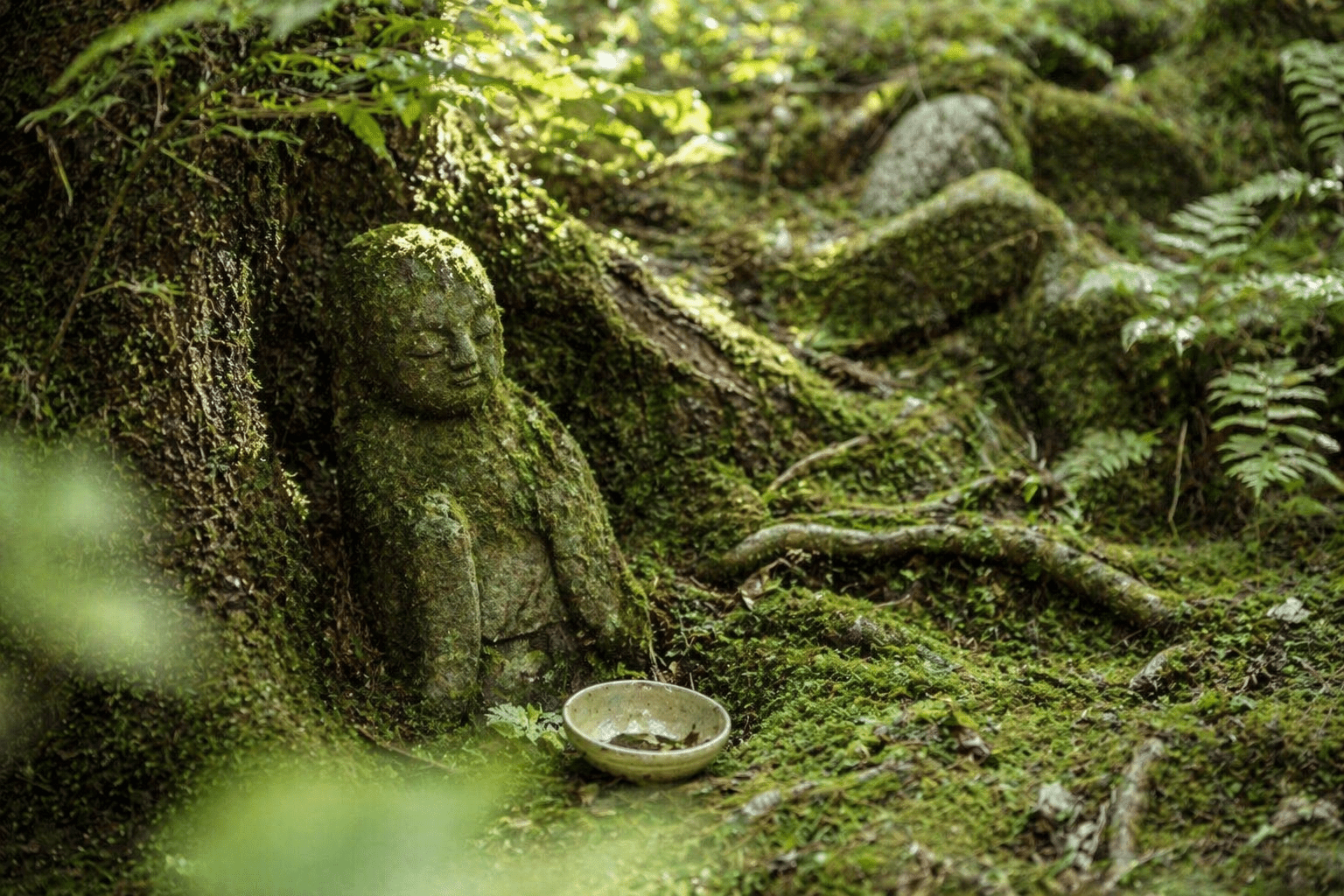
The old woman explained that praying is not always a neutral act.
In daily life, pressing one’s hands together may seem like a polite gesture. But in sacred or liminal places, folklore often treats it as a form of contact. To pray is to call attention. To bow is to acknowledge a presence. To make a wish is, in a sense, to open a door.
The danger in the tale is not that Jizō is cruel or that local gods are evil. The danger comes from not knowing the story of the place.
Some Jizō statues were placed where people died on the road. Some were built to comfort spirits of the dead. Some stood near old mountain passes where travelers were lost, children disappeared, or villagers feared what might come from beyond the boundary. Some shrines were moved from their original locations when no one remained to care for them.
In such stories, the statue is not frightening by itself. What gathers around it may be.
A compassionate figure attracts those who seek compassion. A guardian shrine stands where danger was once imagined or remembered. A forgotten sacred object may carry loneliness, neglect, or unresolved memory.
The old woman put it this way:
“If a spirit has waited for a hundred years, and a living person suddenly comes close, bows, and seems to offer help, why would it not follow?”
The walker felt the morning air grow colder.
He had never thought of prayer as a signal.
The woman continued.
“People often think gods are gentle simply because they are gods. But in old stories, gods are not always soft. They are powerful. They have rules. They may be generous, but they may also be easily offended.”
This idea appears in many cultures. A sacred place is not treated like a public decoration. It has etiquette, history, and relationship. In Japanese tradition, even familiar shrine visits involve gestures of purification, bowing, clapping, silence, and proper conduct. These actions are not empty manners; they acknowledge that contact with the sacred requires care.
A forgotten roadside shrine is different from a famous shrine visited by many people.
A large shrine may be maintained, honored, and approached through known ritual. A lonely shrine under a tree may receive few visitors. Its history may be unknown. Its deity, if one speaks in the language of folklore, may not be accustomed to strangers.
To pray there without knowing the proper way may not be devotion. It may be intrusion.
This is the heart of the warning: not every place that looks sacred is inviting you in.
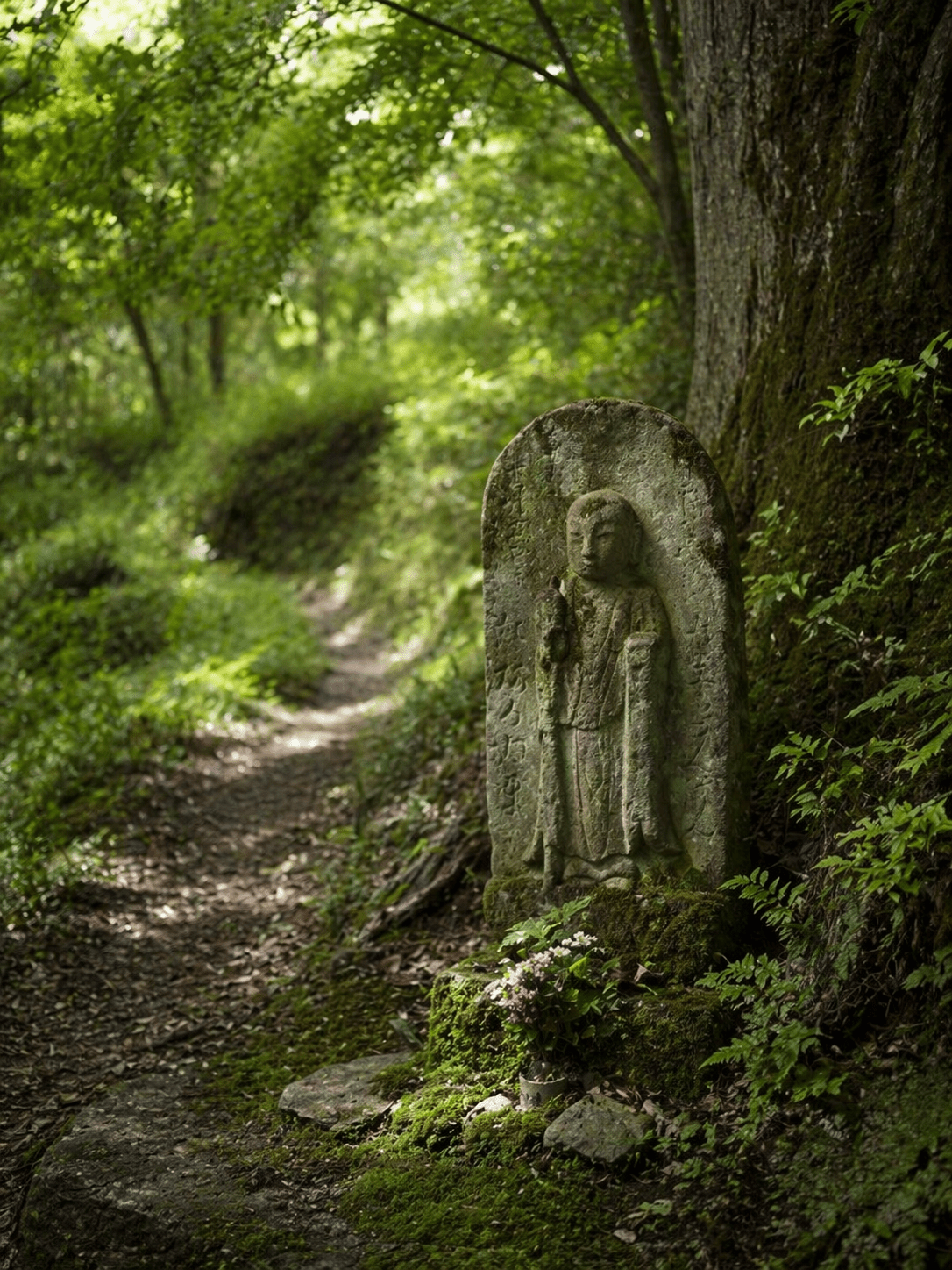
Jizō also reflects a broader Japanese cultural attitude: the idea that unseen beings, forgotten memories, and quiet places should not be treated carelessly. This does not necessarily mean that everyone literally believes in spirits. Rather, it shows a cultural habit of respect toward what cannot be fully explained.
In Japan, small offerings, flowers, red bibs, and simple acts of cleaning around a Jizō statue can express gratitude and care. These gestures connect the living with the dead, the present with the past, and ordinary life with spiritual imagination.
In this way, Jizō is not only a religious symbol. He is also a cultural symbol of tenderness toward the vulnerable, respect for the forgotten, and humility before places that carry memory.
This cultural background deepens the story. The folklore does not ask us to reject Jizō. It asks us to approach with awareness.
The message is not superstition alone. It is cultural wisdom: before we pray, touch, photograph, or interpret something sacred, we should first ask what kind of memory it carries.
“Respect is the first prayer.”
This simple line captures the quiet wisdom of the tale. Before asking for protection, luck, or blessing, the story asks us to practice respect. Not fear in the sense of panic, but reverence: the humility to admit that some places have histories deeper than our own understanding.
From a cultural perspective, this tale reflects several important themes in Japanese folklore.
First, Jizō is often associated with compassion, especially toward children, travelers, and vulnerable beings. That is why Jizō statues are frequently placed along roads, near graveyards, at crossroads, or in lonely areas. They stand where people may need comfort.
Second, Dōsojin and similar roadside deities are connected with boundaries. In older village life, the boundary was not merely a line on a map. It was the edge of the known world. Beyond it lay strangers, illness, mountains, spirits, and uncertainty. A shrine at that border was both a guardian and a warning.
Third, the story expresses a cultural sensitivity toward place. A stone, tree, or shrine may not be valuable because it is large or famous. It may matter because generations of people treated it as meaningful.
In this sense, the tale is not asking modern readers to believe every supernatural detail literally. Rather, it invites us to notice how old communities used stories to preserve respect for memory, death, nature, and the unseen consequences of careless behavior.
Why does this kind of story stay with us?
Perhaps because it gives shape to a fear many people feel but rarely name: the fear of entering a situation without understanding its rules.
A roadside shrine is frightening not because it attacks us in the story, but because it asks a question: What have you touched without knowing its meaning?
In modern life, we do this often. We speak without knowing the full history of another person’s pain. We enter communities without understanding their customs. We use symbols, words, and rituals without asking where they came from. The folklore makes this invisible problem visible through the image of a small shrine in the morning mist.
Horror psychology often suggests that frightening stories help us approach anxiety from a safe distance. A ghost story allows us to imagine danger without being consumed by it. But a good folktale does more than frighten. It transforms fear into attention.
The unknown shrine reminds us that fear is not always an enemy. Sometimes fear is the mind’s way of asking us to slow down.
One way to read this tale is as a lesson in humility.
The walker believed that prayer was always good because his intention was good. But the story gently complicates that idea. Good intentions do not erase context. A place may have rules. A person may have wounds. A tradition may have meanings invisible to outsiders.
This does not mean we should live in fear of every unknown thing. The lesson is quieter than that.
It may remind us that reverence begins before belief. We do not need to understand everything in order to behave with care. We do not need to prove the supernatural to recognize that old places deserve attention. We do not need to be afraid of the dark road, but we may walk it more wisely if we remember that other lives, other griefs, and other prayers have passed there before us.
In modern life, this tale can be understood as a gentle warning against spiritual tourism, careless curiosity, and the habit of treating every mystery as something available for our personal use.
Sometimes the most respectful prayer is not to ask for anything.
Sometimes it is simply to pass by quietly.
The next time you see a small shrine by the road, a stone figure beneath a tree, or an old object wrapped in sacred rope, you may not need to be afraid.
But perhaps you might pause.
Not every silence is empty. Not every forgotten place is abandoned. And not every prayer begins with asking.
Some prayers begin with listening.
“Respect is the first prayer.”
This tale reflects Japanese folk beliefs surrounding Jizō, Dōsojin, roadside shrines, and sacred boundaries. Jizō symbolizes compassion, especially for children, travelers, and suffering beings, while Dōsojin often represents protection at village borders, crossroads, and mountain passes. The story shows how old communities used folklore to preserve respect for place, memory, death, nature, and invisible boundaries.
The story appeals to us because it gives form to a subtle fear: entering a place or relationship without understanding its rules. The unknown shrine becomes a symbol of all the histories we may accidentally disturb. Rather than simply frightening us, the tale turns fear into attention, humility, and awareness.
This story may remind us that good intentions are not enough when we do not understand the context. In life, as in folklore, respect should come before curiosity, and listening should come before asking. Sometimes wisdom means knowing when to pass by quietly.
What unknown place, person, or memory in your own life might be asking for respect before understanding?