Explore Hyakki Yagyō, Japan’s mysterious night parade of demons, through folklore, fear, Kyoto history, and the wisdom hidden in darkness.
 Wonderful Proverbs Journey
※This site uses affiliate advertising.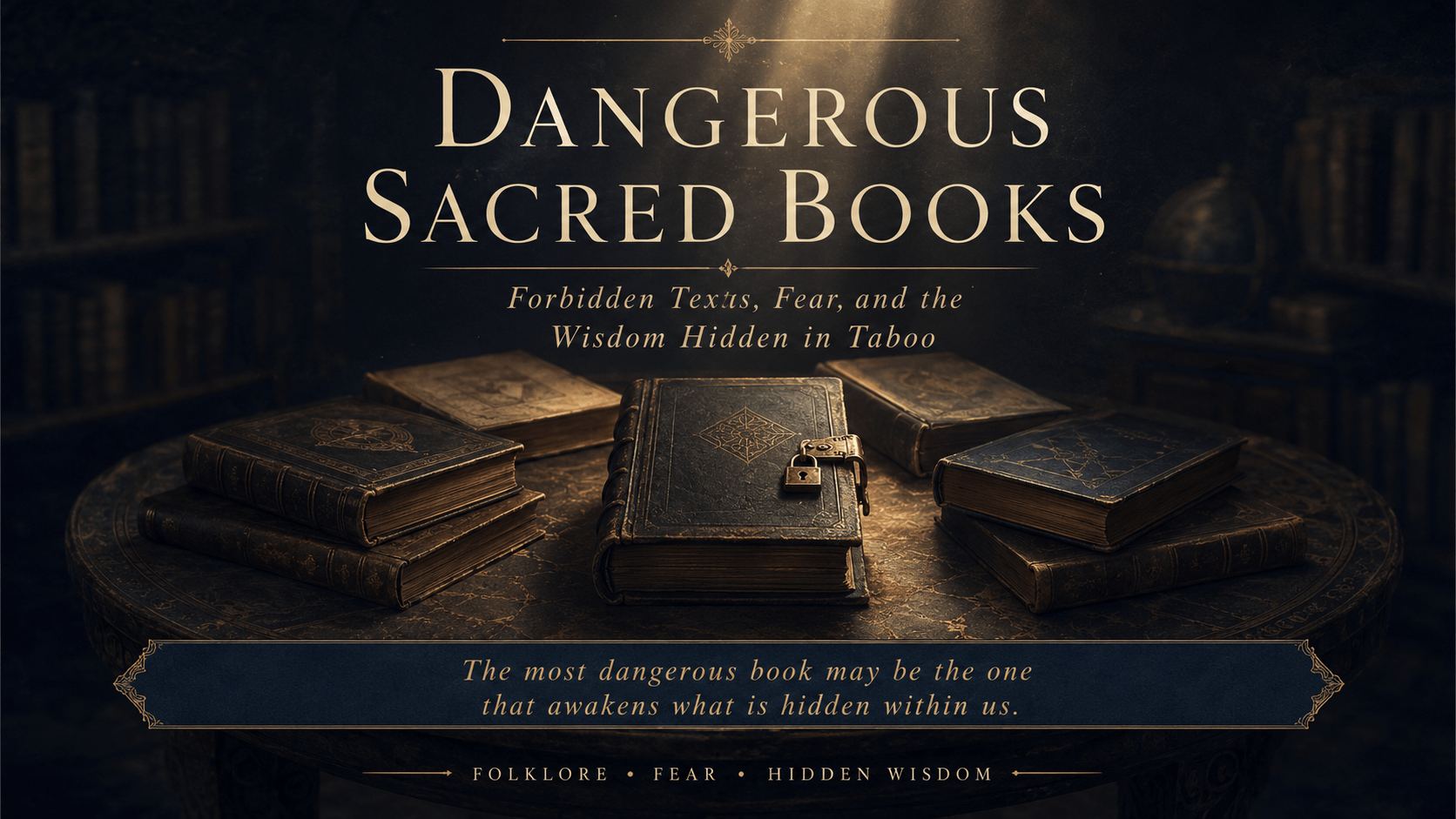
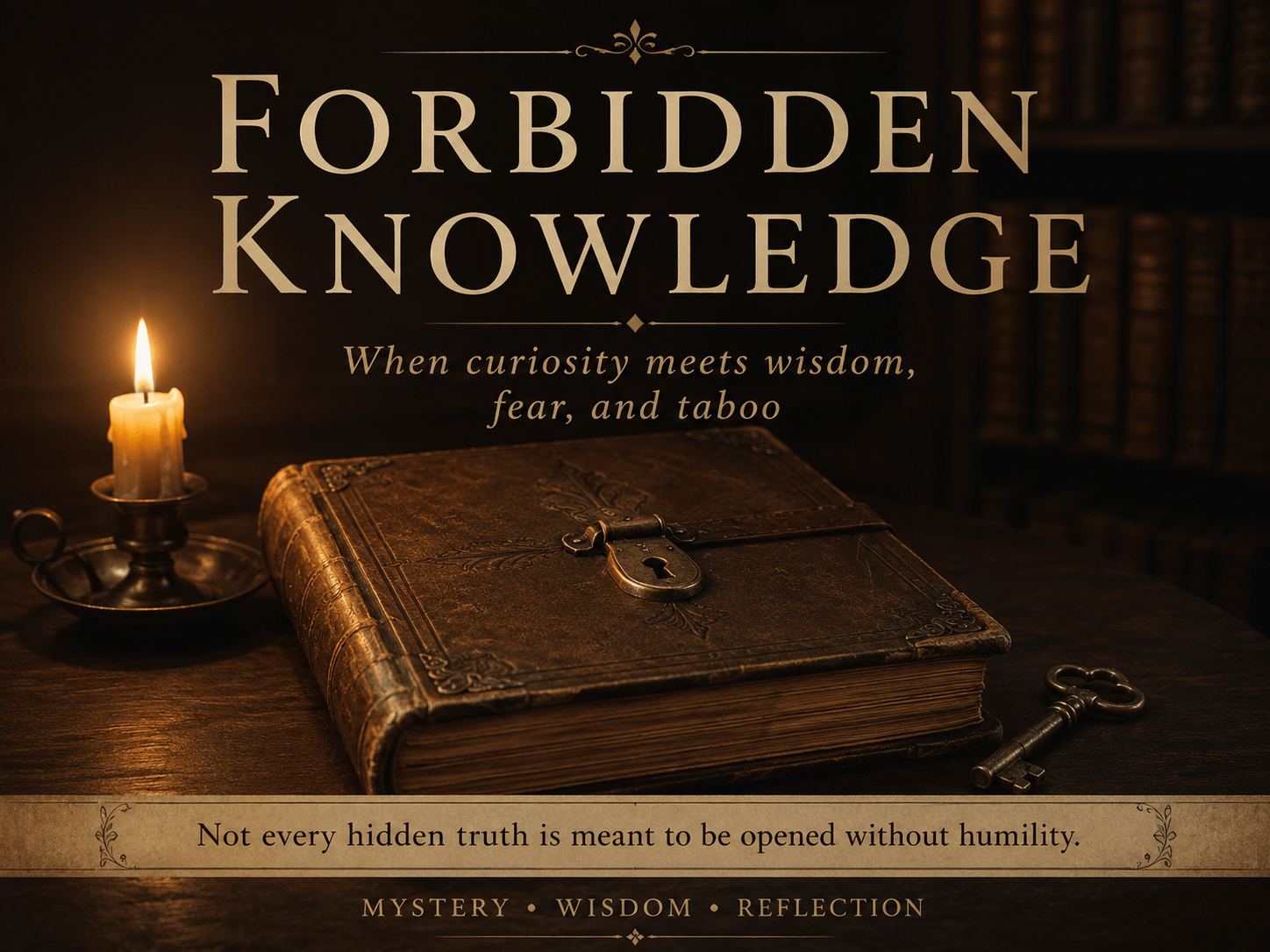
Some books frighten us not because we have read them, but because we have heard they should not be read.
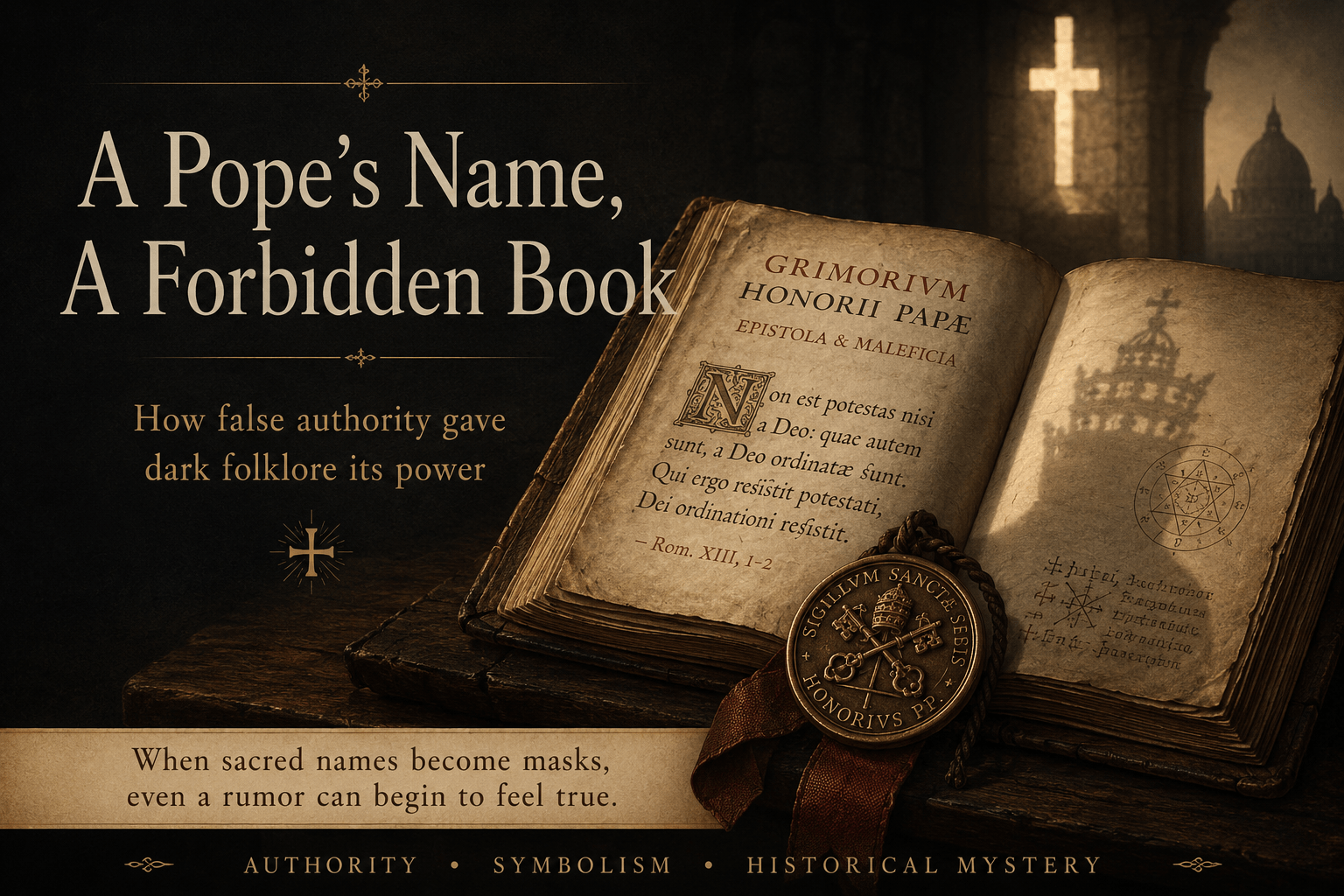
Across cultures, there are stories of dangerous scriptures, forbidden grimoires, occult manuals, angelic books, demonic catalogues, and sacred texts said to contain knowledge too heavy for ordinary human hands. Some are historical manuscripts. Some are modern provocations. Some are surrounded by legend. Others are misunderstood through rumor, fear, or religious controversy.
Yet their deeper power may not lie in whether they are “real” in a supernatural sense. Their power lies in what they reveal about us.
Why do human beings fear forbidden knowledge?
Why do we imagine books that can summon demons, command angels, grant immortality, invert morality, or open doors that should remain closed?
And why does the idea of a dangerous book continue to haunt the modern imagination?
This article explores several famous “dangerous sacred books” and forbidden traditions not as instructions, not as endorsements, and not as sensational horror, but as mysterious folklore with cultural, psychological, and moral meaning. These texts remind us that knowledge is never neutral when the human heart seeks power without wisdom.
Forbidden books occupy a strange place in the human imagination. They are objects of fear, but also of longing. We fear what they might contain, yet we are curious precisely because they are hidden.
A forbidden text is rarely just a book. It becomes a symbol.
It may symbolize rebellion against authority, the desire to control fate, the hunger for secret wisdom, or the danger of mistaking knowledge for maturity. In folklore, dangerous books often appear at the edge of a moral boundary. A monk writes one in a single impossible night. An angel gives one to a biblical figure. A magician opens one and believes he can command invisible powers. An alchemist studies one and drinks the promise of immortality.
These stories may sound extreme, but their emotional structure is familiar. We all know the feeling of wanting a shortcut: a word that unlocks power, a formula that solves suffering, a hidden truth that makes us greater than we are.
That is why dangerous books endure. They are not merely about demons, angels, spirits, or forbidden rituals. They are about the human temptation to reach beyond wisdom and call it enlightenment.
One of the most disturbing ideas in modern occult imagination is not a demon with horns, but a story in which the moral universe itself is reversed.
In certain modern Satanic or anti-Christian reinterpretations, Satan is not presented as the villain of cosmic history. He becomes the rebel, the liberator, the bringer of knowledge, the morning star who refuses to bow before divine authority. God, in this inverted narrative, is imagined not as love or justice, but as a tyrant demanding obedience.
This is not an ancient gospel in the historical Christian sense. Rather, it belongs to a modern pattern of symbolic rebellion, associated with contemporary occult and counter-religious movements. Its danger, if we read it symbolically, is not that it proves a hidden truth. Its danger is that it plays with moral inversion.
Virtue becomes weakness.
Obedience becomes slavery.
Faith becomes ignorance.
Self-worship becomes liberation.
Such inversion can feel intoxicating because it offers a dramatic answer to pain: “What if everything you were taught was a lie?” For people who have suffered under rigid authority, that question may feel like oxygen. Yet folklore often warns that rebellion without reflection can become another form of captivity.
The frightening part of this tradition is not simply that it challenges Christianity. Serious philosophical critique and religious questioning have always existed. The deeper danger is the temptation to replace one absolute with another: to reject blind obedience only to embrace blind self-exaltation.
In this sense, the so-called “Gospel of Satan” is less a book about Satan than a mirror held up to human resentment. It asks what happens when the wounded self decides that all limits are oppression and all desire is truth.
Few occult books have inspired as much fascination as the Lesser Key of Solomon, especially the section known as the Ars Goetia. It is often described as a grimoire containing names, seals, and descriptions of seventy-two spirits or demons said to be commandable through ceremonial magic.
To modern readers, the book may feel like a supernatural catalogue: each spirit has a name, a rank, a function, a seal, and a promise. Some are associated with knowledge. Others with influence, wealth, persuasion, or hidden things. The very structure of the text is seductive because it makes the invisible seem organized.
What frightens people about this book is not only the idea of demons. It is the idea that the unseen world can be reduced to technique.
Draw the symbol.
Say the words.
Stand in the circle.
Command the force.
From a cultural perspective, this reflects a deep human desire: to negotiate with fear instead of surrendering to it. The magician in such stories does not merely pray. He attempts to control. He wants power without humility, contact without vulnerability, knowledge without transformation.
Yet the legends around grimoires almost always contain warnings. The spirit twists the command. The bargain has hidden terms. The summoner believes himself master, only to discover that he has invited a presence he cannot dismiss.
Whether read as religious warning, psychological metaphor, or folklore, the lesson is similar: when we try to command what we do not understand, we may become servants of the very forces we hoped to control.
The Lesser Key of Solomon remains powerful in the imagination because it gives shape to a universal fear: that knowledge without wisdom may open a door the self is not strong enough to close.
In Islamic esoteric history, few books carry a reputation as intense as Shams al-Ma’arif, often associated with Ahmad al-Buni. It is known for discussions of letters, numbers, divine names, talismans, and spiritual correspondences. Around it has grown an aura of danger, secrecy, and religious controversy.
For some, it represents esoteric knowledge. For others, it represents a dangerous crossing of boundaries. Mainstream Islamic concerns often focus on the misuse of sacred names, the involvement of jinn, and the risk of confusing devotion with manipulation.
The deepest fear here is not simply “magic.” It is the transformation of prayer into control.
A sacred name, in devotional religion, is approached with reverence. It reminds the believer of humility, dependence, and the mystery of God. But in occult misuse, the sacred name can be treated like a tool, a lever, a formula to bend reality toward personal desire.
That shift is subtle but profound.
The heart no longer says, “Guide me.”
It says, “Obey me.”
This is why traditions surrounding Shams al-Ma’arif are so charged. They raise a question that appears in many cultures: when does spiritual knowledge become spiritual ambition? When does devotion become technique? When does the search for protection become the desire to dominate?
In folklore, jinn are not merely monsters. They often symbolize the unseen complexity of the world: intelligence beyond human control, forces that may help, deceive, tempt, or mirror us. Stories of dangerous encounters with such beings may be read as warnings about approaching the invisible with arrogance.
The cultural lesson is not that curiosity itself is evil. It is that sacred things require reverence. Knowledge, when separated from humility, becomes a flame in dry grass.
The term Vama Marga, often translated as the “left-hand path,” refers to certain tantric traditions in South Asian religious history that deliberately engage with taboo. These practices are complex, culturally specific, and often misunderstood in popular media.
In simplified retellings, Vama Marga appears shocking because it involves transgression: ritual contact with what society calls impure, forbidden, or dangerous. In some traditions, the goal is not mere indulgence but the transcendence of duality — pure and impure, sacred and profane, fear and liberation.
Yet this is precisely why the tradition can be frightening. It asks whether a person can face what society avoids without being consumed by it.
A cremation ground at night.
The presence of death.
The breaking of social boundaries.
The confrontation with desire, fear, and disgust.
Sefer HaRazim, often translated as the “Book of Mysteries,” belongs to the world of ancient Jewish magical and mystical texts. It contains angelic names, heavenly hierarchies, and rituals associated with protection, healing, influence, and hidden knowledge.
Its atmosphere differs from demonic grimoires. Here the danger is not always imagined as darkness rising from below, but as human ambition reaching upward.
That may be even more subtle.
In religious life, angels are often understood as messengers of divine will. They are not independent powers to be manipulated, but beings who serve a higher order. Yet texts like Sefer HaRazim, at least in the way they have been received and debated, raise the unsettling idea that angelic forces might be named, approached, petitioned, or even commanded.
This blurs a delicate line.
Prayer becomes transaction.
Reverence becomes technique.
Heaven becomes a system to be used.
The danger is not the presence of angels. The danger is the human wish to turn the sacred into machinery.
This theme appears across many traditions. Human beings long to make the invisible predictable. We want a spiritual technology: say this, offer that, receive the result. But sacred traditions often resist this impulse because mystery is not a vending machine. The divine, however understood, cannot be reduced to a mechanism for private desire.
As folklore, Sefer HaRazim invites reflection on a quiet temptation: even the desire for “good” things — healing, protection, love, success — can become spiritually dangerous if the heart seeks control more than wisdom.
Such images are powerful because they bring the hidden parts of human life into the open. Death, sexuality, hunger, impurity, and shadow are not politely hidden away. They are placed at the center of spiritual confrontation.
But folklore and religious warnings often remind us that not everyone who breaks a boundary becomes free. Some people break boundaries and become lost. Some mistake transgression for wisdom. Some confuse intensity with enlightenment.
The symbolic lesson of Vama Marga is therefore delicate. It is not a casual invitation to taboo. Rather, it suggests that the shadow self cannot be healed by denial alone — but neither can it be mastered through reckless indulgence.
The path through darkness, if such a path exists, requires discipline, guidance, humility, and extraordinary self-knowledge. Without these, the abyss does not become a teacher. It becomes a home.
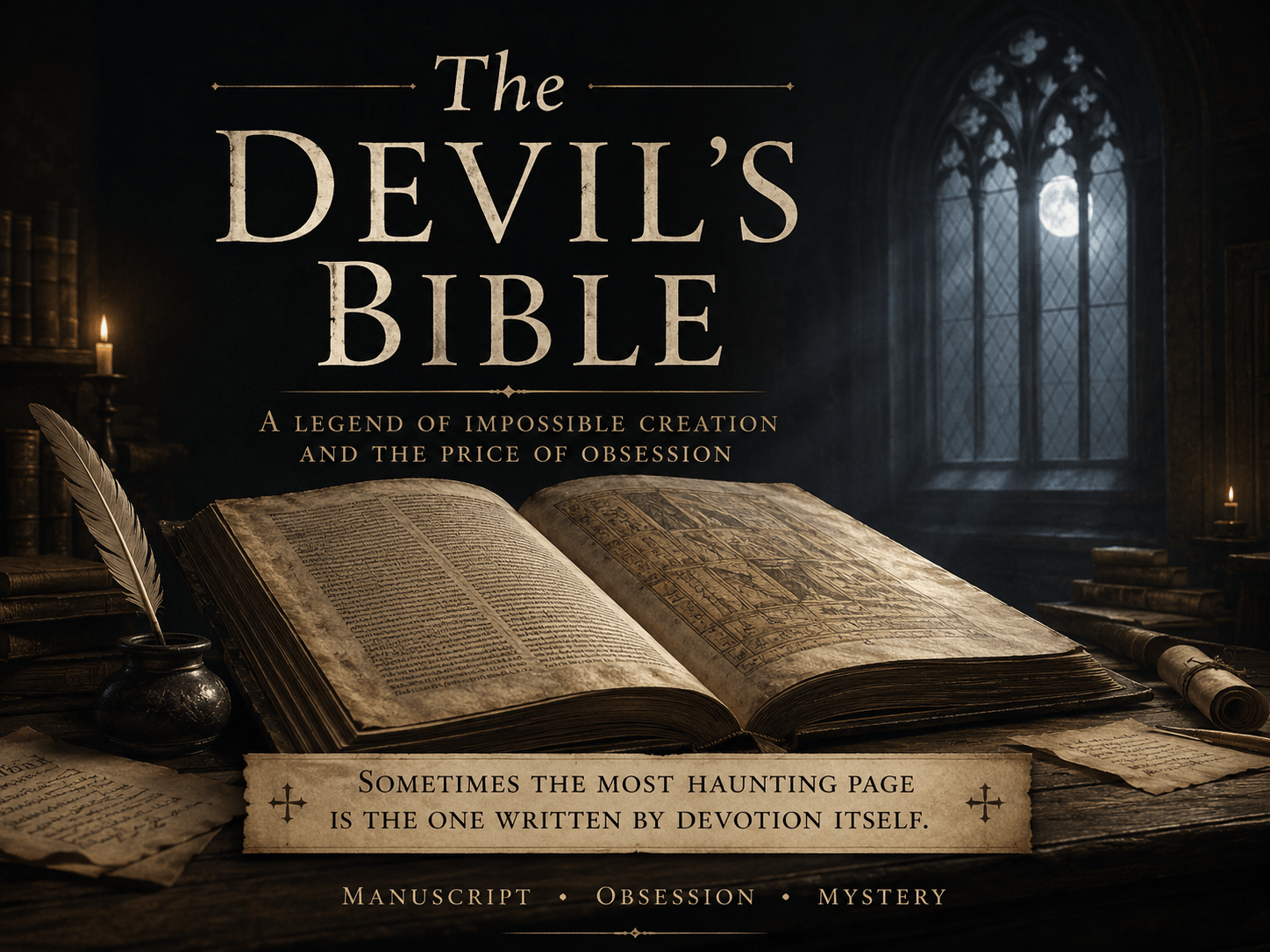
The Codex Gigas, often called the “Devil’s Bible,” is one of the most visually striking manuscripts in the world. It is enormous, mysterious, and famous for its full-page portrait of the devil.
The legend says that a monk, condemned for breaking monastic law, promised to create a book in a single night that would glorify his monastery. Realizing the task was impossible, he supposedly called upon the devil for help. By morning, the book was complete, and the devil’s image appeared within it.
Historically, the manuscript is extraordinary enough without the legend. Its scale, consistency, and ambition suggest years of disciplined labor. It contains biblical material, historical writing, medical texts, and other knowledge. The devil portrait, placed within such a vast work, gave birth to centuries of speculation.
What makes the Codex Gigas so haunting is not simply the image of the devil. It is the human question behind the legend:
What kind of devotion creates something so immense?
We often imagine supernatural explanations when human effort becomes difficult to comprehend. A cathedral, a symphony, a manuscript, a life’s work — when dedication exceeds ordinary measure, people begin to ask whether genius is touched by madness, grace, or darkness.
The legend of the monk’s bargain reveals a fear that creativity itself may demand a price. To make something monumental, must one sacrifice peace, health, identity, or even the soul?
Whether or not anyone believes the legend literally, the symbolic meaning remains powerful. The Codex Gigas reminds us that obsession can wear the mask of devotion. A masterpiece can be holy, human, or haunted — and sometimes the difference depends on what the creator has lost along the way.
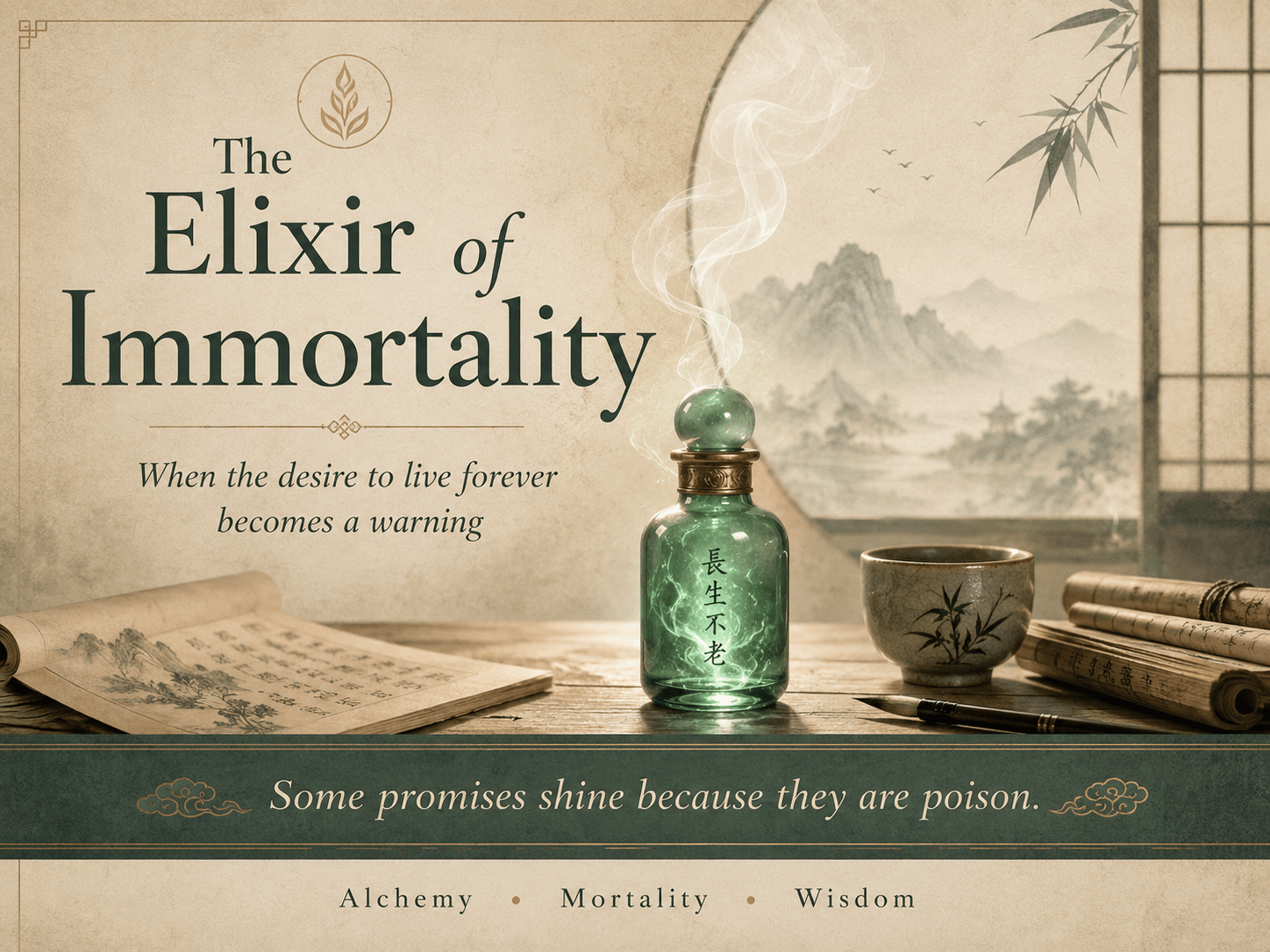
Among the oldest human dreams is the desire not to die.
Chinese alchemical traditions include stories of elixirs, minerals, formulas, and practices associated with longevity or immortality. In some historical cases, substances believed to prolong life were dangerous or poisonous. The tragic irony is clear: in seeking immortality, some seekers may have hastened death.
This is one of the most powerful moral patterns in world folklore.
The hero seeks eternal life.
The sage warns of balance.
The ruler demands a formula.
The potion promises permanence.
The body cannot bear it.
The so-called “Book of Elixir” motif represents more than ancient chemistry. It symbolizes the danger of perfect desire. We do not merely want life; we want life without loss. We do not merely want health; we want certainty. We do not merely want time; we want time without change.
But life resists being frozen.
In many wisdom traditions, mortality is not only an enemy. It is also a teacher. The fact that time is limited gives tenderness to love, urgency to kindness, and meaning to memory. To erase death completely, at least symbolically, might also erase the shape of human life.
The tragedy of the elixir legends is therefore not foolishness alone. It is understandable longing taken too far. The fear of death becomes stronger than the love of life. The desire for safety becomes more dangerous than uncertainty itself.
The forbidden elixir teaches a quiet lesson: not every promise of eternal life is life-giving. Some promises shine because they are poison.
I seek knowledge with humility, and I let wisdom guide what power alone cannot heal.
This affirmation captures the thread connecting all these forbidden texts. The danger is not curiosity itself. Curiosity can open the mind, deepen culture, and lead to compassion. The danger begins when curiosity loses humility and becomes hunger for domination.
Forbidden books appear in many cultures because every culture has boundaries around knowledge. Some knowledge is sacred. Some is dangerous. Some is reserved for the initiated. Some is feared because it threatens the moral order.
In Christianity, the fear may appear as a pact with the devil.
In Jewish mystical tradition, it may appear as angelic names misused.
In Islamic contexts, it may appear as sacred names turned into sorcery.
In tantric traditions, it may appear as taboo-breaking without discipline.
In alchemical legends, it may appear as the desire to conquer death.
Psychologically, forbidden books fascinate us because they externalize the shadow.
The shadow is not only evil. It is everything we hide from ourselves: ambition, resentment, curiosity, desire, rage, grief, and fear. A dangerous book gives these inner forces an object. Instead of saying, “I want power,” the story says, “There is a book of power.” Instead of saying, “I fear my own desires,” the story says, “There is a demon in the pages.”
This makes fear easier to approach.
Philosophically, these books raise one of the oldest human questions: should everything that can be known be known? Modern culture often assumes that knowledge is always progress. But folklore is more cautious. It suggests that knowledge changes the knower.
To learn something is not merely to possess information. It is to become responsible for what that knowledge awakens.
That is why stories of dangerous scriptures remain relevant. They ask us to distinguish between information and wisdom, power and maturity, rebellion and freedom, desire and truth.
Different cultures tell different stories, but the structure is often similar:
A human being reaches for hidden power.
The boundary gives way.
The seeker discovers that power is never free.
These stories preserve cultural values by dramatizing their violation. They do not simply say, “Do not seek.” They ask, “What kind of person are you becoming as you seek?”
One way to read these tales is not as anti-knowledge, but as pro-wisdom.
They do not tell us to remain ignorant. They remind us that some doors require preparation. Some questions require humility. Some powers, even symbolic ones, require moral maturity.
In modern life, forbidden books may stand for many things: technologies we do not fully understand, ambitions we pursue without rest, relationships we enter without self-knowledge, beliefs we adopt because they make us feel powerful.
The lesson is not to fear every mystery.
The lesson is to ask what kind of person we become when we chase mystery without reflection.
A dangerous book, in the symbolic sense, is any knowledge that awakens power faster than it awakens wisdom.
Perhaps the most mysterious forbidden book is not locked in a monastery, hidden in an archive, or buried in a magician’s chest.
Perhaps it is the unwritten book within the human heart — the place where fear, desire, faith, doubt, ambition, and longing are written in a language we do not always understand.
Old stories about dangerous scriptures endure because they give us a way to read ourselves. They ask us to pause before opening the next door, before seeking the next secret, before mistaking power for peace.
So the question is not only:
“What knowledge is hidden from me?”
It may also be:
“Am I ready to become the kind of person who can carry what I want to know?”
What hidden knowledge are you seeking — and are you becoming wise enough to carry it?